Sikh Heritage Tour of Pakistan (2026) – 10 Days & 9 Nights
Walk in the footsteps of Guru Nanak Dev Ji and explore the sacred heritage of Sikhism Embark on a deeply spiritual and unforgettable journey through Pakistan, the land that cradles the early footsteps of Sikhis…
About this journey
Walk in the footsteps of Guru Nanak Dev Ji and explore the sacred heritage of Sikhism
Embark on a deeply spiritual and unforgettable journey through Pakistan, the land that cradles the early footsteps of Sikhism. This 10-day pilgrimage is a once-in-a-lifetime opportunity to visit some of the most revered Gurdwaras associated with Guru Nanak Dev Ji and other Sikh Gurus. It is a journey of faith, reflection, and connection—where history comes alive, and the spirit finds peace.
Your journey begins in Lahore, the cultural heart of Punjab, where you’ll explore the historic Gurdwara Dera Sahib, located beside the mausoleum of Emperor Jahangir, and pay respects at the Samadhi of Maharaja Ranjit Singh, the Lion of Punjab. Experience the vibrant energy of the old city and the legacy of Sikh rule in the region.
Travel onward to Nankana Sahib, the birthplace of Guru Nanak Dev Ji. Spend time in prayer and peace at Gurdwara Janam Asthan, as well as other significant shrines including Gurdwara Bal Lila and Gurdwara Patti Sahib—each marking a chapter from the life of the first Sikh Guru.
Your pilgrimage will also take you to Sacha Sauda, where Guru Nanak taught the value of true charity, and Gurdwara Rohri Sahib, a place of profound spiritual significance where the Guru is said to have meditated.
The highlight of the tour is a full-day visit to the magnificent Gurdwara Darbar Sahib in Kartarpur, now connected to India through the historic Kartarpur Corridor. This is where Guru Nanak spent his final years, and where his teachings resonate in the very air.
Throughout the tour, you will be guided by knowledgeable, respectful staff who understand the cultural and religious importance of each site. Comfortable accommodations, daily vegetarian meals, private transportation, and seamless logistics ensure a worry-free, meaningful journey.
This is more than just a tour it is a sacred pilgrimage, a spiritual homecoming, and a tribute to the timeless wisdom of Sikhism.
Day by day
1Day 1: Arrival in Lahore
Arrive at Allama Iqbal International Airport and transfer to your hotel. Rest and enjoy a traditional Punjabi dinner. Overnight stay in Lahore.
2Day 2: Explore Lahore & Sikh Heritage
Visit Gurdwara Dera Sahib (site of Guru Arjan Dev Ji’s martyrdom), Gurdwara Shaheed Ganj Singh Singhania, and Gurdwara Bhai Taru Singh. Also see Lahore Fort and Badshahi Mosque. Overnight stay in Lahore.
3Day 3: Full-Day Visit to Nankana Sahib (Drive Time: 2 hours one-way)
Drive to Nankana Sahib, birthplace of Guru Nanak Dev Ji. Visit Gurdwara Janam Asthan, Gurdwara Bal Lila, Gurdwara Patti Sahib, and others. Return to Lahore in the evening. Overnight stay in Lahore.
4Day 4: Visit Gurdwara Rohri Sahib & Sacha Sauda (Drive Time: 3–4 hours round trip)
Day trip to Rohri Sahib (where Guru Nanak stayed after leaving Nankana Sahib) and Gurdwara Sacha Sauda in Farooqabad. Return to Lahore. Overnight stay in Lahore.
5Day 5: Lahore to Kartarpur – Darbar Sahib Visit (Drive Time: 3–4 hours round trip)
Drive to Narowal to visit Gurdwara Darbar Sahib Kartarpur—the final resting place of Guru Nanak Dev Ji. Spend time in the peaceful compound and Langar Hall. Return to Lahore by evening. Overnight stay in Lahore.
6Day 6: Lahore to Eminabad – Gurdwara Rori Sahib (Drive Time: 2–3 hours)
Drive to Eminabad to visit Gurdwara Rori Sahib, where Guru Nanak stayed during Babur’s invasion. Also visit Gurdwara Chakki Sahib and Bhai Lalu di Khoi. Continue to Islamabad. Overnight stay in Islamabad.
7Day 7: Islamabad & Panja Sahib (Drive Time: 1.5 hours)
Morning visit to Gurdwara Panja Sahib in Hasan Abdal, where Guru Nanak’s handprint is imprinted on a rock. Return to Islamabad and visit Faisal Mosque, Lok Virsa Museum, and enjoy dinner at Monal. Overnight stay in Islamabad.
8Day 8: Islamabad to Lahore (Drive Time: 5–6 hours)
After breakfast, drive back to Lahore. Enjoy a relaxing evening with local cuisine. Overnight stay in Lahore.
9Day 9: Optional Gurdwara Revisit or Shopping Day
Spend this day at leisure. Optional revisit to any Gurdwara, or enjoy shopping and a cultural food tour. Overnight stay in Lahore.
10Day 10: Departure
Transfer to Lahore Airport for your onward flight. End of tour.
What you will experience
- Visit the holiest Sikh sites in Pakistan, including Gurdwara Janam Asthan (Nankana Sahib) and Gurdwara Darbar Sahib Kartarpur
- Explore Gurdwaras connected to Guru Nanak, Guru Arjan Dev, and Guru Hargobind
- Witness the stunning architecture and spiritual energy of Gurdwara Panja Sahib
- Visit cultural landmarks in Lahore and Islamabad including Badshahi Mosque and Faisal Mosque
- Enjoy warm Punjabi hospitality, local food, and spiritual serenity
What to bring
A practical starting point for this trip. Your guide will send a final, weather-checked list two weeks before departure.
Documents & essentials
- Passport valid 6+ months, plus photocopies stored separately
- Pakistan visa or e-visa confirmation printout
- Travel insurance certificate (mandatory — must cover altitude if trekking)
- Flight tickets and this itinerary, printed and on your phone
- Cash in USD or EUR for exchange; cards are not widely accepted outside major cities
- Passport-sized photographs for permits and hotel registration
Clothing
- Layered clothing — northern valleys are cool at night even in summer
- Fleece or insulated jacket for high passes such as Khunjerab and Babusar
- Light waterproof jacket
- Comfortable walking shoes plus sandals or trainers
- Modest clothing covering shoulders and knees for mosques, forts and villages
- A scarf or shawl (women should carry one for religious sites)
- Sun hat and sunglasses — UV is intense at altitude
Health & personal care
- Personal medication with a copy of the prescription
- Basic first-aid kit: blister plasters, painkillers, antihistamine, rehydration salts
- Anti-diarrhoeal and a broad-spectrum antibiotic if your doctor advises it
- High-factor sunscreen (SPF 50) and SPF lip balm
- Insect repellent
- Hand sanitiser and wet wipes
- Toilet paper — not reliably supplied outside hotels
Electronics
- Universal adapter — Pakistan uses type C and D sockets, 230 V
- Power bank; mains power is intermittent in mountain areas
- Camera with spare batteries — cold drains them quickly
- Phone with offline maps downloaded before departure
Good to have
- Reusable water bottle to reduce plastic waste
- Small padlock for luggage
- Snacks you like — choice is limited outside cities
- Earplugs and eye mask for long drives and shared lodges
- A small gift or postcards from home if you plan to visit local families
Before you travel
Best Time to Visit on the Sikh Heritage Tour
This 10-day pilgrimage traverses the sacred heartland of Sikhism in Pakistani Punjab — visiting the birthplace of Guru Nanak Dev Ji at Nankana Sahib, the Darbar Sahib at Kartarpur where the Guru spent his final years, the miraculous Panja Sahib Gurdwara at Hassan Abdal, and the historic Sikh shrines and royal tombs of Lahore. The tour stays entirely within the Punjab plains, and while Pakistan is a year-round destination, timing your pilgrimage for the cooler months makes the experience significantly more comfortable and spiritually immersive.
October through December is the finest window for this tour. Temperatures across Pakistani Punjab cool from the high 30s of September into a comfortable 20–30°C through October and November, settling to a cool and pleasant 10–20°C in December. Walking the vast marble courtyards and perambulation paths of the Gurdwara complexes is far more enjoyable in these temperatures than in the summer heat. November brings the most significant event on the Sikh pilgrimage calendar: Guru Nanak Dev Ji’s Gurpurab (birthday anniversary), celebrated on the full moon of Kartik (typically November). Nankana Sahib and Kartarpur Darbar Sahib during Gurpurab are transformed into extraordinary places of worship, with all-night kirtans, masses of devoted pilgrims, and an atmosphere of spiritual intensity unlike any other time of year. If your travel dates can align with Gurpurab, the experience is exceptional and deeply memorable.
January and February are cool and clear across Punjab. Panja Sahib Gurdwara at Hassan Abdal, set in a valley beside its sacred sarovar with the Margalla Hills as a backdrop, is particularly beautiful in the sharp winter light of January. Lahore can experience morning fog in January — normal for the Punjab winter — which typically clears by 10–11am without materially affecting the programme. February marks the return of spring warmth; mustard fields turn the Punjab countryside golden yellow and the tour has a pleasant sense of the season turning.
March and April offer another excellent window. Punjab spring brings temperatures of 18–30°C, the countryside is beautiful with crops and wildflowers, and conditions at all Gurdwara sites are excellent. The Baisakhi festival (13–14 April) — commemorating the founding of the Khalsa by Guru Gobind Singh Ji in 1699 — brings enormous congregations to Panja Sahib and Nankana Sahib. If you wish to be present at Baisakhi celebrations, an April visit is highly rewarding though crowds will be very large and advance coordination with your guide team is essential.
May through September are not recommended for this itinerary. Pakistani Punjab in summer reaches 42–46°C, and the marble-floored Gurdwara courtyards — beautiful but fully exposed to direct sun — become genuinely difficult to traverse in peak heat. The monsoon (July–August) brings high humidity alongside the heat. While all Gurdwaras remain open year-round and the pilgrimage can be made in any season, the experience is most spiritually immersive and physically comfortable in the October–April window. Please consult your Passage to Pakistan coordinator if summer travel dates are unavoidable.
Travel Tips for UK Visitors
UK passport holders — including Sikh pilgrims making this journey — require a standard Pakistan tourist visa. There is no special pilgrimage visa category for UK nationals; the e-Visa through visa.nadra.gov.pk is the recommended option. A 30-day tourist visa costs approximately £35–45 and is processed within one to three working days. Apply at least two weeks before your travel date. Visa on arrival at Islamabad or Lahore airports is available for UK nationals but the advance e-Visa is strongly preferred. Your Passage to Pakistan coordinator will guide you through the application at booking.
The tour can begin from either Islamabad International Airport (ISB) or Lahore’s Allama Iqbal International Airport (LHE). Lahore is particularly well-placed for this itinerary; it is served by Pakistan International Airlines from London and by one-stop connections through Dubai, Doha, Istanbul, and Abu Dhabi. Flight times from London are 8–9 hours direct to Lahore or 13–16 hours with a Gulf hub connection. Both ISB and LHE airports have reliable taxi, Uber, and pre-arranged driver services. Your Passage to Pakistan itinerary will specify your recommended arrival airport based on your tour start point.
The Pakistani rupee (PKR) trades at approximately 350–360 to the pound sterling. ATMs accepting international Visa and Mastercard are widely available in Lahore and Islamabad; in Nankana Sahib and near Kartarpur (Narowal district), cash is essential as ATM and card infrastructure is limited. Bring adequate PKR in medium denominations for the rural portions of the tour — donations at Gurdwaras are made by placing PKR cash in the golak (offering box), not by card. Charitable donations to the langar kitchen are also warmly welcomed in PKR. Exchange at Lahore or Islamabad airport on arrival is convenient; the Liberty Market area of Lahore has exchange bureaux with competitive GBP rates.
A Jazz or Zong SIM costs approximately £3 at the airport and covers Lahore, Islamabad, Hassan Abdal, and Nankana Sahib well. Coverage at Kartarpur Darbar Sahib (Narowal district, near the Indian border) can be variable; your guide team maintains alternative communication for this location. Pakistan Standard Time (GMT+5) is 4–5 hours ahead of the UK; early morning Nitnem prayers at Gurdwaras (beginning before sunrise at Amrit Vela) align naturally with this time difference for UK travellers. Comprehensive travel insurance with medical repatriation is mandatory for all Passage to Pakistan bookings.
Accommodation on This Tour
Over 10 nights, your accommodation combines comfortable city hotels in Lahore and Islamabad with stays close to the sacred Gurdwara complexes. Passage to Pakistan selects properties that balance convenience for the day’s pilgrimage sites with a standard appropriate for international visitors, and at several points on the tour, accommodation close to the Gurdwara allows for participation in early morning prayers.
In Lahore, the tour typically uses the Avari Hotel on Upper Mall or the Pearl Continental Hotel — both four-to-five-star properties with excellent restaurant options, comfortable rooms, and staff experienced in welcoming Sikh heritage visitors from the UK and worldwide. The Avari is particularly well-located close to the Walled City where the Lahore Gurdwaras are situated. Lahore’s restaurants offer authentic Punjabi cuisine — dal makhani, sarson da saag with makki di roti, and fresh lassi — that provides a genuine connection to the culinary heritage shared across the divided Punjab.
At Nankana Sahib, accommodation at the ETPB (Evacuee Trust Property Board) pilgrim sarai adjacent to the main Gurdwara complex allows for walking to early morning prayers — an experience of unique intimacy and spiritual closeness to the site. For visitors preferring hotel-standard amenities, a mid-range property in nearby Sheikhupura is arranged. Near Kartarpur (Narowal district), accommodation in Narowal or Gujranwala is arranged for overnight stays. Islamabad nights use a comfortable four-star property in the F-7 or F-8 sector. All included accommodation provides air conditioning, en-suite facilities, and breakfast. Your Passage to Pakistan coordinator will advise on specific properties for your tour dates.
Local Culture and Etiquette
This tour is a sacred pilgrimage to some of the holiest sites in Sikhism, and the etiquette at each Gurdwara should be observed with the respect these places deserve. At every Gurdwara on this tour — Darbar Sahib Kartarpur, Gurdwara Janam Asthan Nankana Sahib, Panja Sahib at Hassan Abdal, and the Lahore Gurdwaras — the head must be covered before entering the Gurdwara precincts. Rumalas (cotton head coverings) are available at the entrance of every Gurdwara for visitors who have not brought their own. Personal dastaars (turbans), scarves, or bandanas are equally appropriate. Shoes are removed before entering Gurdwara premises and deposited at the shoe room at the entrance.
At Gurdwaras with a sarovar (sacred pool) — Nankana Sahib and Panja Sahib are the principal ones on this tour — it is customary to wash hands and in some traditions rinse the feet before entering. Non-Sikh visitors and those not performing a personal spiritual bath should observe the sarovar respectfully from its perimeter rather than entering the water. Tobacco products and alcohol are strictly prohibited on all Gurdwara premises without exception; do not bring these substances anywhere onto the Gurdwara grounds.
Langar — the free community kitchen and meal service central to Sikh worship — operates continuously at all major Gurdwaras on this tour and visitors of all faiths are warmly invited to participate. Langar is served while sitting cross-legged on the floor in rows (pangat); eat with your right hand or with the provided utensils; leave a voluntary donation in the langar hall’s collection box if you feel moved to. The langar meal is simple, vegetarian, and deeply nourishing — dal, sabzi, roti, and rice — and participating in it alongside hundreds of fellow pilgrims is one of the most genuinely moving experiences this pilgrimage offers.
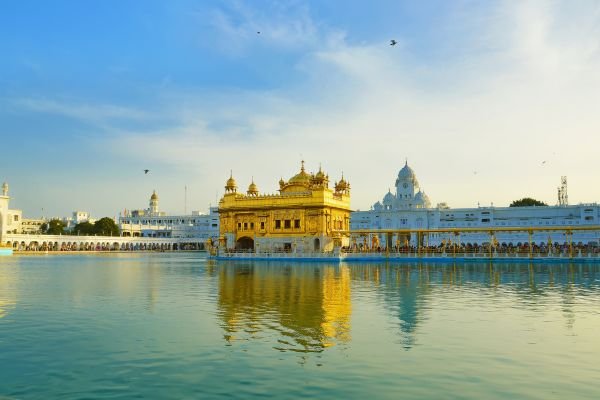
Photography within Gurdwara courtyards is generally permitted and the architecture is breathtaking: the golden domes of Kartarpur Darbar Sahib reflected in the sarovar at sunset, the white marble of Nankana Sahib under a clear winter sky, the ancient stone of Panja Sahib. Photography inside the Darbar Sahib (the inner prayer hall where Guru Granth Sahib is installed) requires care; ask your guide before photographing and never direct a camera toward the Guru Granth Sahib itself without explicit permission. The Sikh community and the local Muslim population of Pakistani Punjab are overwhelmingly warm and welcoming toward pilgrims from the UK diaspora; the human connections made during this tour are frequently as profound as the spiritual ones.
Safety and Health Information
Pakistan’s Punjab province, which this tour traverses entirely, is the country’s most populous, most economically developed, and most comprehensively served by security, health, and transport infrastructure. The Gurdwara sites — under the management of the Evacuee Trust Property Board (ETPB) of Pakistan — regularly receive large international pilgrim delegations from the UK, Canada, USA, India, and worldwide, and security arrangements are professional and experienced. Passage to Pakistan maintains a long-standing relationship with the ETPB and coordinates all site access through established channels.
Kartarpur Darbar Sahib requires particular logistical awareness. Located in Narowal district near the Indian border, all visitors enter through the Pakistan Kartarpur Corridor gate and undergo a security registration process. Your Passage to Pakistan guide manages this entry procedure; allow additional time at this site for security. The Gurdwara complex itself — rebuilt and massively expanded by the Pakistani government in 2019 — is modern, immaculately maintained, and equipped with full visitor facilities including a large langar hall, accommodation blocks for pilgrims, and a dedicated tourist information centre.
This tour is entirely at low altitude: Lahore, Nankana Sahib, and Kartarpur are all below 250 metres; Hassan Abdal and Islamabad are at 500–550 metres. Altitude sickness is not a concern. Heat is the primary health consideration in warmer months (see Best Time to Visit above). Drink only bottled water (provided by Passage to Pakistan throughout all tour days) and eat at the hotel restaurants and Gurdwara langar venues. The langar at major Gurdwaras is prepared under scrupulous hygiene standards and is safe for international visitors. Standard precautions for Pakistan travel apply throughout.
Major hospitals near key tour sites: Lahore — Services Hospital and Doctors Hospital (private, recommended for international visitors); Nankana Sahib — District Headquarters Hospital or transfer to Lahore for anything serious; Hassan Abdal — transfer to Rawalpindi or Islamabad. Rescue 1122 emergency services operate across the Punjab. Your Passage to Pakistan guide carries a full first-aid kit and emergency medical contacts for every location. Review FCDO travel advice for Pakistan at gov.uk/foreign-travel-advice/pakistan, register your trip with the FCDO LOCATE service, and ensure your comprehensive travel insurance includes a minimum £500,000 medical evacuation cover — mandatory for all Passage to Pakistan bookings.
When to travel
Recommended travel window. Highlighted months are when we run this itinerary. Private departures can be arranged on any date — just ask.
Dates shown are guide departures. Exact start dates are confirmed at the time of booking and can be adjusted to suit your flights.
Plan your 10-Day Sikh Heritage Tour of Pakistan – Kartarpur, Nankana Sahib & More
Tell us your dates and we will build this itinerary around them — private guide, your pace, your interests. We reply within one working day.
Or call +92 342 5017535
Questions travellers ask
1. What are the most important Gurdwaras included in this Sikh pilgrimage tour?
This tour includes visits to some of the holiest Sikh sites in Pakistan, such as Gurdwara Janam Asthan (Nankana Sahib), Gurdwara Kartarpur Sahib, Gurdwara Panja Sahib (Hasan Abdal), Gurdwara Sacha Sauda, and Gurdwara Rori Sahib. These sacred sites are deeply connected to the life and teachings of Guru Nanak Dev Ji.
2. Is a visa required for Indian and international Sikh pilgrims?
Yes, all international travelers—including Indian Sikh pilgrims—require a Pakistan visa. Our team provides full guidance and support for the Sikh pilgrimage visa process, including documentation and invitation letters. Those entering via the Kartarpur Corridor may be eligible for a special permit.
3. What is the best time to take this Sikh heritage tour in Pakistan?
The best time to visit is during Guru Nanak Gurpurab (October/November) or Vaisakhi (April), though this Sikh religious tour of Pakistan can be taken year-round. Spring and autumn are ideal due to pleasant weather and fewer travel restrictions.
4. Are accommodations and meals included during the Gurdwara Yatra?
Yes, this is a fully inclusive Sikh heritage tour, which covers 3-star or 4-star hotel accommodations, daily vegetarian meals, private transportation, and guided visits to each Gurdwara. Langar is also available at many Gurdwaras during visits.
5. Is this tour safe and suitable for elderly pilgrims or families?
Absolutely. This tour is designed with elderly travelers, families, and spiritual groups in mind. The itinerary is comfort-focused, with manageable travel times, wheelchair-friendly sites, and full on-ground support for a safe and peaceful Sikh Yatra in Pakistan.