Karachi Day Tour (2026) – Clifton Beach, Mohatta Palace & Culture
Dive into the dynamic spirit of Pakistan’s largest metropolis with this full-day guided tour of Karachi — a city where colonial architecture, bustling markets, and the Arabian Sea come together to tell a story…
About this journey
Dive into the dynamic spirit of Pakistan’s largest metropolis with this full-day guided tour of Karachi — a city where colonial architecture, bustling markets, and the Arabian Sea come together to tell a story of cultural fusion. From the solemn grandeur of Mazar-e-Quaid to the vibrant chaos of Empress Market, this tour blends history, heritage, and the modern pulse of the city. Whether you’re a history buff, architecture enthusiast, or simply want to experience the energy of Karachi in a day, this tour is a perfect introduction to the heart of Pakistan’s commercial capital.
Day by day
1Itinerary
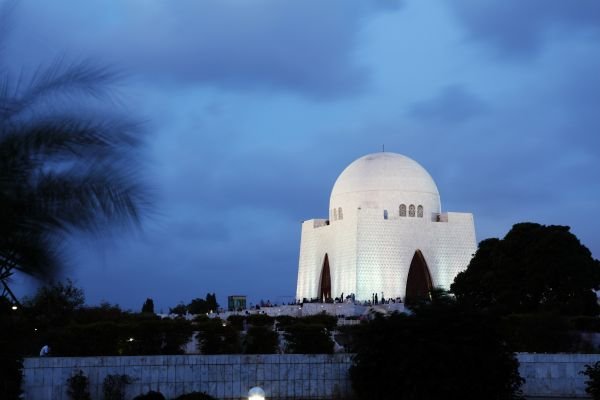
Your journey begins with a 9:00 AM pickup from your hotel by a licensed guide and chauffeur in an air-conditioned vehicle. Our first stop is Mazar-e-Quaid, the resting place of Muhammad Ali Jinnah, where the striking white marble mausoleum and ceremonial guard duty reflect the city’s deep respect for its founder. We then drive into the colonial district of Saddar, passing iconic British-era buildings, and stop at the chaotic yet fascinating Empress Market, a buzzing place to witness daily local life and traditional commerce. Next, we proceed to Frere Hall, one of Karachi’s finest colonial-era structures surrounded by peaceful gardens, before heading to the nearby Merewether Tower. Our guide will explain the historical relevance of these sites and how they shaped Karachi’s urban development. At midday, you can choose to enjoy lunch at a seaside restaurant—popular options include BBQ, biryani, or fresh seafood (lunch cost not included). After lunch, we visit the National Museum of Pakistan, which houses artifacts from the Indus Valley Civilization, Islamic manuscripts, and important relics from Pakistan’s independence movement. Later in the afternoon, we head to the Mohatta Palace, an elegant Indo-Saracenic mansion that now functions as an art and heritage museum. Our final stop is Clifton Beach, where you can walk along the shoreline, take photos, or sip chai as the sun begins to set. The tour concludes with a return to your hotel around 6:00 PM.
What you will experience
- Pay homage at the Mazar-e-Quaid, the mausoleum of Pakistan’s founder
- Explore colonial-era landmarks like Frere Hall, Empress Market, and Merewether Tower
- Visit the insightful National Museum of Pakistan
- Discover local art and heritage at Mohatta Palace
- Enjoy sea views and a relaxed stroll at Clifton Beach
- Option to enjoy a local seafood or desi lunch near the sea
What to bring
A practical starting point for this trip. Your guide will send a final, weather-checked list two weeks before departure.
Documents & essentials
- Passport valid 6+ months, plus photocopies stored separately
- Pakistan visa or e-visa confirmation printout
- Travel insurance certificate (mandatory — must cover altitude if trekking)
- Flight tickets and this itinerary, printed and on your phone
- Cash in USD or EUR for exchange; cards are not widely accepted outside major cities
- Passport-sized photographs for permits and hotel registration
Clothing
- Comfortable walking shoes with grip
- Modest clothing covering shoulders and knees — required at mosques and shrines
- A scarf or shawl (women should carry one for religious sites)
- Light jacket or fleece for early starts and evenings
- Sun hat and sunglasses
Health & personal care
- Personal medication with a copy of the prescription
- Basic first-aid kit: blister plasters, painkillers, antihistamine, rehydration salts
- Anti-diarrhoeal and a broad-spectrum antibiotic if your doctor advises it
- High-factor sunscreen (SPF 50) and SPF lip balm
- Insect repellent
- Hand sanitiser and wet wipes
- Toilet paper — not reliably supplied outside hotels
Electronics
- Universal adapter — Pakistan uses type C and D sockets, 230 V
- Power bank; mains power is intermittent in mountain areas
- Camera with spare batteries — cold drains them quickly
- Phone with offline maps downloaded before departure
Good to have
- Reusable water bottle to reduce plastic waste
- Small padlock for luggage
- Snacks you like — choice is limited outside cities
- Earplugs and eye mask for long drives and shared lodges
- A small gift or postcards from home if you plan to visit local families
Before you travel
Best Time to Visit Karachi
Karachi enjoys a relatively mild coastal climate compared to much of Pakistan, making it accessible year-round — though some seasons are far more comfortable than others for exploring the city on foot. The best months for a Karachi day tour run from October through to February, when daytime temperatures hover pleasantly between 20°C and 28°C and the sea breeze off the Arabian Sea keeps humidity manageable. This winter window is when the city truly comes alive: the outdoor bazaars are busiest, clifftop views over Clifton Beach are clearest, and an evening spent along Sea View is genuinely enjoyable rather than a sweaty endurance test.
March and April offer a short shoulder season that many experienced travellers consider the hidden sweet spot. Temperatures climb quickly but haven’t yet peaked, crowds thin after the school-holiday rush, and hotel prices dip noticeably. If you can manage a visit in these two months you’ll often find a more relaxed pace on the guided highlights, from the Quaid’s Mausoleum to the lanes of the old Hindu quarter. The light in March is particularly warm and beautiful for photography along the harbour and coastal clifftops.
May and June are the toughest months. Temperatures regularly breach 35–40°C, and Karachi also catches the tail of the pre-monsoon heat haze that reduces visibility across the city skyline. The monsoon itself arrives in July and typically withdraws by September; unlike Lahore or Islamabad, Karachi receives only moderate monsoon rainfall — perhaps 150–200 mm across the season — but flash flooding of low-lying roads can disrupt city-centre traffic on heavy-rain days. Outdoor visits to street-food lanes and open-air markets are best avoided during peak rainfall periods.
September and early October mark the monsoon’s departure and the return of tolerable heat. The vegetation along the Clifton coast looks surprisingly lush in these weeks and the Karachi Fish Harbour is at its most photogenic in the golden late-afternoon light. UK visitors flying in for a broader Pakistan itinerary that includes Karachi as a gateway city typically find October arrivals the most comfortable, allowing a full day of outdoor sightseeing without the weight of peak summer heat.
There is no single “wrong” month to visit Karachi — the city’s scale and wealth of indoor attractions mean there is always something accessible — but for the open-air highlights of our Classic Karachi Day Tour we consistently recommend the October-to-February window as offering the most pleasant and rewarding experience for visitors arriving from the UK.
Travel Tips for UK Visitors
British passport holders travelling to Pakistan need a valid visa before flying, and the most convenient option for most leisure travellers is the Pakistan Online Visa (eVisa) available at visa.nadra.gov.pk. The tourist visa currently costs approximately £35–45 depending on the processing tier, and a 30-day single-entry visa covers the typical holiday itinerary comfortably. Applications are processed online and turnaround is generally 3–5 working days for the standard tier, though you should apply at least two weeks in advance of travel during peak summer months when demand is higher. The visa is issued electronically — you simply present your passport at arrival, with no sticker or stamp required prior to travel.
Most UK travellers find the best-value connections to Karachi route via Dubai, Abu Dhabi, Doha, or Riyadh, with total journey times running 14 to 17 hours including transit. Karachi’s Jinnah International Airport (KHI) is the country’s largest and busiest and has seen significant recent improvements to its terminal facilities. Arrivals are generally smooth and our drivers meet you in the designated arrivals pickup zone with a clearly visible name board.
The Pakistani Rupee (PKR) has traded at approximately 350–360 PKR to the pound sterling in recent periods, though rates fluctuate and you should confirm the current rate before travel. Cash is strongly preferred in Karachi’s traditional bazaars, street-food stalls, and smaller restaurants — carry sufficient rupees for a day of guided exploration. ATMs are available at the airport and in major commercial districts but foreign cards occasionally encounter processing issues, so we recommend changing a modest sum at a reputable exchange office before heading out. Your guide can point you to trusted options if needed.
A local SIM card is an excellent investment for any Pakistan trip. Jazz and Zong offer the broadest coverage across Karachi and tourist SIM packages start from around £3–5 for a week’s data allowance. You will need your passport to register the SIM at airport kiosks. Having local data access makes navigating the city’s busy streets far more manageable and keeps you in contact with your guide should your group temporarily split in a large market.
Comprehensive travel insurance is mandatory for our tours and strongly recommended by the UK Foreign, Commonwealth and Development Office (FCDO) for all travel to Pakistan. Ensure your policy covers medical evacuation, as private hospital costs in Karachi can be substantial. If your broader Pakistan itinerary includes trekking or adventure activities, confirm your policy explicitly covers those activities too.
The FCDO currently advises against travel to certain districts within Karachi, particularly some interior areas of Lyari and parts of the old city at night. Our day-tour routes are planned entirely within areas considered safe for tourism and your guide will brief you on current local conditions at the start of the day. We monitor FCDO guidance continuously and adjust itineraries if advice changes. As with any large city anywhere in the world, exercise standard urban awareness: keep valuables out of sight in busy markets, avoid displaying expensive camera equipment unnecessarily, and follow your guide’s lead at all times.
Accommodation on This Tour
The Classic Karachi Day Tour departs from central Karachi in the morning and returns to the city in the late afternoon or early evening, so no overnight accommodation is included within the tour itself. Most UK visitors use this tour either as a standalone city introduction during a Karachi layover or as part of a broader Pakistan itinerary that begins or nends at Jinnah International Airport.
For visitors spending one or two nights in Karachi, the Clifton and Defence Housing Authority (DHA) neighbourhoods offer the broadest selection of quality hotels with good security standards and easy access to the main attractions on the day tour. The Pearl Continental Karachi remains one of the city’s flagship international-standard hotels and is frequently used by overseas visitors, offering a familiar level of service alongside robust security protocols. The Movenpick Hotel Karachi and several well-regarded boutique guesthouses in the Clifton area also provide comfortable and well-located bases for an overnight stay before or after the tour.
If your Pakistan itinerary uses Karachi only as an arrival or departure gateway and you are staying primarily in Islamabad or Lahore for onward tours, we can arrange airport transfers and suggest hotels within easy reach of Jinnah Airport for transit stays. Simply mention this when booking and our team will tailor accommodation recommendations to your specific itinerary and budget.
Local Culture and Etiquette
Karachi is Pakistan’s most cosmopolitan city — a megapolis of over 20 million people that blends Sindhi, Muhajir, Punjabi, Pashtun, and Baloch communities alongside significant historical Parsi, Hindu, and Christian populations. This urban diversity gives the city a slightly more relaxed social atmosphere than more conservative rural regions of Pakistan, but modest dress remains important, particularly when visiting the Quaid’s Mausoleum, mosques, and older residential neighbourhoods in the city centre.
For women, loose-fitting trousers or a shalwar kameez with a light dupatta (scarf) worn over the shoulders is appropriate and comfortable for all the sites on this tour. Men should wear full-length trousers rather than shorts when visiting the Mausoleum and mosques. Remove your shoes before entering any mosque or shrine, and accept hospitality offered by local families or shopkeepers graciously — a polite refusal is perfectly fine, but a warm exchange is always appreciated and leaves a lasting positive impression.
Photography is generally welcomed by Karachi’s residents, who are proud of their extraordinary city and curious about international visitors. Always ask before photographing individuals, and be aware that military installations, government buildings, and certain port and harbour facilities are off-limits for photography. In the bazaars and street scenes, photography can usually proceed freely, though a smile and a gesture toward your camera is always better etiquette than shooting without acknowledgement.
Tipping is not culturally obligatory in Pakistan in the way it is in some other countries, but it is genuinely appreciated by guides, drivers, and restaurant staff. A tip of 200–500 PKR for a restaurant meal and 500–1,000 PKR for a full day’s guiding is considered thoughtful and appropriate. Pakistan is an Islamic country and alcohol is not available in public restaurants or hotels in the standard tourist sense — licensed establishments exist for non-Muslim visitors but they are not part of our day-tour itinerary.
Safety and Health Information
Karachi has a complex and evolving security landscape and the UK FCDO maintains specific district-level travel advisories for the city that we monitor on your behalf. Our tour routes are planned carefully to remain within areas cleared for tourism at all times, and all our guides are deeply experienced in current local conditions and established safe routing. We do not visit areas under heightened FCDO advisory and our drivers use vetted, established routes throughout the day.
Sensible urban precautions apply as they would in any large city: keep your passport and travel documents secured in your hotel safe and carry only a photocopy, avoid displaying expensive jewellery or electronics in crowded areas, and keep your mobile phone out of sight in busy markets. Avoid venturing out independently after dark in unfamiliar districts. Karachi’s famous street-food scene is spectacular and entirely accessible in the evening — simply do so with your guide or by joining a group rather than exploring alone at night.
Healthcare in Pakistan varies significantly by provider. Karachi is home to the Aga Khan University Hospital, consistently rated among the best medical facilities in South Asia, alongside several other reputable private hospitals. However, private medical care is expensive and your travel insurance cover should explicitly include medical evacuation. Pakistan requires no mandatory vaccinations for entry, but the NHS travel health service recommends standard vaccines including hepatitis A and typhoid, and malaria prophylaxis may be advised depending on the specific regions you plan to visit. Check with your GP or a specialist travel health clinic at least six weeks before departure.
Regarding food and water: drink only sealed bottled water throughout your visit and avoid ice in drinks outside well-established hotel restaurants. Pakistan’s street food is genuinely world-class and entirely safe when freshly prepared — your guide will know which stalls enjoy the strongest local reputation. In case of any medical emergency during your tour, Pakistan’s emergency Rescue helpline is 1122, and our team maintains 24-hour emergency contact throughout your time with us.
When to travel
Available year-round. Highlighted months are when we run this itinerary. Private departures can be arranged on any date — just ask.
Dates shown are guide departures. Exact start dates are confirmed at the time of booking and can be adjusted to suit your flights.
Plan your Classic Karachi Day Tour – A Journey Through History & Culture
Tell us your dates and we will build this itinerary around them — private guide, your pace, your interests. We reply within one working day.
Or call +92 342 5017535
Also explore: Lahore Day Tour · Islamabad Tour · Peshawar Day Trip · Ancient Pakistan 12 Days · Sikh Heritage 10 Days · Khewra Salt Mine Tour
Questions travellers ask
1. What are the top attractions included in the Karachi city tour?
This full-day Karachi sightseeing tour includes visits to iconic landmarks such as Quaid-e-Azam’s Mausoleum, Frere Hall, Empress Market, Mohatta Palace, and Clifton Beach. You’ll also explore local neighborhoods, colonial architecture, and experience the vibrant culture of Pakistan’s largest city.
2. Is the Karachi city tour suitable for first-time visitors and cruise travelers?
Absolutely. This guided Karachi day tour is perfect for first-time visitors, solo travelers, and cruise passengers looking to explore the city’s highlights in a short amount of time. It includes a carefully planned itinerary with comfortable transportation and expert guidance.
3. What time does the 1-day Karachi tour start and how long does it last?
The tour usually starts at 9:00 AM and lasts about 6 to 8 hours, depending on your preferences and traffic conditions. Pickup and drop-off from hotels or the Karachi port can be arranged for added convenience.
4. What kind of food is included in the Karachi tour?
You’ll enjoy a delicious traditional Pakistani lunch, featuring popular Karachi street food or local specialties such as Biryani, Nihari, or Chapli Kebab. Vegetarian options can be arranged upon request.
5. Is this Karachi tour private or in a group?
We offer both private Karachi city tours and small group experiences. Private tours allow for more flexibility and personalized exploration, while group tours are a great way to meet fellow travelers and enjoy a budget-friendly option.