Skardu Lakes & Deosai Tour (2026) – 9 Days & 8 Nights
09 Days 08 Nights guided journey from £649 per person.
About this journey
The Skardu Lakes and Deosai Tour is a nine-day journey into the high-altitude heart of Pakistan’s Baltistan region — a landscape so singular it challenges every expectation of what a mountain destination can be. Perched between the Karakoram and the Himalayas at an average elevation of 2,500 metres, Skardu is the departure point for expeditions to K2, Broad Peak, and the Baltoro Glacier, yet it holds an entirely different kind of wonder for the traveller who is not a mountaineer: mirror-still glacial lakes, stark cold desert, orchards of apricot and walnut, medieval hilltop forts, and the extraordinary plateau of Deosai — one of the highest ecosystems on earth, carpeted with wildflowers and roamed by the endangered Himalayan brown bear. This tour is built for those who want to experience that wonder without any prior trekking experience or technical skill.
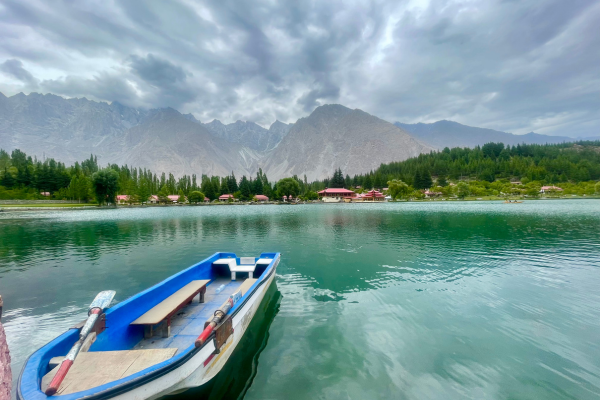
From Islamabad you fly or drive north into Gilgit-Baltistan, Pakistan’s northernmost territory, and from there transfer east along the Indus Valley to Skardu. The route itself is an introduction to the landscape: the Indus River cuts a dramatic gorge between cliffs that soar thousands of metres above the water, with small walnut-tree villages clinging to alluvial fans above the flood line. Skardu town sits on a wide river terrace beneath the rugged Kachura range, and the nine days unfold in a series of day excursions and short overnight stops that cover the region’s essential destinations. Satpara Lake and Lower Kachura Lake offer turquoise water flanked by snow peaks. Upper Kachura and Shangrila Resort — the legendary Nine Heaven Hotel set on a lotus-covered lake — give you one of Pakistan’s most photographed scenes. The Shigar Valley, an hour from Skardu, contains the 17th-century Shigar Fort (converted into an atmospheric heritage hotel), ancient rock carvings by Silk Road travellers, and the headwaters of the Braldu River that drains the K2 massif.
The tour’s centrepiece is the Deosai National Park, reached by a high mountain road that climbs from Skardu to 4,114 metres above sea level. Deosai — the name means Land of Giants in Shina, the local language — is the world’s second-highest plateau and one of the few places outside Russia where the Himalayan brown bear survives in the wild. In summer the plateau transforms into an ocean of wildflowers: golden buttercups, purple iris, yellow poppies, and dozens of alpine species that bloom briefly in the window between snowmelt and the first autumn frost. The drive across Deosai to Sheosar Lake and Bara Pani is one of the most extraordinary road journeys in Pakistan, with a silence and a scale that make a profound impression on nearly every visitor who experiences it. The tour also includes the Khaplu and Ghanche districts in the upper Shyok Valley — home to the beautifully restored Khaplu Palace, the ancient Chaqchan Mosque (one of the oldest surviving mosques in Central and South Asia), and some of the warmest hospitality in all of Gilgit-Baltistan.
This itinerary is well suited to travellers in ordinary good health who enjoy walking on flat or gently sloping terrain. There is no technical climbing or multi-day trekking involved: the longest daily walk is approximately four kilometres on well-defined paths. However, the altitude of Deosai (4,114m) means acclimatisation is important, and the tour is designed with rest days and a gradual ascent profile to allow your body to adjust. Travellers who have experienced mild altitude sickness before, or who have any cardiovascular concerns, should consult their GP before booking. The tour departs from July through October, when passes are clear and Deosai is accessible — September is particularly outstanding for the wildflower season and stable weather before the first autumn snows.
All travel within Pakistan is by private vehicle with experienced drivers who know the roads, the conditions, and the people. Your English-speaking guide accompanies the group from arrival to departure and handles all logistics, permits, and local arrangements. Accommodation ranges from comfortable mid-range hotels in Skardu and Islamabad to the unique Shangrila Resort on Kachura Lake and the historic Khaplu Palace for an optional upgrade. Meals throughout the tour draw on the outstanding produce of Baltistan — fresh river trout from Satpara Lake, Skardu-grown apricot jam and walnut oil, slow-braised mutton, and stone-ground bread baked the same way it has been for centuries. For nine days you will inhabit a part of the world that most people have never heard of, and leave with a understanding of Pakistan that almost no outside visitor ever acquires.
Day by day
1Day 1: Arrival in Islamabad
Arrive at Islamabad International Airport, where our team will welcome you and transfer you to your hotel. After a relaxing afternoon, we will gather in the evening for a welcome dinner and briefing. Overnight stay in Islamabad.
2Day 2: Islamabad to Chilas via Babusar Top (Drive Time: 10–11 hours)
Today we set out toward Chilas, journeying through the lush valleys of Kaghan and stopping at Lulusar Lake and Babusar Top. We follow the winding mountain roads to arrive in Chilas by evening. Overnight stay in Chilas.
3Day 3: Chilas to Skardu (Drive Time: 8–9 hours)
After breakfast, we depart for Skardu, tracing the route alongside the mighty Indus River. Along the way, we cross the hanging Alam Bridge before reaching Skardu and checking in. Overnight stay in Skardu.
4Day 4: Shangrila, Kachura Lakes, Cold Desert & Shigar Fort
We begin with a visit to Shangrila Resort, nestled by a heart-shaped lake, and explore Lower and Upper Kachura Lakes. From there, we cross the Cold Desert—the world’s highest—and head to Shigar Fort, a restored 17th-century palace. Guests may optionally hike to Kharpocho Fort for sweeping views of the Skardu valley. Overnight stay in Skardu.
5Day 5: Khaplu Valley, Fort & Chaqchan Mosque
We journey into the Ghanche district and explore the traditional villages and poplar-lined roads of Khaplu Valley. Stops include the beautifully restored Khaplu Fort and Chaqchan Mosque—one of the oldest mosques in the region. We end the day with a visit to the serene Manthoka Waterfall before returning to Skardu. Overnight stay in Skardu.
6Day 6: Deosai National Park & Sheosar Lake (Drive Time: 5–6 hours round trip)
After breakfast, we head to the Deosai Plateau, elevated at 4,000m. Known as the “Land of Giants,” the region is rich in rare wildlife and alpine views. We visit Sheosar Lake, Bara Pani, and Kala Pani before returning to Skardu. Overnight stay in Skardu.
7Day 7: Skardu to Besham/Naran (Drive Time: 9–10 hours)
We leave Skardu and travel via Besham or Naran, depending on road conditions. Along the way, enjoy dramatic scenery and pass through Abbottabad, Mansehra, or the green alpine forests of the Kaghan Valley. Overnight stay in Besham/Naran.
8Day 8: Besham/Naran to Islamabad – City Tour (Drive Time: 7–8 hours)
On our return to the capital, we check in and explore Islamabad’s landmarks including the grand Faisal Mosque. Our journey concludes with a farewell dinner at the scenic Monal Restaurant in the Margalla Hills. Overnight stay in Islamabad.
9Day 9: Departure
After breakfast, transfer to Islamabad Airport for your return flight. End of tour.
What you will experience
- Explore the panoramic Kachura Lakes and scenic Shangrila Resort
- Traverse the Cold Desert and discover the historic Shigar and Khaplu Forts
- Visit Chaqchan Mosque and meet the warm locals of Ghanche district
- Roam the alpine plains of Deosai National Park and marvel at Sheosar Lake
- Enjoy cultural sights in Islamabad including Faisal Mosque and Monal Viewpoint
What to bring
A practical starting point for this trip. Your guide will send a final, weather-checked list two weeks before departure.
Documents & essentials
- Passport valid 6+ months, plus photocopies stored separately
- Pakistan visa or e-visa confirmation printout
- Travel insurance certificate (mandatory — must cover altitude if trekking)
- Flight tickets and this itinerary, printed and on your phone
- Cash in USD or EUR for exchange; cards are not widely accepted outside major cities
- Passport-sized photographs for permits and hotel registration
Clothing
- Layered clothing — northern valleys are cool at night even in summer
- Fleece or insulated jacket for high passes such as Khunjerab and Babusar
- Light waterproof jacket
- Comfortable walking shoes plus sandals or trainers
- Modest clothing covering shoulders and knees for mosques, forts and villages
- A scarf or shawl (women should carry one for religious sites)
- Sun hat and sunglasses — UV is intense at altitude
Health & personal care
- Personal medication with a copy of the prescription
- Basic first-aid kit: blister plasters, painkillers, antihistamine, rehydration salts
- Anti-diarrhoeal and a broad-spectrum antibiotic if your doctor advises it
- High-factor sunscreen (SPF 50) and SPF lip balm
- Insect repellent
- Hand sanitiser and wet wipes
- Toilet paper — not reliably supplied outside hotels
Electronics
- Universal adapter — Pakistan uses type C and D sockets, 230 V
- Power bank; mains power is intermittent in mountain areas
- Camera with spare batteries — cold drains them quickly
- Phone with offline maps downloaded before departure
Good to have
- Reusable water bottle to reduce plastic waste
- Small padlock for luggage
- Snacks you like — choice is limited outside cities
- Earplugs and eye mask for long drives and shared lodges
- A small gift or postcards from home if you plan to visit local families
Before you travel
Best Time to Visit Skardu
Skardu sits at 2,438 metres above sea level in the heart of Gilgit-Baltistan, and the seasons here are more dramatic than almost anywhere else in Pakistan. Late March and April mark the shoulder season, when the valley floor is carpeted in apricot and cherry blossom — one of the most photographed spectacles in the country — and temperatures are cool but manageable, typically ranging from 5°C overnight to around 18°C by midday. Visitor numbers are still modest in spring, roads are improving after winter closure, and the extraordinary clarity of the mountain air makes this an ideal window for photography around Satpara Lake, the old Skardu Fort, and the lower reaches of the Indus gorge.
May and June represent the pre-monsoon high season, when most roads into the higher valleys have reopened after winter snowfall and the famous Deosai National Park begins its thaw. The plateau sits at over 4,114 metres above sea level, making it the second-highest plateau in the world, and by late June the vast grasslands erupt in wildflowers while Himalayan brown bears emerge from hibernation to graze openly in the meadows. Temperatures in Skardu town reach a warm 25–28°C by day during this period, but nights cool sharply to around 10–12°C, so a warm layer for evenings is essential even in early summer.
July and August are the peak summer months and the busiest period in Skardu. The main valley roads are fully operational, the Indus River runs high and turquoise with glacial meltwater, and the full complement of guesthouses, local guides, and 4WD operators is in service. Views of the great Karakoram peaks — K2 at 8,611 metres, Broad Peak at 8,047 metres, and the four Gasherbrum summits — are clearest on early mornings before afternoon cloud builds over the high ridges. Daytime temperatures reach 28–32°C in the valley, but the altitude means even a passing cloud can drop the temperature noticeably, and evenings always require a fleece or light down jacket.
September and October are widely regarded as the golden season for Skardu. The monsoon influence fades, skies stabilise, and the poplar trees lining every road and field edge turn to brilliant gold and amber. Deosai remains accessible through September, wildlife sightings intensify as animals prepare for winter, and the river valleys glow in the low autumn sun. October brings the first dusting of snow to the higher peaks and passes, temperatures drop to around 14–16°C by day with near-freezing nights, and there is a genuine poignancy to the landscape — a sense of a place preparing for its long winter rest — that makes the autumn light particularly affecting.
Access to Skardu is by a 45-minute domestic flight from Islamabad Benazir Bhutto International Airport, operated by PIA, Airsial, and Serene Air. These flights are highly weather-dependent and cancellations are common, particularly in early and late season when cloud sits low over the Karakoram foothills. We strongly advise building at least one buffer day into your Islamabad arrival before your domestic connection north. The overland alternative via the Karakoram Highway through Chilas is a 20–24-hour road journey and is rarely practical as a first choice, but it forms a viable and spectacular backup when flights are grounded. Your tour leader will manage all contingencies and keep you informed in real time.
Travel Tips for UK Visitors
British passport holders are eligible for a Pakistani visa on arrival at Islamabad International Airport, valid for 30 days and priced at approximately £35–45. Alternatively, the online e-visa portal at visa.nadra.gov.pk allows you to apply before departure, with typical processing of 24–72 hours. Either route requires a valid passport with at least six months of remaining validity, a confirmed return or onward ticket, and evidence of accommodation. We recommend the e-visa as it removes any uncertainty on arrival and allows you to move quickly through immigration. Carry a printed copy alongside the digital version saved on your phone and in your email.
Flights from the UK to Pakistan route through Dubai (Emirates), Doha (Qatar Airways), Abu Dhabi (Etihad), or Istanbul (Turkish Airlines), with total journey times from London to Islamabad in the range of 14–17 hours including the connection. PIA also operates a direct London Heathrow to Islamabad service several times weekly, which avoids the connection entirely. All major UK departure airports — London Heathrow, Manchester, Birmingham — are well served by the Gulf carriers. Islamabad Benazir Bhutto International Airport is a modern, well-equipped facility where domestic connections to Skardu depart from the same terminal building, so no inter-airport transfer is required.
The currency is the Pakistani Rupee (PKR). The exchange rate at the time of writing is approximately 350–360 PKR to the pound sterling, though rates fluctuate. Cash is essential throughout Gilgit-Baltistan. ATMs exist in Skardu town but are unreliable and frequently run out during peak season. Carry a substantial supply of Rupees exchanged in Islamabad, where the bureaux de change in the Blue Area or at the airport consistently offer competitive rates. Credit and debit cards are not accepted at guesthouses, restaurants, or markets in the mountain regions. Budgeting approximately £20–30 per day for incidentals — snacks, souvenirs, tips — is a sensible guide.
Health preparation should begin four to six weeks before departure. Recommended vaccinations include hepatitis A, typhoid, and a tetanus booster; consult your GP or a travel health clinic for personalised advice. Comprehensive travel insurance with medical evacuation cover is non-negotiable for this region — helicopter evacuation from Skardu to Islamabad in a genuine emergency can cost several thousand pounds without cover. Carry a personal first-aid kit including blister plasters, oral rehydration salts, anti-diarrhoea medication, and high-factor sun cream. The UV index at altitude is substantially stronger than in the UK. Diamox (acetazolamide) is widely used as a prophylactic against altitude sickness and is available at Pakistani pharmacies, but should be discussed with your GP before departure as it is contraindicated in some conditions. Drink only bottled or purified water throughout the trip.
Accommodation on This Tour
In Skardu town, this tour uses established mid-range hotels that represent the best the region currently offers in terms of comfort and reliability. The Concordia Hotel and Mashabrum Hotel are both well-regarded properties on the central Skardu road, offering clean en-suite rooms with consistent hot water, in-room electric heaters for cold nights, and restaurant service covering generous local Balti meals — rice-based dishes, slow-cooked daal, fresh tandoor bread, and locally grown apricots in season. Wi-Fi is available in lobbies and some rooms, though bandwidth is limited. Beds are comfortable, rooms are clean, and the staff are unfailingly warm and proud to host international guests. Rooms on the upper floors of both properties offer extraordinary mountain views.
The Shangrila Resort at Lower Kachura Lake is one of the most iconic overnight stops in Pakistan and features on this itinerary. The resort sits directly at the edge of a vivid turquoise lake ringed by willow trees, with the snow-dusted Karakoram rising dramatically behind. The heritage-style lakeside cottages are a step up in comfort from standard Skardu hotels, and the resort restaurant is a deservedly famous lunch and dinner destination. The main building famously incorporates the fuselage of a 1940s aircraft into its unusual architecture, making it one of the most photographed structures in northern Pakistan.
On the Deosai plateau, accommodation shifts to high-quality tented camps operated by our local partner. Each camp features sleeping tents with proper camp beds or thick foam mattresses, a dining tent with gas-heated cooking, and basic latrine facilities. The camps are positioned at approximately 4,100 metres elevation, and temperatures after dark can fall below 0°C even in the height of summer. A sleeping bag rated to −5°C is strongly recommended — guests can rent one through their tour operator if needed. Sleeping on the world’s second-highest plateau, surrounded by a silence broken only by wind and the distant call of short-toed eagles circling the grasslands below Nanga Parbat’s Rupal Face, is one of the most memorable experiences this itinerary delivers.
Local Culture and Etiquette in Gilgit-Baltistan
Gilgit-Baltistan is home to a predominantly Muslim population divided between Shia, Sunni, and a significant Ismaili community, particularly in the Karakoram valleys. The Ismaili communities, followers of the Aga Khan, are notably progressive in their social outlook — women are educated and publicly active, mixed company is more common, and the more conservative codes encountered in parts of the Punjab or Khyber Pakhtunkhwa are somewhat relaxed here. That said, modest dress remains the standard expectation for all visitors and should be observed consistently throughout the region.
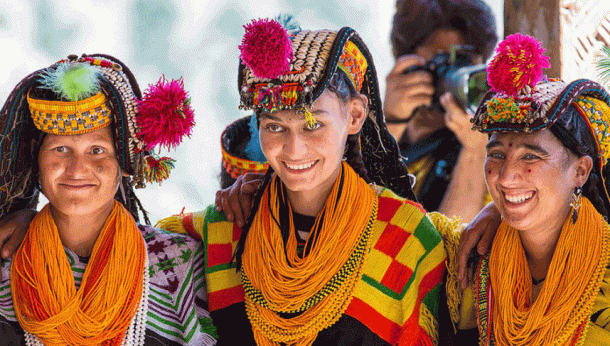
For women, this means covering shoulders and knees in public at all times. Loose, long-sleeved tops and trousers or a long skirt are both culturally appropriate and practically sensible for the variable mountain temperatures. A lightweight headscarf is worth carrying for visits to mosques, shrines, or more rural communities — it doubles as useful sun protection at altitude. Male visitors should avoid shorts outside of active trekking situations. Photography of local people is one of the genuine pleasures of Skardu: always ask before photographing individuals, particularly women and elders. A smile and a questioning gesture is universally understood, and the majority of people will agree warmly. Sharing the resulting photograph on your phone screen is always a delightful moment of connection.
Tipping is appreciated but not customary in the Western sense. A suggested range is 200–500 PKR per day for guesthouse staff and drivers, and 500–1,000 PKR per day for personal guides on multi-day tours — your tour leader will advise on timing and amounts. Alcohol is not available in Gilgit-Baltistan, which is a dry region by law, and attempting to import it is strongly inadvisable. Pakistani hospitality in the north runs on sweet milk tea (chai), green cardamom tea (kahwa), freshly baked bread, and the particular warmth that comes from receiving guests in a place that so rarely sees them. Accepting both the tea and the time it takes to drink it is one of the best small investments any visitor to the mountains can make.
Safety and Health Information
Altitude sickness is the primary health consideration on this tour. Skardu itself at 2,438 metres is already high enough to cause mild symptoms in some visitors on their first night, and the Deosai plateau excursion at over 4,100 metres takes guests well into serious altitude territory. Acute mountain sickness (AMS) presents as persistent headache, fatigue, nausea, loss of appetite, and disturbed sleep. Symptoms are most common among people who ascend rapidly without acclimatisation. This itinerary is designed with a rest day in Skardu built in before the Deosai excursion. To minimise risk: ascend gradually, drink three to four litres of water daily, avoid alcohol on the first nights at each new elevation, and listen carefully to your body. If symptoms worsen rather than improve, descend immediately and consult medical advice. Diamox is a useful prophylactic for those prone to AMS — discuss it with your GP before travel.
Mountain road safety is a genuine consideration in Gilgit-Baltistan. The roads connecting Skardu to the surrounding valleys — Deosai, Khaplu, Shigar — are narrow, often unsealed jeep tracks built into sheer cliff faces with unguarded drops on the downhill side. Rockfall, landslides, and flash floods are seasonal hazards that drivers navigate as a matter of routine. All vehicle movements on this tour use experienced, locally-based drivers in well-maintained 4WD vehicles, and our partners adhere strictly to daylight-only driving policies on exposed mountain roads. Journey times are always longer than the distances suggest — a 60-kilometre valley road can take three hours — and a relaxed attitude to the pace makes for a far more enjoyable experience. The scenery through the windows is, without exception, extraordinary.
Medical facilities in Skardu are limited to the District Headquarters Hospital, which handles basic emergencies competently but lacks the surgical and intensive care capacity of an urban centre. For serious medical events, evacuation to Gilgit (45 minutes by air) or Islamabad (1 hour 15 minutes by air) would be required. Emergency numbers include 1122 for the Rescue 1122 service in Gilgit-Baltistan and 15 for police. The Pakistan Tourism Development Corporation maintains a tourist police presence in Skardu and is generally responsive to visitor concerns. All guests are required to carry comprehensive travel insurance with medical evacuation cover as a condition of booking — this will be confirmed in writing at the time of reservation.
When to travel
Trekking season. Highlighted months are when we run this itinerary. Private departures can be arranged on any date — just ask.
Dates shown are guide departures. Exact start dates are confirmed at the time of booking and can be adjusted to suit your flights.
Plan your 9 Days in Skardu – A Scenic Escape to Lakes, Valleys & Deosai
Tell us your dates and we will build this itinerary around them — private guide, your pace, your interests. We reply within one working day.
Or call +92 342 5017535
Questions travellers ask
1. What is the best time to visit Skardu and Deosai National Park?
The ideal time to visit Skardu and Deosai is between June and September, when the weather is pleasant, roads are accessible, and alpine destinations like Sheosar Lake and Bara Pani are in full bloom. These months are perfect for a Skardu Valley tour and exploring the Deosai Plains.
2. Is the Skardu tour suitable for families and beginner travelers?
Yes, this Skardu family tour is designed for all experience levels. With private transport, guided visits, and optional hikes, it’s an ideal choice for first-time travelers to Gilgit-Baltistan looking for comfort, nature, and cultural exploration.
3. What are the top attractions covered in this 9-day Skardu itinerary?
This itinerary includes Shangrila Resort, Kachura Lakes, Shigar Fort, Khaplu Valley, Chaqchan Mosque, Deosai National Park, and Manthoka Waterfall. These are among the most visited places in Skardu and perfect for scenic photography and cultural insights.
4. What should I pack for the Skardu tour?
Pack warm layers, hiking shoes, sunblock, a reusable water bottle, and travel essentials. Since temperatures in Skardu and Deosai can drop significantly, especially at night, it’s important to dress in layers for this northern Pakistan adventure tour.
5. Is there mobile network and internet access in Skardu and Deosai?
In Skardu city, mobile coverage is available (Jazz and SCOM work best). However, during trips to remote areas like Deosai and Upper Kachura, expect limited or no signal. It’s advisable to inform loved ones and download offline maps before heading out.