
Fairy Meadows Trek (2026) – 7 Days at Nanga Parbat Base Camp
7 Days & 6 Nights camping adventure from £449 per person.
Duration
Accommodation
Season
Difficulty
Price
About this journey
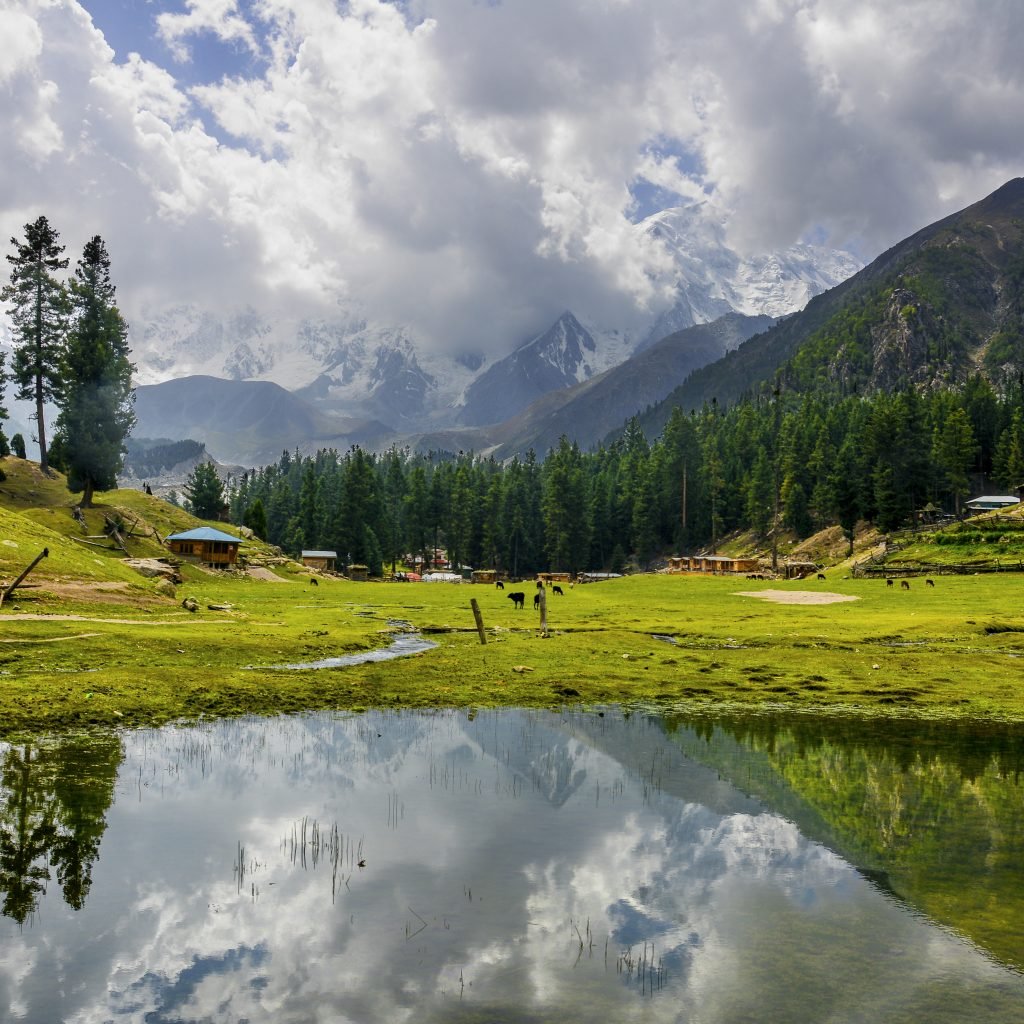
Into the Wild is a 7-day adventure to one of the most dramatic and spiritually charged places in Asia — Fairy Meadows, a lush alpine plateau at 3,300 metres above sea level that sits directly beneath the south face of Nanga Parbat (8,126m), the world’s ninth-highest mountain. The name Fairy Meadows — Joot in the local Shina language — was given by a German mountaineering expedition in the 1930s, and it is a name that feels entirely earned. The meadow is exactly what it sounds like: a wide, wildflower-strewn plateau of extraordinary green, ringed by pine forests, with the impossibly vast south face of Nanga Parbat filling the entire upper horizon.
Nanga Parbat is not just a mountain — it is a legend. Known as the Killer Mountain for the terrible toll it exacted on early climbing expeditions (13 climbers died on a single day in 1937), it is also one of the most beautiful mountains in the world when seen from below. The Raikot Face — the south face visible from Fairy Meadows — rises nearly 7,000 metres of vertical rock and ice from the valley floor at 1,150 metres (Raikot Bridge on the Karakoram Highway) to the summit at 8,126m. From Fairy Meadows at 3,300m, you see approximately 4,800 metres of this face in a single unobstructed view. It is an overwhelming experience even for seasoned mountain travellers.
This 7-day tour is designed for active travellers who want more than a scenic drive — it involves a genuine mountain trek of 3km each way to reach Fairy Meadows, an optional day hike to Nanga Parbat Base Camp (Raikot Base Camp, 3,549m), and the extraordinary jeep journey up the notoriously steep track from Raikot Bridge to Tato village. This is not a technical climb or a mountaineering expedition. But it is a proper adventure that gets you somewhere genuinely remote and rewards you with mountain scenery that is hard to match anywhere on earth.
The tour is equally suited to nature photographers seeking close-up images of a major 8,000-metre peak, trekkers who want an achievable but meaningful mountain experience in Pakistan, travellers curious about the legendary mountaineering history of Nanga Parbat, and those who simply want to spend two nights sleeping under a sky full of stars at altitude with one of the world’s great mountains overhead. The Karakoram Highway sections of the drive also provide an introduction to the broader northern Pakistan landscape — the Indus River gorges, the Kohistan canyon country, and the Chilas petroglyphs site — that gives context to the Fairy Meadows centrepiece.
Day by day
Below is a full day-by-day itinerary for the Into the Wild tour, with descriptions of the route, terrain, physical demands, and key experiences at each stage.
Day 1 – Arrival in Islamabad
Your tour begins with arrival at Islamabad International Airport (IATA: ISB). A guide and driver meet you in the arrivals hall and transfer you to your hotel in central Islamabad. The evening is free for rest or exploration of the nearby F-7 and F-6 restaurant and market areas. A group orientation briefing over dinner covers what to expect over the next seven days, including practical information about the jeep track and the trek to Fairy Meadows. Overnight in Islamabad (508m).
Day 2 – Islamabad to Chilas via Karakoram Highway (approx. 360km, 7–8 hrs)
An early 6am departure north on the Karakoram Highway. The road passes through Abbottabad (1,256m) for a breakfast stop, then drops into the spectacular Indus River gorges of Kohistan — one of the most dramatic road sections in Pakistan, with the grey-green Indus churning hundreds of metres below and sheer cliffs rising on both sides. At Patan and Dasu, terraced wheat fields cling to near-vertical hillsides above the river. A roadside lunch at a local dhaba. Afternoon arrival at Chilas (1,250m), a garrison town in the Diamer district at the foot of Nanga Parbat’s approach. A short visit to the Chilas Rock Carvings — a UNESCO-listed site containing over 50,000 petroglyphs spanning 5,000 years of human activity, from Buddhist pilgrims to Silk Road merchants — is one of the hidden highlights of Day 2. Overnight in Chilas.
Day 3 – Chilas to Raikot Bridge: Jeep to Tato, Trek to Fairy Meadows (3,300m)
The most physically demanding and most exhilarating day of the tour. Depart Chilas at 7am and drive 30km north on the KKH to Raikot Bridge (1,150m) — your first unobstructed ground-level view of the full south face of Nanga Parbat. Transfer to purpose-built 4×4 jeeps for the ascent to Tato village: a 12km track that climbs 1,650m in vertical height, with gradients up to 40 degrees in places, no barriers, and views that will have white knuckles relaxing into wonder by the second kilometre. The journey to Tato (2,800m) takes approximately 45 minutes to 1 hour. From Tato, a 3km walk through pine forest and open alpine meadow (approximately 2 hours at a comfortable pace) brings you to Fairy Meadows (3,300m). The moment the tree line opens and the full panorama appears — Nanga Parbat filling the skyline to an extent that requires physical stepping back to take in — is genuinely unforgettable. Check in to your guesthouse or tented camp. Rest, acclimatise, explore the meadow in the late afternoon. Overnight at Fairy Meadows.
Day 4 – Fairy Meadows: Nanga Parbat Base Camp Day Hike (optional)
A full day at Fairy Meadows. The highlight option is a day hike to Raikot Base Camp (Nanga Parbat Base Camp, 3,549m) — approximately 4–5 hours return from Fairy Meadows through open meadow, moraine field, and the edge of the Raikot Glacier. The base camp offers even closer views of the Raikot Face and the routes attempted by early mountaineering expeditions. This hike is optional — those preferring a rest day at Fairy Meadows can explore the meadow itself, hike to a viewpoint ridge (approximately 1 hour above the camp) for wider panoramic views of the Karakoram Range, photograph wildflowers, or simply spend the day with the mountain. Meals at the camp are served communally and tend toward hearty Pakistani cooking — rice, daal, chapattis, and seasonal vegetables. Overnight at Fairy Meadows.
Day 5 – Beyal Camp Hike and Fairy Meadows Afternoon
A second full day at altitude with a different exploration objective. Morning hike to Beyal Camp (3,700m), a higher viewpoint approximately 3 hours return from Fairy Meadows, used by mountaineering expeditions as an approach camp and offering the most comprehensive close-up view of the Raikot Face available to non-technical visitors. The glacier below the camp is visible and the scale of Nanga Parbat’s buttresses and ice ridges becomes truly apparent from Beyal. Return to Fairy Meadows for lunch. Afternoon free for rest, photography of the meadow in the long afternoon light, and final views of the mountain before departure tomorrow. Overnight at Fairy Meadows.
Day 6 – Fairy Meadows to Raikot Bridge: Drive to Besham or Islamabad
A morning departure from Fairy Meadows — the downhill walk to Tato (3km, approximately 1.5 hours) is noticeably easier than the ascent. Jeep from Tato back to Raikot Bridge, then join the KKH southbound for the long return drive to Islamabad. This is a very long driving day (approximately 360km, 8–9 hours including stops). Overnight in Besham or Abbottabad to break the journey, or full drive to Islamabad for a late arrival if required by departure schedules. Overnight in Besham or Islamabad.
Day 7 – Islamabad: Rest Day or Departure
If overnighting in Islamabad on Day 6, Day 7 is a free morning for rest, Islamabad city sightseeing (Faisal Mosque, Lok Virsa Museum, Pakistani Pavilion, Shakarparian viewpoint), or souvenir shopping at the Jinnah Super and Centaurus Mall. Transfer to Islamabad International Airport for your departure flight. Tour ends on check-in. If you have a very early departure, a late-night return from Besham on Day 6 may be preferable to ensure arrival at the airport with adequate time.
What you will experience
- Stand beneath the south face of Nanga Parbat (8,126m) at Fairy Meadows — one of the most dramatic mountain views in the world
- Ride the legendary jeep track from Raikot Bridge to Tato: a 40-degree ascent through pine forest with no barriers and extraordinary views — an experience that feels exactly as wild as it looks
- Hike to Nanga Parbat Base Camp (Raikot Base Camp, 3,549m) and walk the moraine field at the foot of the Raikot Glacier
- Sleep two nights at Fairy Meadows (3,300m) under a sky of extraordinary star density, with Nanga Parbat visible all night
- Ascend to Beyal Camp (3,700m) for the most comprehensive close-up view of the Raikot Face available to non-technical visitors
- Discover the Chilas Rock Carvings — one of the world’s largest concentrations of petroglyphs, spanning 5,000 years of human passage along the Indus
- Drive the Karakoram Highway through the Kohistan gorges — one of the most dramatic road sections in Asia
- Experience the scale of Nanga Parbat at dawn from Fairy Meadows, when the summit ignites in alpenglow while the valley below remains in darkness
What to bring
This tour requires more careful packing than a standard sightseeing tour. You will be sleeping at 3,300m, potentially hiking to 3,700m (Beyal Camp), and spending a significant part of Day 3 on a jeep track that is one of the roughest accessible mountain roads in Pakistan. Light and layered is the guiding principle, with warmth taking priority over comfort items.
Sleeping system: A sleeping bag rated to 0°C or -5°C is the single most important item to bring for this tour. Even in July and August, nights at Fairy Meadows reach 2–5°C. Guesthouses supply blankets, but a personal sleeping bag liner or bag gives you temperature control and hygiene assurance. If you do not own a sleeping bag, quality bags are available for purchase or hire in Islamabad before departure.
Clothing layers: 2–3 trekking trouser options (lightweight convertible is ideal). 3–4 moisture-wicking base layer T-shirts. One long-sleeved thermal base layer. A 300-weight fleece mid-layer — cold nights at 3,300m require genuine insulation. A waterproof and windproof shell jacket. A down or synthetic insulated jacket — essential for dawn and evening at Fairy Meadows and for the Base Camp hike. Trekking socks (Merino wool, 4–5 pairs). Warm beanie hat and liner gloves. A brimmed hat and sunglasses for trail use.
Footwear: Waterproof trekking boots with ankle support and a grippy sole are mandatory for the trail from Tato to Fairy Meadows, the Base Camp hike (moraine terrain), and the Beyal Camp ascent. Do not attempt these trails in trainers or casual shoes — the terrain is rocky and irregular. Lightweight sandals or shoes for camp use.
Trekking essentials: Trekking poles are recommended for the ascent to Fairy Meadows (uphill on a narrow trail) and for the Base Camp hike. A headtorch with spare batteries (needed for pre-dawn starts and camp navigation). A daypack of 25–30 litres for carrying water, snacks, a waterproof layer, and camera gear on hiking days. A sturdy main bag (duffel or rucksack) for the rest of your gear — porters at Tato can carry bags from Tato to Fairy Meadows for a small fee (PKR 300–500 per bag) if you prefer not to carry a full load on the first ascent.
Photography: Nanga Parbat’s Raikot Face is one of the world’s great photographic subjects. A telephoto lens (100–400mm or 70–300mm) is the priority — the summit and ice ridges are approximately 5km distant horizontally from Fairy Meadows and need reach to resolve clearly. A wide-angle lens (16–35mm) for the meadow, the pine forest, and the panoramic context shots. A sturdy compact tripod for pre-dawn and post-sunset Nanga Parbat photography when the light is most magical. Multiple batteries (cold drains them quickly). Multiple SD cards. Lens cloths and a UV filter for each lens.
Before you travel
Best Time to Visit Fairy Meadows
Fairy Meadows and Nanga Parbat Base Camp are accessible from approximately mid-May to mid-October each year, with the window depending on snowmelt (spring) and the first heavy snowfall (autumn).
Mid-May to mid-June brings spring colour to Fairy Meadows — wildflowers emerge as the snow melts, the meadow turns vivid green almost overnight, and the first trekking groups of the season arrive. This is an excellent time to visit if you can accept slightly cooler temperatures (5–15°C at Fairy Meadows by day, 0–5°C at night) and the possibility of afternoon cloud that can obscure the mountain. The jeep track from Raikot Bridge to Tato is usually clear by early May but confirmation before travel is recommended.
Late June and July are the warmest and most colourful months at Fairy Meadows. The meadow is carpeted with wildflowers in extraordinary variety and density — buttercups, geraniums, gentians, and alpine composites. Temperatures are comfortable (12–18°C by day at Fairy Meadows, 3–8°C at night). Skies are generally clear in the morning with some afternoon cloud build-up; the best views of Nanga Parbat are at dawn and early morning before cloud develops. July and August see the highest visitor numbers.
August is peak season — warm, fully accessible, and busy. Accommodation at Fairy Meadows (simple wooden guesthouses and tented camps) fills up quickly in August; book at least 8–12 weeks in advance. Mountain views remain excellent in the mornings. An occasional monsoon-fringe shower can occur in August afternoons.
September is widely favoured by experienced Pakistan travellers for Fairy Meadows. Skies stabilise after the last monsoon influence, temperatures remain mild (10–16°C by day), visitor numbers thin from mid-September, and the mountain views are exceptionally clear. The first light dustings of autumn colour begin appearing in the pine trees around Tato village.
October brings dramatically colder conditions at Fairy Meadows (3–8°C by day, -5 to 0°C at night) and the possibility of early snowfall. The meadow takes on golden autumn tones. A warm sleeping bag is essential. The jeep track to Tato typically closes for the winter by late October or early November. October is rewarding for those equipped for cold but not recommended without proper cold-weather gear.
Travel Tips for UK Visitors
UK passport holders require a visa for Pakistan, available as an e-Visa through visa.nadra.gov.pk. The tourist e-Visa costs approximately £35–45 (the fee is set in US dollars at $50 and converted at current exchange rates). Processing time is 3–5 working days. The visa is issued electronically and linked to your passport number — no physical sticker is required, though carrying a printout or phone screenshot of the approval letter is advisable.
Flights from the UK: Direct flights from London Heathrow to Islamabad (ISB) are operated by Pakistan International Airlines (PIA), with a flight time of approximately 8 hours. Connecting flights via Turkish Airlines, Emirates, Qatar Airways, or Etihad typically add 2–6 hours. Return fares from UK airports range from approximately £450 off-season to £900 during peak summer, with the best prices found 3–5 months ahead of travel. If possible, leave arrival flexibility in your booking for Day 1 — delayed or disrupted flights do occasionally affect early-morning KKH departure schedules, and a buffer day in Islamabad prevents the itinerary from being compressed.
Currency: Pakistani Rupee (PKR) is the local currency. In 2026, £1 buys approximately 350–380 PKR. Exchange in Islamabad at the start of the tour at a licensed money changer in the F-7 Supermarket area or Blue Area. ATMs do not exist in Chilas, Tato, or at Fairy Meadows — all transactions in these areas are cash-only. Bring sufficient PKR cash from Islamabad for the entire mountain section. Estimated cash needed beyond the tour cost: PKR 30,000–40,000 (approximately £80–115) for tips, snacks, gemstone purchases, and extras.
Health preparation: Consult a GP or travel clinic 4–6 weeks before departure. Recommended vaccinations: typhoid, hepatitis A, tetanus booster. Altitude sickness protocol is important for this tour — you ascend to 3,300m on Day 3 (arriving at Fairy Meadows in a single day from Chilas at 1,250m). This is a rapid ascent and some altitude symptoms are common on the first night. Drink at least 3 litres of water per day from Day 2, avoid alcohol on arrival night at Fairy Meadows, eat lightly, and rest. Ask your GP about acetazolamide (Diamox) as a prophylactic. Comprehensive travel and medical insurance including helicopter rescue is strongly recommended for trekking above 3,000m.
Accommodation on This Tour
Accommodation on the Into the Wild tour spans three distinct types, reflecting the nature of the journey from capital city to remote alpine meadow.
In Islamabad, you stay in a comfortable 3-star city hotel in the F-7 or Blue Area district, with air conditioning, Wi-Fi, and an in-house restaurant. This is a transit night before the main journey begins.
In Chilas, accommodation is in a clean, well-established guesthouse or mid-range hotel on the main KKH — functional and comfortable with private bathrooms, hot water, and a reliable restaurant. Chilas is a working town rather than a tourist destination; the guesthouse is your base for the petroglyphs visit and the start of the next day’s drive to Raikot Bridge.
At Fairy Meadows, accommodation is in wooden log-cabin style guesthouses or purpose-built tented camps, depending on the season and group size. The guesthouses are simple but characterful: timber frames, basic furniture, solar-powered lighting, supplied blankets and bedding (we recommend supplementing with your own sleeping bag rated to 0°C or below), and shared bathroom facilities with cold water (or solar-heated water in season). The tented camps provide standing-height tents with camp beds, supplied sleeping bags (verify temperature rating with us when booking), and a communal dining tent. Meals at both guesthouses and camps are Pakistani mountain cooking: rice, lentil daal, chicken or mutton curry, fresh chapattis, and morning eggs. The communal dining experience with other trekkers and mountaineering groups is an unexpected social highlight of the Fairy Meadows stay.
On the return journey in Besham or Abbottabad, a clean roadside guesthouse or small hotel provides a comfortable overnight before the final drive to Islamabad. These properties are functional transit accommodation rather than destination stays.
Local Culture and Etiquette
The route from Islamabad to Fairy Meadows passes through three culturally distinct regions. Islamabad is a cosmopolitan capital city with a relaxed social atmosphere. The Kohistan and Chilas sections pass through Sunni Muslim communities in Diamer district, which are notably more conservative than Hunza — dress modestly in these areas and women in the group should travel in the vehicle rather than walking in Chilas town. The Fairy Meadows and Tato area is home to a small community of Shia Muslim residents from Diamer and Astore districts who run the guesthouses, manage the jeep track, and act as porters — they are generally friendly and accustomed to international visitors.
Respect for the mountain: Nanga Parbat is a sacred mountain to local communities. Do not treat the base camp as a tourism destination without awareness of its significance as a site where many climbers have died. Be respectful at memorials and cairns on the approach and at the base camp.
Photography at Fairy Meadows: The meadow and mountain are freely photographable. Always ask permission before photographing guesthouse workers, porters, or local residents. Avoid photographing women without explicit permission — the Tato and Fairy Meadows community is conservative in this regard. Children are usually enthusiastic subjects but parental consent should be sought where possible.
Litter and environmental responsibility: Fairy Meadows is a fragile alpine ecosystem. Please carry all non-biodegradable waste back to Tato and Raikot Bridge — do not leave plastic bottles, packaging, or batteries in the meadow. Passage to Pakistan enforces a strict no-litter policy on all tours and our guides carry a pack-it-out kit. Biodegradable waste (food scraps) should be disposed of away from water sources in designated areas.
Tipping: Jeep drivers (shared, PKR 500–600 per vehicle per trip, adjust for private), porters from Tato to Fairy Meadows (PKR 300–500 per bag per way), guesthouse cook/staff at Fairy Meadows (PKR 300–500 per night per person is appreciated), your main guide from Islamabad (PKR 2,000–3,000 per day). Always tip in PKR banknotes — coins and foreign currency are of limited use in remote mountain areas.
Safety and Health Information
Fairy Meadows and Nanga Parbat Base Camp involve a genuine mountain environment at altitude, and this tour carries different risks from a standard sightseeing tour. That said, with proper preparation, the route is safe and appropriate for fit, moderately experienced walkers.
Altitude: You arrive at Fairy Meadows (3,300m) on Day 3 having slept at 1,250m (Chilas) the previous night. This is a significant one-day altitude gain. Mild AMS symptoms on the first night at Fairy Meadows — headache, disturbed sleep, reduced appetite — are common and usually resolve by the second morning. The key mitigation is hydration: drink 3–4 litres of water on Day 3 and the morning of Day 4. If you plan to attempt the Base Camp hike (3,549m), ensure you have had at least one full night of acclimatisation at Fairy Meadows first. Your guide carries supplemental oxygen and is trained in AMS recognition and response. Descend to Tato if symptoms worsen rather than improve overnight.
The jeep track: The road from Raikot Bridge to Tato is steep, rough, and has no safety barriers. All jeeps on this route are driven by local specialists who know the track intimately. Passenger safety record on this route is excellent. If you are a nervous passenger on mountain roads, inform your guide in advance — there are sections where keeping your eyes on the valley view rather than the road edge is recommended.
Trail safety: The trail from Tato to Fairy Meadows is a well-used footpath with no technical sections. The Base Camp approach crosses moraine and some loose rock — take care on descent and use trekking poles for stability. The Beyal Camp approach is steeper but not technical. No ropes, crampons, or mountaineering equipment are required for any route on this tour.
Emergency resources: There is no mobile phone signal at Fairy Meadows. The nearest hospital is in Chilas (District Headquarters Hospital Diamer). In the event of a serious medical emergency, rescue is by jeep to Raikot Bridge, then vehicle to Chilas or Gilgit. Helicopter rescue (arranged by the tour operator from Islamabad) is possible in good weather and is why comprehensive travel insurance with helicopter evacuation cover is not optional for this tour — it is a genuine necessity. If you bring a satellite communicator (Garmin inReach or SPOT), ensure it is fully charged before leaving Islamabad.
When to travel
Fairy Meadows is best visited May through September when the trail is snow-free. July and August offer the clearest skies for Nanga Parbat views. Private departures available.
Plan your Fairy Meadows Trek
Tell us your preferred dates and we’ll arrange 4×4 transfers, camping equipment, permits and a certified mountain guide for your Nanga Parbat Base Camp adventure.
No commitment. We will reply within 24 hours with a personalised quote.
Questions travellers ask
Q: How difficult is the trek from Tato to Fairy Meadows?
The trek is approximately 3km in length and takes 1.5–2.5 hours depending on your pace and fitness. The trail gains approximately 500 metres of altitude and is mostly a footpath through pine forest with some rocky sections toward the top. It is classified as moderate — equivalent to a long uphill walk in a UK countryside park (Snowdonia or the Lake District) rather than a demanding mountain hike. Trekking poles are recommended. Porters from Tato can carry your bag for a small fee (PKR 300–500) if you prefer to walk with just a daypack.
Q: How close does this tour get to Nanga Parbat?
From Fairy Meadows, you are approximately 15km horizontal distance from the summit of Nanga Parbat, and the bottom of the Raikot Glacier is approximately 4–5km from the camp. At Nanga Parbat Base Camp (Raikot Base Camp, 3,549m), you are at the edge of the moraine with clear views of the glacier and the lower buttresses of the Raikot Face. This is as close as it is possible to get without mountaineering equipment and technical skills.
Q: Is there electricity and phone signal at Fairy Meadows?
Most Fairy Meadows guesthouses have solar panels that provide limited lighting and occasional phone charging (one charge per day per guest is typical). There is no mobile phone network signal at Fairy Meadows. Bring a portable charger with sufficient capacity to last 2 nights without mains power. If staying connected is important to you, a satellite communicator device (Garmin inReach Mini, approximately £300–400 to purchase in the UK) is the only reliable option for messaging from Fairy Meadows.
Q: What is the minimum fitness level required for this tour?
You need to be able to walk uphill for 2–2.5 hours with a loaded daypack on an uneven footpath. If you regularly walk in the UK countryside — a long day in the Peak District, the South Downs Way, or the Brecon Beacons — you have the base fitness this tour requires. Dedicated training for 4–6 weeks before departure (regular uphill walks of 90 minutes or more, three times per week) makes the ascent to Fairy Meadows and the Base Camp hike considerably more enjoyable.
Q: Can I combine this tour with a visit to Hunza Valley?
Yes, and this is a popular combination. The standard approach is to add 3–4 days in Hunza Valley before or after the Fairy Meadows section, as both are served by the same Karakoram Highway north from Islamabad. Hunza is approximately 230km north of Raikot Bridge. A combined 10–12 day tour covering Hunza, Khunjerab Pass, and Fairy Meadows is available from Passage to Pakistan — contact us for details and pricing.