Guided tour
Grand Northern Pakistan Tour (2026) – 13 Days in Gilgit-Baltistan
13 Days & 12 Nights guided journey from £999 per person.
Duration
Group type
Season
Difficulty
Price
About this journey
The Grand Northern Pakistan Tour is a 13-day odyssey through the roof of the world, taking you deep into the Gilgit-Baltistan region — home to five of the planet’s fourteen 8,000-metre peaks and some of the most awe-inspiring mountain scenery on earth. This tour is designed for travellers who want to experience Pakistan in its fullest northern expression: ancient Silk Road trading posts, turquoise glacial lakes, soaring granite towers, and extraordinary hospitality from communities in Hunza, Gilgit, and Baltistan that have welcomed travellers for centuries.
Starting in Islamabad, you travel north along the legendary Karakoram Highway (KKH), widely regarded as one of the greatest engineering achievements of the 20th century. Completed in 1979 after two decades of construction, the KKH cuts through the Karakoram mountain range at altitudes exceeding 4,700 metres, hugging cliff faces above the Indus River gorge before descending into the lush Hunza Valley at 2,438 metres above sea level. From Hunza, the tour continues east to Skardu — the gateway to K2, Broad Peak, and the Baltoro Glacier — before finishing with a visit to the enchanting Fairy Meadows beneath the formidable south face of Nanga Parbat (8,126m), the world’s ninth-highest peak.
This tour is ideal for active travellers in reasonable physical condition who do not need to be experienced trekkers or mountaineers. While the route takes you to altitudes above 4,500 metres at Khunjerab Pass (the highest paved international border crossing in the world at 4,693m), the majority of travel is by vehicle on sealed or improved gravel roads. Short hikes and walks are incorporated throughout, allowing you to step into the landscape at a pace that suits your energy and curiosity.
The tour is equally well suited to photographers seeking extraordinary light on glaciated peaks, culture enthusiasts interested in Silk Road history and Ismaili traditions, history buffs tracing 900-year-old fortresses and ancient rock carvings, and those simply seeking an adventure that very few of their peers will have experienced. With a ratio of one guide per ten guests and English-speaking local specialists at every key destination, the Grand Northern Tour balances comfort with genuine cultural immersion.
Accommodation throughout the tour is in carefully selected mid-range guesthouses and hotels that offer clean rooms, reliable hot water, and a flavour of local character. Meals combine the best of Pakistani mountain cuisine — fragrant rice pilafs, slow-cooked lamb karahi, fresh stone-baked chapattis, dried Hunza apricots, and locally grown walnuts — with occasional international options where available. From the Rakaposhi viewpoint at 2,800 metres to the shores of the vivid Attabad Lake, from the medieval Baltit Fort perched above Karimabad to the starlit silence of the Deosai Plains at 4,114 metres, this is a journey that permanently alters your sense of what the world contains.
Day by day
Below is a full breakdown of each day on the Grand Northern Pakistan Tour, including the distances covered, the places visited, and the experiences that await at each stage of the journey.
Day 1 – Arrival in Islamabad
Your tour begins with arrival at Islamabad International Airport (IATA: ISB). Your guide and driver meet you in the arrivals hall and transfer you to your hotel in the diplomatic enclave of Islamabad or neighbouring Rawalpindi. The evening is free for relaxation, a walk through the nearby F-7 Supermarket area, and a group orientation dinner where your guide introduces the journey ahead, distributes itinerary notes, and answers your initial questions. Overnight in Islamabad.
Day 2 – Islamabad to Chilas via Karakoram Highway (approx. 360km, 7–8 hrs)
An early breakfast and a 6am departure take you north on the KKH. The road climbs through the Hazara hills past Abbottabad (1,256m), where you stop for a second breakfast, before descending dramatically into the Indus gorges of Kohistan. The Indus River runs far below, a thundering grey-green force between sheer rock walls. The landscape transitions from green valleys to arid canyon country as you approach Chilas (1,250m), a garrison town at the foot of Nanga Parbat’s southern flank. Near Chilas, a short stop at the Chilas Rock Carvings site — over 50,000 petroglyphs spanning 5,000 years — is one of the hidden highlights of this day. Overnight in Chilas.
Day 3 – Chilas to Gilgit via Nanga Parbat Viewpoint (approx. 130km, 3–4 hrs)
The morning drive north follows the Indus River past Raikot Bridge (1,150m), the starting point for Fairy Meadows. Stop here for your first unobstructed view of Nanga Parbat’s Raikot Face — a wall of ice and rock rising nearly 7,000 metres directly above the river. Continue to Gilgit (1,500m), the administrative capital of Gilgit-Baltistan. An optional late-afternoon walk to the Kargah Buddha — a 7th-century rock carving of the Kargah Deity on a cliff face 10 minutes from town — offers a glimpse into the region’s pre-Islamic Buddhist heritage. Overnight in Gilgit.
Day 4 – Gilgit to Karimabad, Hunza Valley (approx. 110km, 2–3 hrs)
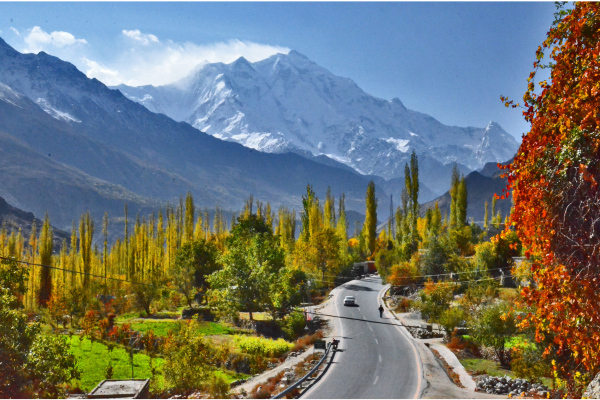
A scenic morning drive north on the KKH brings you to Karimabad (2,438m), historic capital of the old Hunza kingdom, ruled by the Mirs of Hunza until 1974. Stop en route at the Rakaposhi Viewpoint (2,800m) at Minapin village for a magnificent view of Rakaposhi (7,788m). In Karimabad, check in to your guesthouse, then walk up to Baltit Fort — built in the 8th century by Kashmiri craftsmen, restored in the 1990s by the Aga Khan Trust for Culture — and Altit Fort, the older of the two at over 900 years old and now home to a fascinating community museum. The views across the Hunza Valley from both forts are extraordinary. Overnight in Karimabad.
Day 5 – Eagle’s Nest, Duikar Village, Karimabad Bazaar
Rise at 5am and drive 45 minutes up a rough track to Eagle’s Nest viewpoint (3,600m) for the most spectacular sunrise in Hunza — six peaks above 7,000 metres lit in sequence by the first light of day, including Rakaposhi, Diran (7,257m), Ultar Sar (7,388m), and Passu Cones in the distance. Return for breakfast, then spend the morning in Karimabad bazaar sampling dried apricots, walnut oil, gemstone jewellery, and handmade caps. Afternoon hike to Ultar Base Camp (3,000m, approximately 3 hours return), which offers close-up views of the Ultar Sar glacier. Overnight in Karimabad.
Day 6 – Attabad Lake, Passu Cones, Hussaini Bridge
Drive 40km north to the stunning Attabad Lake, created in January 2010 when a catastrophic landslide dammed the Hunza River and flooded the valley for 22km. A local wooden boat takes you across the vivid turquoise water — the colour comes from suspended glacial flour — with the canyon walls rising sheer on both sides. Continue north to Passu village (2,400m), where the extraordinary Passu Cones — cathedral-like towers of eroded rock — rise directly behind the village. Walk the famous Hussaini Suspension Bridge: 200 metres of woven rope and plank above the Hunza River, one of the most dramatic pedestrian crossings anywhere in the world. Return south to Karimabad for your last night in Hunza.
Day 7 – Khunjerab Pass (4,693m) and Gilgit
An early departure takes you north past Attabad Lake and up the increasingly dramatic Khunjerab National Park road to Khunjerab Pass (4,693m) — the highest paved international border crossing on earth and the traditional gateway between Pakistan and China on the Silk Road. Stand at the border marker for photographs, then descend back through the national park, where Marco Polo sheep and snow leopard tracks can sometimes be seen. Drive south to Gilgit for the night, approximately 280km total.
Day 8 – Gilgit to Skardu (approx. 320km, 6–7 hrs or 55 min flight)
Travel east to Skardu (2,438m), capital of Baltistan district and the gateway to the world’s greatest concentration of high peaks. The road follows the Indus River through some of the most dramatic canyon scenery on the KKH. Alternatively, a domestic flight from Gilgit to Skardu (subject to weather — mountain flights are frequently delayed or cancelled) takes 30 minutes and offers extraordinary aerial views. On arrival, visit Kharpocho Fort (the “King of Forts”) perched on a rock above the Indus River, built in the 16th century by Ali Sher Khan Anchan. Overnight in Skardu.
Day 9 – Satpara Lake and Shigar Valley
A full day exploring Skardu’s remarkable surroundings. Morning drive to Satpara Lake (3,500m), a pristine glacial reservoir that supplies Skardu’s drinking water. Afternoon in the Shigar Valley (2,200m), a green-floored oasis lined with apricot orchards and ancient polo grounds, 30km east of Skardu. Visit the beautifully restored Shigar Fort, a 17th-century palace converted into a boutique heritage hotel by the Aga Khan Trust — you are welcome to walk the grounds and view the carved wood interiors even if not staying. Return to Skardu for the night.
Day 10 – Deosai National Park (4,114m)
Full-day excursion onto the Deosai Plains, one of the highest plateaus in the world at an average elevation of 4,114 metres. The plateau covers 3,000 square kilometres and is a UNESCO-recommended protected area, home to the critically endangered Himalayan brown bear (Ursus arctos isabellinus), golden marmots, Himalayan wolves, and over 120 species of migratory bird. In summer (July–August) the plateau is carpeted with wildflowers of extraordinary density and variety. The Sheosar Lake (4,114m) at the edge of the Deosai is simply breathtaking in its stillness. Total driving: approximately 130km return from Skardu.
Day 11 – Skardu to Fairy Meadows (3,300m)
Drive west on the KKH to Raikot Bridge (1,150m), then transfer to 4×4 jeeps for the 12km rough-track ascent to Tato village (2,800m) — a journey of approximately 45 minutes through pine forests on a road with no barriers and substantial drops. From Tato, a 3km walk through alpine meadow (approximately 2 hours at a steady pace) brings you to Fairy Meadows (3,300m), a lush plateau with an absolutely direct, unobstructed view of the entire south face of Nanga Parbat. This is one of the most remarkable places in Asia. Overnight in wooden log-cabin guesthouse or tented camp at Fairy Meadows.
Day 12 – Fairy Meadows: Nanga Parbat Base Camp (optional) and Return
An optional full day hike to Nanga Parbat Base Camp (Raikot Base Camp, 3,549m) — approximately 4 hours return from Fairy Meadows through moraine and glacial terrain with superb close-up views of the Raikot Glacier. Those preferring a rest day can explore the meadow, photograph wildflowers, or simply sit with the mountain. By mid-afternoon, begin the return walk to Tato, jeep to Raikot Bridge, and drive back toward Islamabad. Overnight in Chilas or Besham en route.
Day 13 – Return to Islamabad and Departure
Morning drive completes the return journey to Islamabad (approximately 4–5 hours from Besham). Your guide accompanies you to Islamabad International Airport in time for your departure flight. Tour ends on check-in. If you have a late flight, luggage storage and a city lunch can be arranged.
What you will experience
- Drive the legendary Karakoram Highway — one of the world’s most dramatic mountain roads, crossing the Karakoram range at over 4,700 metres
- Watch the sun rise from Eagle’s Nest viewpoint (3,600m) over six peaks above 7,000 metres in Hunza Valley
- Walk the thrilling Hussaini Suspension Bridge — 200 metres of rope and plank above the rushing Hunza River
- Take a boat across the vivid turquoise Attabad Lake, formed by a 2010 landslide and one of Pakistan’s most photographed natural features
- Stand at Khunjerab Pass (4,693m) — the highest paved international border crossing in the world
- Explore 900-year-old Altit Fort and the beautifully restored Baltit Fort above Karimabad
- Drive the Deosai Plains at 4,114m, one of the world’s highest plateaus and home to Himalayan brown bears
- Sleep at Fairy Meadows (3,300m) with Nanga Parbat (8,126m) directly above — an experience that stays with you forever
- Discover 5,000 years of Chilas petroglyphs — one of the largest concentrations of rock carvings on earth
- Visit the Shigar Fort heritage palace in the apricot-orchard valley above Skardu
What to bring
The Grand Northern Pakistan Tour takes you from a national capital at 508 metres above sea level to 4,693 metres at Khunjerab Pass, with overnights at 3,300 metres at Fairy Meadows. Packing for this temperature range requires careful layering. Here is what is recommended.
Clothing layers: 2–3 pairs of lightweight trekking trousers (zip-off convertible styles are excellent for this tour). 3–4 moisture-wicking base-layer T-shirts. One long-sleeved thermal top. A 200–300 weight fleece mid-layer. A waterproof and windproof outer shell jacket (essential for Khunjerab, Fairy Meadows, and Eagle’s Nest morning visits). A down or synthetic-insulated jacket for evenings at altitude and high-altitude day excursions — non-negotiable even in August. Trekking socks in Merino wool (bring 4–5 pairs). A warm beanie hat and lightweight gloves. A brimmed sun hat for valley days. One set of smart-casual clothing for evenings in Islamabad and Skardu city.
Footwear: One pair of waterproof trekking boots with ankle support is the single most important footwear item on this tour — the Fairy Meadows and Deosai walks require proper grip. Lightweight trail trainers or comfortable walking shoes for guesthouse evenings and Skardu city. Sandals are optional and useful in Islamabad and Gilgit.
Photography equipment: Northern Pakistan is one of the world’s finest photography destinations. Carry a wide-angle lens (16–35mm equivalent) for valley panoramas and a telephoto (70–300mm or 100–400mm) for distant peaks. Multiple SD cards are essential. A sturdy compact travel tripod is worthwhile for sunrise and star photography. Bring lens cloths; dust is significant on mountain roads. A UV filter on each lens protects the glass. Portable chargers and spare batteries — power can be unreliable for hours at a time in mountain guesthouses.
Health and personal items: Sunscreen SPF 50+ (UV radiation is intense above 3,000 metres). Polarised sunglasses with UV400 protection. Insect repellent (evenings in lower valleys). Altitude medication if prescribed by your GP (acetazolamide/Diamox). Rehydration sachets (at least 10). Blister plasters and a basic first-aid kit. Any prescription medications in original packaging with a doctor’s letter. Hand sanitiser and biodegradable wet wipes for remote-area hygiene.
Before you travel
Best Time to Visit Pakistan’s Northern Region
The Grand Northern Pakistan Tour operates from May through October. Each season within this window offers a genuinely distinct experience, and the best time for your visit depends on your priorities.
May and June bring spring colour to the Hunza Valley — cherry blossom arrives in April but the broader valley is green and lush through June, with apricot orchards heavy with ripening fruit. Temperatures in Karimabad are pleasant (16–22°C by day, 5–10°C at night), though Khunjerab Pass may still have patches of snow and temperatures near 0°C. The Deosai Plains open around late May as the snowpack melts. Wildflowers are extraordinary at high altitude in June. Skies are generally clear and mountain views are excellent.
July and August are the busiest months with the warmest temperatures across all altitudes. Valley temperatures reach 24–28°C in Skardu and 20–24°C in Hunza, while high-altitude areas remain cool (10–15°C at Khunjerab, 8–12°C at Fairy Meadows). The Deosai Plains are carpeted with wildflowers. All routes are fully open. The monsoon fringe occasionally brings brief afternoon showers in July and August, and flash flooding can close roads temporarily, but these delays are usually short-lived. This is peak season and accommodation should be booked well in advance.
September is widely considered the finest month for this tour. Skies are clear and stable after the last monsoon rains, autumn colours are beginning to appear in the poplar and willow groves throughout Hunza and the river valleys, and daytime temperatures (16–22°C in valleys, 5–10°C at altitude) are ideal for walking and photography. Tourist numbers thin from mid-September, meaning easier access to viewpoints and a quieter atmosphere.
October brings dramatic golden and amber autumn colour throughout the Hunza and Indus river valleys — for photographers, this can be the most visually spectacular month of all. Temperatures drop to 8–14°C in valleys and nights at altitude are cold (0°C and below at Fairy Meadows and Deosai). Khunjerab Pass typically closes in late October. Confirm road conditions before departure if travelling after 20 October.
Travel Tips for UK Visitors
UK passport holders require a visa to enter Pakistan. The Pakistan e-Visa for tourists is available online at visa.nadra.gov.pk and currently costs approximately £35–45 (the fee is set in US dollars at $50, so the precise GBP amount varies with exchange rates). The application is straightforward: you upload a scan of your passport, a passport-sized photograph, and your hotel booking or tour confirmation. Processing time is typically 3–5 working days. Your e-Visa is linked electronically to your passport number; there is no need to carry a physical stamp or sticker.
Flights from the UK: Pakistan International Airlines (PIA) operates daily direct flights from London Heathrow (LHR) to Islamabad International Airport (ISB), with a flight time of approximately 8 hours. Turkish Airlines, Emirates, Qatar Airways, and Etihad Airways also serve ISB via their respective hubs (Istanbul, Dubai, Doha, Abu Dhabi), with total journey times of 10–14 hours. Return fares from London range from approximately £450 in the off-season to £900 in peak summer, depending on how far in advance you book. Booking 3–6 months ahead typically secures the best fares.
Currency: Pakistan uses the Pakistani Rupee (PKR). As of 2026, £1 buys approximately 350–380 PKR. ATMs are available in Islamabad, Gilgit, and Skardu but are rare or absent in smaller towns and mountain areas. We recommend exchanging £200–300 into PKR cash at a reputable exchange in Islamabad at the start of your tour for incidental expenses — bazaar shopping, tips, and small purchases. Major hotels accept card payments; small guesthouses, petrol stations, and bazaar vendors are cash only.
Health precautions: Consult your GP or a travel clinic at least 4–6 weeks before departure. No vaccinations are mandatory for entry to Pakistan from the UK, but typhoid, hepatitis A, and a tetanus/polio booster are widely recommended. Altitude sickness is a genuine concern above 3,500 metres; your guide will brief you on recognition and response. Comprehensive travel insurance including mountain rescue helicopter evacuation cover is strongly recommended. UK travellers should also register their trip with the FCDO via the British passport holder travel registry.
Accommodation on This Tour
Accommodation throughout the Grand Northern Pakistan Tour is in a combination of mid-range guesthouses, character hotels, and mountain lodges, each carefully chosen for cleanliness, reliability, and a sense of place. In Islamabad, you stay in a 3-star city hotel — air conditioned, with reliable Wi-Fi and an in-house restaurant — in the F-7 or Blue Area district, close to good restaurants and the airport road.
In Chilas and Besham (overnight transit stops), accommodation is in simple but clean guesthouses with private or shared bathrooms and hot water; these are functional stopovers, not destination properties. In Gilgit, you stay in one of the town’s better mid-range hotels near the city bazaar, with en-suite bathroom, satellite TV, and reliable hot showers.
In Karimabad, Hunza, accommodation is in one of the valley’s finest mountain guesthouses — properties like the Hunza Serena Inn, the Eagle’s Nest Hotel, or a comparable boutique lodge, all with direct views across the valley to Rakaposhi and the Karakoram peaks, traditional carved-wood interiors, and warm family hospitality. Many Hunza guesthouses serve home-cooked meals featuring locally grown produce, dried apricots, and fresh-baked bread from their own tandoors.
In Skardu, you stay in a comfortable mid-range hotel near the Indus River, with reliable electricity (generator backup), hot water, and a good local restaurant. At Fairy Meadows, accommodation is in simple but atmospheric wooden log-cabin guesthouses or properly equipped tented camps with supplied bedding, a shared bathroom, and a communal dining area. This is a genuine mountain camp experience — you are sleeping at 3,300 metres with Nanga Parbat directly above, and comfort here is purposefully simple.
Local Culture and Etiquette in Gilgit-Baltistan
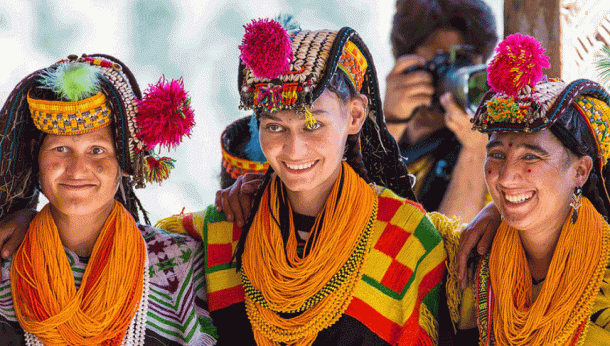
Gilgit-Baltistan is home to a fascinating and diverse mosaic of Muslim communities. Hunza and upper Gilgit are predominantly Ismaili Muslim — followers of the Aga Khan — and this community is notably liberal, educated, and welcoming of international visitors. Baltistan (Skardu and surrounds) is predominantly Shia Muslim. The Diamer district (Chilas area) is predominantly Sunni. Each community has its own distinct character, and Gilgit-Baltistan as a whole has an excellent record for visitor safety and hospitality.
Dress: Both men and women should cover shoulders and knees in villages, bazaars, mosques, and at cultural sites. Female travellers do not need to wear a hijab in Hunza and are generally comfortable travelling and exploring independently in this region. Carrying a light scarf to cover hair when entering mosques or when requested is courteous. Men should remove shoes and hats when entering mosques.
Photography: Always request permission before photographing local people, especially women. A smile and a respectful “Theek hai?” (Urdu for “is this alright?”) or simply pointing at your camera with a questioning expression is universally understood. Never photograph military installations, checkpoints, or anything near the Khunjerab border area. Landscapes, architecture, children (with parental consent), market scenes, and cultural events are generally photographable without issue.
Tipping: Tips are appreciated but not obligatory in the Western sense. A suggested guide for UK visitors: local guide PKR 2,000–3,000 per day (approximately £5.50–8.50), vehicle driver PKR 500–800 per day, hotel porter PKR 200–300 per bag, restaurant staff 10% of the bill. Use PKR banknotes in small denominations for tipping rather than foreign coins, which are difficult to exchange locally. Tips are best given directly and in person at the end of a service rather than through a pooled arrangement.
Greetings and social customs: “Assalamu Alaikum” (peace be upon you) or “Salaam” is warmly received everywhere in the region. Handshaking between men is standard. In traditional households, women may not extend a hand to male visitors; follow the local person’s lead. Accepting tea when offered in a home or guesthouse is a significant gesture of hospitality — politely accept unless you have a medical reason not to. Bringing a small gift (a box of biscuits or sweets from Islamabad) when visiting a family home is appreciated.
Safety and Health Information
Northern Pakistan and Gilgit-Baltistan have an excellent safety record for international visitors. The main risks on this tour are environmental — altitude, road conditions, and mountain weather — rather than security-related. The region is patrolled by the Pakistan Army and the Gilgit-Baltistan Scouts, and tourist safety is a high priority for both local communities and the regional government.
Altitude sickness: The itinerary is designed with a gradual acclimatisation profile. You will ascend from Islamabad (508m) to Karimabad (2,438m) over two days, then progressively to Khunjerab Pass (4,693m) over several more days. This is a manageable profile for most healthy adults. Symptoms of Acute Mountain Sickness (AMS) — headache, nausea, fatigue, loss of appetite — are common above 3,000 metres and do not automatically mean you must descend. Mild AMS responds to rest, hydration, and paracetamol. Your guide carries supplemental oxygen on all high-altitude days and is trained in altitude first aid. Anyone developing severe AMS symptoms (confusion, loss of balance, blue-tinged lips) must descend immediately; this is a medical emergency. If your GP recommends it, carry acetazolamide (Diamox) as a prophylactic.
Road conditions: Mountain roads in this region can be affected by landslides, particularly after heavy rain. Your driver team monitors conditions in real time and the itinerary can be adapted as needed. All vehicles are well-maintained 4×4 Toyota Land Cruisers or Hiace Coasters with experienced mountain drivers who know these roads intimately.
Emergency contacts and resources: The nearest hospitals with surgical capability are in Gilgit (District Headquarters Hospital, tel: 05811-920400) and Skardu (Combined Military Hospital, open to civilians in emergencies). The Aga Khan Health Services network operates primary care clinics throughout Hunza and Gilgit districts. Helicopter rescue is available via Serena Hotels and the Aga Khan network. Travel insurance covering mountain rescue helicopter evacuation is strongly recommended; a policy from a UK provider such as Campbell Irvine or Battleface that explicitly covers trekking above 4,000 metres should be obtained before departure. FCDO travel advice for Pakistan is updated regularly at gov.uk/foreign-travel-advice/pakistan.
When to travel
This tour runs from April through October 2026. The best months are May–September for optimal weather in Gilgit-Baltistan. Private departures can be arranged outside peak season.
Plan your Grand Northern Pakistan Tour
Tell us your dates and we will build this 13-day itinerary around them — private guide, included hotels, and personalised routing from Islamabad to the Karakoram.
No commitment. We will reply within 24 hours with a personalised quote.
Questions travellers ask
Q: Do I need prior trekking experience to join this tour?
No prior trekking experience is required. The longest walk on this tour is the approach to Fairy Meadows (3km, approximately 2 hours uphill on a footpath). All other activities involve short walks on accessible terrain. If you can comfortably walk for 3–4 hours on slightly uneven ground without stopping, you have the physical capability required for this tour.
Q: Is Khunjerab Pass always accessible? What if it is closed?
Khunjerab Pass is typically open from May to October. The Pakistan side closes first, usually in late October or after a significant snowfall event. If conditions prevent access on your scheduled day, the itinerary is adapted to spend additional time in Upper Hunza — visiting Passu Glacier, Shimshal Valley, or Gulmit — and the Pass excursion is attempted again the following day. A Khunjerab Pass alternative itinerary is always held in reserve.
Q: Can I drink the tap water in Pakistan?
Tap water is not safe to drink without treatment throughout Pakistan, including in Islamabad and mountain towns. Your tour includes bottled mineral water in all vehicles. At guesthouses in Hunza and Skardu, water filter systems are common and generally reliable, but we recommend using bottled water throughout for peace of mind. A quality water filter bottle (such as a LifeStraw or Sawyer) is a worthwhile personal item to bring.
Q: What is the group size on this tour?
Standard group departures run with 6–12 participants. We do not exceed 12 guests on a single shared vehicle and guide team, ensuring a high-quality and personalised experience. Private departures for 2–12 people are available on any date throughout the season; contact us to enquire about current pricing.
Q: Is mobile phone coverage and Wi-Fi reliable on this tour?
Mobile coverage (4G/LTE) is available in Islamabad, Gilgit, Karimabad (Hunza), and Skardu, but patchy or absent on road sections through the Kohistan and Diamer gorges. A Pakistan SIM card (available at Islamabad airport from Jazz, Zong, or Telenor, approximately £3–5) provides useful connectivity where signal exists. Wi-Fi at guesthouses is increasingly common in Hunza but slow and intermittent at Fairy Meadows and Chilas. If you need reliable internet access, bring a satellite communicator device (Garmin inReach or SPOT) for emergencies in remote areas. Inform family at home of planned off-grid days in advance.