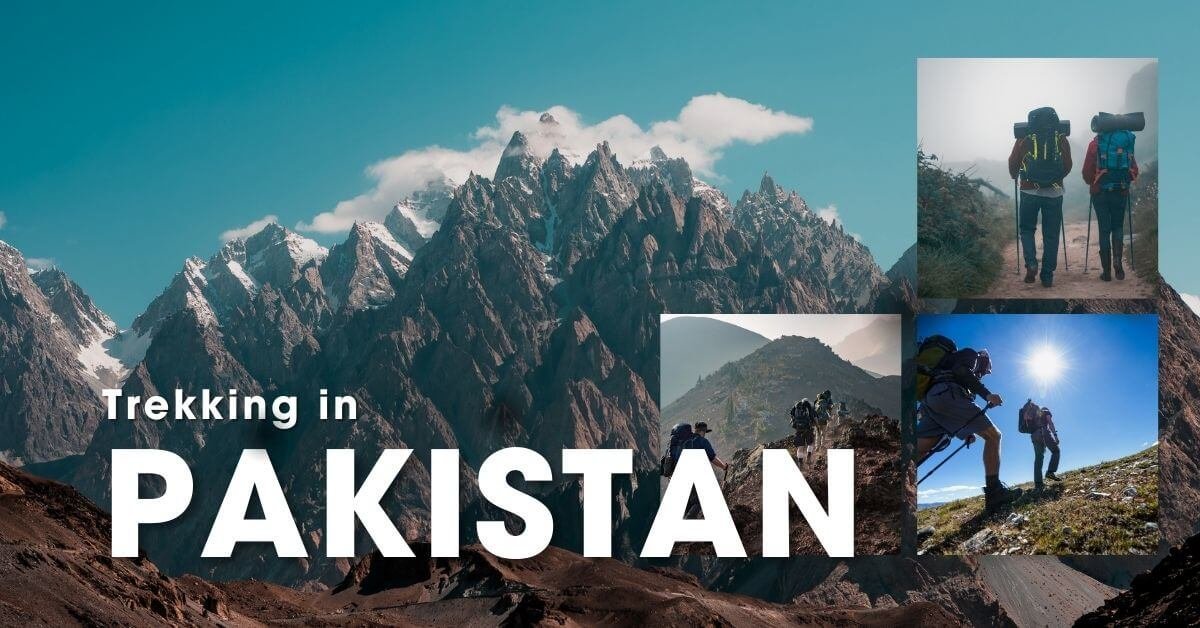
Pakistan is a trekker’s paradise. Few countries on earth compress so much vertical altitude, so many distinct mountain ranges, and such dramatic scenery into one border. The Himalayas, the Karakoram, and the Hindu Kush all converge here, making Pakistan home to five of the world’s fourteen eight-thousanders and some of the most spectacular trekking terrain on the planet. Whether you’re a seasoned mountaineer or a first-time trekker, this guide covers everything you need to plan your perfect Pakistan trekking adventure.
Why Trek in Pakistan?
Pakistan is consistently ranked among the world’s top trekking destinations, yet it remains far less crowded than Nepal or Patagonia. This means you can walk for days in complete solitude, camp beside glaciers without another tent in sight, and experience authentic mountain culture untouched by mass tourism. The warmth of Pakistani hospitality — chai offered by strangers, overnight stays in family guesthouses in remote villages — makes every trek a human journey as much as a physical one.
From the flower-filled meadows of Fairy Meadows to the ancient caravan routes of the Karakoram Highway, every trail tells a story thousands of years in the making. Add to this some of the world’s most affordable guided trekking and you have the recipe for an unforgettable adventure.
Pakistan’s Three Great Mountain Ranges
The Karakoram
The Karakoram is the world’s most heavily glaciated range outside the polar regions. It contains K2 (8,611m), the world’s second-highest mountain, along with Broad Peak, Gasherbrum I and II, and Masherbrum. The Baltoro Glacier — the world’s longest glacier outside the poles at 63 kilometres — flows through its heart. Trekking in the Karakoram means glacier crossings, moraines, and dramatic towers of rock rising sheer from the valley floor.
The Western Himalayas
The westernmost arm of the Himalayan chain sweeps through Gilgit-Baltistan and Azad Kashmir. Nanga Parbat (8,126m) — “The Killer Mountain” — dominates this section. Rakaposhi (7,788m) lords over the Hunza Valley, and the surrounding meadows and forests offer some of Pakistan’s most accessible yet spectacular trekking. The Nanga Parbat and Rakaposhi Base Camp trek is a classic route that gets you up close to both giants in a single expedition.
The Hindu Kush
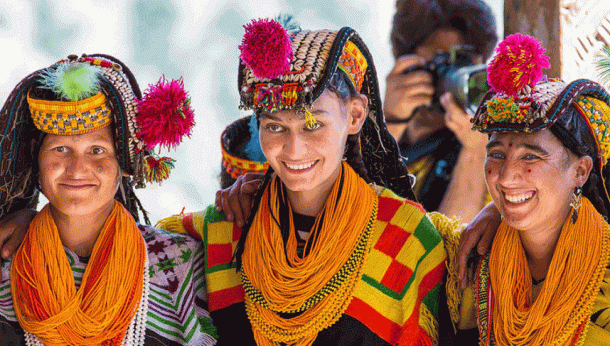
Sweeping through Chitral and the far north-west, the Hindu Kush is wilder and far less visited than its eastern neighbours. Tirich Mir (7,708m) is its highest peak. The Hindu Kush valleys are home to the Kalash people — Pakistan’s only non-Muslim indigenous community — who have maintained their ancient festivals, language, and way of life for millennia. Treks here pass through walnut groves, vineyards, and traditional wooden villages clinging to impossibly steep hillsides.
Best Treks in Pakistan: Top 8 Routes
1. Fairy Meadows Trek (3–5 Days | Easy–Moderate)
Perhaps the most iconic short trek in Pakistan, the Fairy Meadows trek takes you to a flower-carpeted plateau directly beneath Nanga Parbat’s Raikot Face. The trailhead is at Raikot Bridge on the Karakoram Highway; from there a jeep track and then a steep footpath lead up to 3,300 metres. The views of Nanga Parbat — best at dawn when the rose-pink light hits the ice — are among the finest mountain panoramas in the world. Camping at Fairy Meadows then pushing to Beyal Camp and Nanga Parbat Base Camp turns a simple walk into a genuine high-altitude adventure.
2. Rakaposhi Base Camp Trek (5–7 Days | Moderate)
Starting from Minapin village in the Hunza Valley, the Rakaposhi Base Camp trek climbs through pastures and moraines to a camp at around 3,500 metres with Rakaposhi’s 7,788-metre summit filling the entire sky above. The mountain has one of the steepest faces of any peak in the world — a vertical rise of 5,900 metres from the valley floor to the summit in just 11 kilometres. The trek is technically straightforward but physically demanding, and the rewards are extraordinary.
3. K2 Base Camp Trek (16–21 Days | Strenuous)
The K2 Base Camp trek is the holy grail of Himalayan trekking. From Askole — the last village accessible by road — the trail follows the Braldu River and then the Baltoro Glacier for six to eight days to reach Concordia, where K2, Broad Peak, and the Gasherbrum massif all come into view simultaneously. Few sights in trekking can match the Throne Room of the Mountain Gods at Concordia. Reaching K2 Base Camp itself adds another day. This trek requires a proper permit, an experienced licensed guide, and porters; it is one of the most logistically complex but most rewarding treks in the world.
4. Hunza Valley Trails (3–10 Days | Easy–Moderate)
The Hunza Valley offers a range of treks for all fitness levels. The walk from Karimabad to Eagle’s Nest offers stunning views over the confluence of the Hunza and Nagar rivers with Rakaposhi and Ultar Sar towering above. The trek to Ultar Glacier above Karimabad is a half-day scramble rewarded with views of hanging seracs. For longer routes, the trek to Rush Lake — Pakistan’s highest lake at 4,694 metres — is a two-day return that very few foreign trekkers attempt.
5. Deosai Plains Crossing (2–4 Days | Moderate)
The Deosai Plateau — one of the world’s highest plateaus at 4,114 metres — is a vast, treeless highland of wildflowers, streams, and grazing Himalayan brown bears. Crossing Deosai from Skardu to Astore is a multi-day walk through some of Pakistan’s most surreal scenery: rolling tundra under enormous skies, with the peaks of Nanga Parbat visible on the horizon. It forms part of the Skardu Lakes and Deosai tour.
6. Gondogoro La Trek (14–18 Days | Very Strenuous)
A technical high-altitude crossing at 5,585 metres, the Gondogoro La connects the Hushe Valley to Concordia, allowing a circular route from the K2 Base Camp trek. The crossing requires fixed ropes and crampons and is one of the highest trekking passes in the world that non-technical trekkers can attempt with guide support. The views from the pass — four eight-thousanders visible simultaneously — are unmatched anywhere on earth.
7. Chitral–Kalash Valley Trek (5–8 Days | Moderate)
This cultural and mountain hybrid trek passes through the three Kalash valleys — Bumburet, Rumbur, and Birir — in the Hindu Kush foothills. The trail connects valleys via high passes, passing Kalash villages, terraced fields, and walnut forests. It is as much an anthropological expedition as a trekking one. Combine it with one of the Kalash festival tours for a complete Chitral experience.
8. Nanga Parbat Base Camp (4–6 Days | Moderate–Strenuous)
Several routes lead to base camps on different faces of Nanga Parbat. The Raikot Face approach via Fairy Meadows is the most popular. The Rupal Face approach from Tarashing village is longer, wilder, and less visited — the Rupal Face at 4,600 metres is the highest mountain wall on earth. The Diamir Base Camp approach through the Diamir Valley offers a third perspective. All three can be incorporated into a single circumnavigation of the massif for very experienced trekkers with 12–14 days.
When to Trek in Pakistan
The trekking season in Pakistan’s high mountains runs from May to October. The narrow weather window is one of the biggest differences from Nepal, where the spring and autumn seasons are longer and more predictable.
- May–June: Ideal for lower elevation treks (below 4,000m). Fairy Meadows is accessible but snow remains on higher passes. Cherry blossom season peaks in April–May in Hunza.
- July–August: Peak summer. K2 Base Camp and Concordia accessible. Long days, stable weather. High glacier passes open. Best time for Deosai.
- September–October: Autumn gold in Hunza and Gilgit. Crowds thin out. Weather becoming unstable at high altitude by mid-October. Best for photography.
- November–April: High mountain trails closed. Winter tours to Hunza and Naltar Valley offer frozen waterfalls, snow-covered forts, and uncrowded landscapes.
Essential Trekking Permits in Pakistan
Many of Pakistan’s most spectacular trekking areas require permits. The requirements vary by zone and change periodically, so always verify with your tour operator before departure.
- No permit required: Fairy Meadows, Rakaposhi Base Camp, Hunza Valley trails, most Chitral treks.
- Permit required: K2 Base Camp / Baltoro Glacier (Restricted Zone permit), Gondogoro La (Technical Zone permit), Siachen Glacier zone.
- National Park entry: Deosai National Park charges a daily entry fee payable at the gate.
A licensed guide and registered porters are mandatory for Restricted Zone treks. All of Passage to Pakistan’s trekking packages include permits, licensed guides, and full logistics support.
What to Pack for Trekking in Pakistan
Clothing
- Moisture-wicking base layers (wool or synthetic)
- Insulating mid-layer (fleece or down jacket)
- Waterproof shell jacket and trousers
- Warm hat, sun hat, neck gaiter, gloves
- Trekking trousers (convertible style useful)
- Comfortable camp shoes or sandals
Footwear
Broken-in waterproof trekking boots are essential. Approach shoes or trail runners are fine for Fairy Meadows and Hunza Valley walks; stiff-soled mountain boots are needed for Concordia, Gondogoro La, and any glacier travel. Pack two pairs of trekking socks per day of planned walking.
Gear
- 40–60 litre rucksack plus 20–30 litre daypack (porters carry main bag)
- Sleeping bag rated to -10°C minimum for high camps
- Trekking poles (crucial for glacier moraine terrain)
- Headlamp with spare batteries
- Sunscreen SPF50+, glacier glasses, lip balm
- Water purification (filter or iodine tablets)
- First aid kit including altitude sickness medication (Diamox)
Altitude Sickness: What Every Trekker Must Know
Acute Mountain Sickness (AMS) is a real risk on any trek above 3,000 metres. Symptoms include headache, nausea, fatigue, dizziness, and disturbed sleep. The golden rule is never ascend with symptoms. If symptoms appear, stay at your current altitude or descend until you feel better. Most trekkers acclimatise well if they ascend no more than 300–500 metres per day above 3,000 metres and build in rest days.
Diamox (acetazolamide) can help with acclimatisation and is commonly used by trekkers in Pakistan. Consult your doctor before travel. Drink 3–4 litres of water daily, avoid alcohol at altitude, and eat even if you are not hungry. Passage to Pakistan’s guides are trained in wilderness first aid and altitude protocols.
Responsible Trekking in Pakistan
Pakistan’s mountain ecosystems are fragile and increasingly stressed by climate change and growing visitor numbers. Follow the Leave No Trace principles: carry out all rubbish, use established campsites, never cut live wood, and avoid single-use plastics. Hire local porters and guides — it keeps income in mountain communities and supports the conservation of landscapes that local people depend on.
The Karakoram is losing its glaciers faster than almost anywhere on earth — some scientists estimate 30% of glacier mass will be gone by 2050. Respectful, low-impact trekking is the best contribution any visitor can make to the long-term health of these mountains.
How to Book a Trekking Tour in Pakistan
The easiest and safest way to trek in Pakistan is with a registered Destination Management Company (DMC) based in the country. Passage to Pakistan is an Islamabad-based DMC with deep expertise in trekking logistics across all of Pakistan’s mountain ranges. Our trekking packages include airport transfers, internal transport, accommodation, fully licensed guides, registered porters, all meals on trail, camping equipment, and permit handling.
Whether you want a 3-day introduction at Fairy Meadows or a 21-day expedition to K2 Base Camp, we tailor every itinerary to your fitness level, schedule, and interests. Contact us to start planning your Pakistan trekking adventure today.