Hunza Cherry Blossom Tour (2026) – Spring in the Karakoram
Passage to Pakistan's Cherry Blossom Hunza Tour Celebrate the arrival of spring in one of the most enchanting places on Earth—Hunza Valley.
About this journey
Passage to Pakistan’s Cherry Blossom Hunza Tour
Celebrate the arrival of spring in one of the most enchanting places on Earth—Hunza Valley. This 10-day tour is a vibrant and soul-stirring journey through Northern Pakistan, brought to you by PASSAGE TO PAKISTAN, during the magical cherry blossom season, when the rugged Karakoram landscapes burst into shades of pink, white, and crimson.
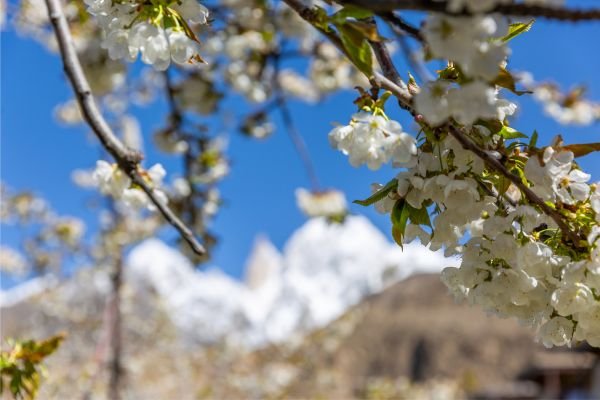
Every year, from late March to mid-April, Hunza transforms into a fairytale. Snow-capped peaks like Rakaposhi, Ultar Sar, and Ladyfinger provide a majestic backdrop to blooming apricot, peach, and cherry trees that line the ancient villages of Karimabad, Gulmit, and Altit.
Your adventure begins in Islamabad, followed by a scenic drive along the world-famous Karakoram Highway, with stops at breathtaking viewpoints, mountain villages, and historical landmarks. In Hunza, stroll through centuries-old stone alleys, visit the beautifully restored Baltit and Altit Forts, and enjoy panoramic hikes above the valley.
Experience the stunning serenity of Attabad Lake, formed by a natural landslide, and take a peaceful boat ride through its surreal blue waters. Discover the dramatic landscapes of Passu, the iconic Passu Cones, and the suspended Hussaini Hanging Bridge—a true test of courage.
Day by day
1Day 1: Arrival in Islamabad
Drive Time: Minimal (Airport to hotel)
Distance: ~30 km from Islamabad International Airport to central Islamabad
Altitude: ~540 m above sea level
Weather/Expected Temperature: Day ~18–24°C, Night ~10–14°C (comfortable spring weather)
Itinerary:
You will be welcomed at Islamabad International Airport and transferred to your hotel in the city. Take this day to rest after your journey, meet with the tour team for briefing about the next days’ road trip through Pakistan’s Northern Areas via the legendary Karakoram Highway. Enjoy a relaxed evening exploring local markets or dining at a recommended restaurant.
Night Stay: Islamabad
2Day 2: Islamabad to Chilas
Drive Time: ~10–12 hrs by road (breaks included)
Distance: ~460–480 km (via Hazara Motorway & KKH)
Altitude: ~1,265 m (Chilas)
Weather/Expected Temperature: Cooler as you ascend; likely daytime ~10–18°C, nights colder (check local forecasts closer to travel date)
Itinerary:
Depart early from Islamabad and head north via the Hazara Motorway, connecting to the Karakoram Highway. Enjoy views of mountain foothills and the Indus River valley. En route, observe constructions like the Diamer–Basha and Dasu dams rising against dramatic landscapes. Arrive in Chilas by late afternoon or evening, check in to your hotel, and rest up for the next day.
Night Stay: Chilas
3Day 3: Chilas to Hunza Valley (Karimabad/Gulmit)
Drive Time: ~7–9 hrs including stops
Distance: ~220–240 km (Chilas → Hunza via Gilgit)
Altitude: ~2,438 m (central Hunza valley)
Weather/Expected Temperature: Day ~5–15°C (cool to mild), nights below ~5°C (potential chill)
Itinerary:
Depart Chilas after breakfast and continue along the Karakoram Highway through spectacular mountainous terrain. On the way, stop at the symbolic junction where the three great mountain ranges — Hindukush, Himalayas and Karakoram — converge for photography and a stretch. Proceed to the Rakaposhi View Point to capture breathtaking views of Rakaposhi and nearby peaks. Arrive in Hunza in the late afternoon and check in to your guesthouse.
Night Stay: Hunza
4Day 4: Heritage and Views in Hunza
Drive Time: Short local drives only
Distance: Minimal local travel
Altitude: ~2,438 m (Hunza)
Weather/Expected Temperature: Cool mountain climate; days ~8–15°C, nights ~0–5°C
Itinerary:
Explore Hunza’s rich heritage. Experience a sunrise from Duikar Viewpoint — offering panoramic aerial views of the valley and peaks. Visit Baltit Fort and Altit Fort, showcasing history and culture atop scenic hilltops with views of vineyards and mountains. Enjoy local Hunza cuisine and interact with welcoming villagers to gain insight into their traditions and way of life.
Night Stay: Hunza
5Day 5: Gojal/Upper Hunza – Gulmit & Borith Lake
Drive Time: ~1–2 hrs (scenic local travel)
Distance: ~80–100 km round trip locally
Altitude: ~2,500–2,650 m in Gulmit and Borith Lake areas
Weather/Expected Temperature: Cool, potential winds around higher lakes; pack warm layers
Itinerary:
Depart for Gojal/Upper Hunza Valley to experience traditional mountain villages. Start with Old House Gulmit & Carpet Centre, then visit the famous Hussaini Suspension Bridge — an iconic yet photogenic crossing. Continue to Borith Lake, a serene high-altitude lake with spectacular mountain reflections. Return to Gulmit for the night.
Night Stay: Gulmit
6Day 6: Ondra Poyga Hike & Passu Exploration
Drive Time: Short transfers in morning and afternoon
Distance: ~local to Passu later ~30–40 km
Altitude: ~2,600 m (Upper Hunza)
Weather/Expected Temperature: Cool to cold at higher elevations; daytime ~5–12°C
Itinerary:
Begin early with a hike to the top of Ondra Poyga, offering expansive aerial views of Hunza’s rugged peaks and valleys. Explore Ondra Fort and Kamari’s Village, then either hike back or return by vehicle. Later in the day, drive toward Passu Village, exploring the village and stunning views of Passu Cones and nearby glaciers.
Night Stay: Gulmit
7Day 7: Hunza to Besham (via Chilas)
Drive Time: ~11–12 hrs (long day drive)
Distance: ~410+ km (Hunza → Besham via Chilas)
Altitude: ~615 m (Besham area)
Weather/Expected Temperature: Warming as you descend; daytime ~12–20°C
Itinerary:
Depart early and retrace part of the Karakoram Highway toward Chilas and beyond to Besham. An optional stop at Shatial — an ancient Buddhist rock carving site — can be included if time permits before continuing. Arrive in Besham in the evening for rest.
Night Stay: Besham
8Day 8: Besham to Islamabad – City Tour & Farewell Dinner
Drive Time: ~7–9 hrs
Distance: ~350–380 km
Altitude: ~540 m (Islamabad)
Weather/Expected Temperature: Pleasant spring weather in Islamabad; ~18–24°C
Itinerary:
Depart Besham for Islamabad. On arrival, embark on a light city tour visiting highlights such as Faisal Mosque, Lok Virsa Museum, and Saidpur Village. Conclude with a farewell dinner at a recommended restaurant celebrating the end of your Northern adventure.
Night Stay: Islamabad
9Day 9: : Return Journey
Drive Time: Airport transfer only
Distance: As required
Altitude: ~540 m (Islamabad)
Itinerary:
After breakfast and packing, you will be transferred to Islamabad International Airport for your return flight. The trip concludes with memories of mountains, culture, and scenic road experiences.
10Day 10: Departure from Islamabad
Transfer to Islamabad International Airport for your departure. End of tour.
What you will experience
- Witness the stunning cherry blossoms of Hunza in full bloom
- Explore the ancient forts of Altit and Baltit with majestic mountain backdrops
- Drive along the iconic Karakoram Highway through valleys and rivers
- Visit Passu Cones, Attabad Lake, and Khunjerab Pass (if accessible)
- Meet the warm people of Hunza and taste the local cuisine
What to bring
A practical starting point for this trip. Your guide will send a final, weather-checked list two weeks before departure.
Documents & essentials
- Passport valid 6+ months, plus photocopies stored separately
- Pakistan visa or e-visa confirmation printout
- Travel insurance certificate (mandatory — must cover altitude if trekking)
- Flight tickets and this itinerary, printed and on your phone
- Cash in USD or EUR for exchange; cards are not widely accepted outside major cities
- Passport-sized photographs for permits and hotel registration
Clothing
- Layered clothing — northern valleys are cool at night even in summer
- Fleece or insulated jacket for high passes such as Khunjerab and Babusar
- Light waterproof jacket
- Comfortable walking shoes plus sandals or trainers
- Modest clothing covering shoulders and knees for mosques, forts and villages
- A scarf or shawl (women should carry one for religious sites)
- Sun hat and sunglasses — UV is intense at altitude
Health & personal care
- Personal medication with a copy of the prescription
- Basic first-aid kit: blister plasters, painkillers, antihistamine, rehydration salts
- Anti-diarrhoeal and a broad-spectrum antibiotic if your doctor advises it
- High-factor sunscreen (SPF 50) and SPF lip balm
- Insect repellent
- Hand sanitiser and wet wipes
- Toilet paper — not reliably supplied outside hotels
Electronics
- Universal adapter — Pakistan uses type C and D sockets, 230 V
- Power bank; mains power is intermittent in mountain areas
- Camera with spare batteries — cold drains them quickly
- Phone with offline maps downloaded before departure
Good to have
- Reusable water bottle to reduce plastic waste
- Small padlock for luggage
- Snacks you like — choice is limited outside cities
- Earplugs and eye mask for long drives and shared lodges
- A small gift or postcards from home if you plan to visit local families
Before you travel
Best Time to See the Hunza Cherry Blossoms
The Hunza Valley cherry blossom season is one of the most breathtaking natural spectacles in all of Asia, and timing your visit correctly is the single most important planning decision you will make. The blossoms typically emerge in late March to mid-April, transforming the valley floor, terraced fields, and village orchards into an ocean of pale pink and white flowers framed by the dramatic snow-dusted peaks of the Karakoram. The exact timing varies by a week or two each year depending on winter temperatures and the speed of the spring thaw; as a general guide, the last week of March through the first two weeks of April offers the best chance of peak blossom across the main Hunza Valley and the sub-valleys of Nagar and Gojal.
What makes Hunza particularly special during blossom season is the combination of landscapes that are simply not replicated anywhere else on earth. The terraced apricot orchards above Karimabad, the ancient carved walls of Baltit Fort rising behind curtains of blossom, the turquoise-blue surface of Attabad Lake glinting beneath the snow-covered faces of the Batura Glacier — and above it all, the permanent bulk of Rakaposhi (7,788m) and Ultar Sar (7,388m) dominating the skyline. Photographers come from around the world specifically for this fortnight of floral fireworks.
Spring in Hunza is still a shoulder season by Pakistani standards, which means the valley is not yet overwhelmed by the summer domestic tourism rush that fills guesthouses from June to August. April brings pleasantly warm days (15°C to 22°C in the valley) and cool evenings (4°C to 10°C at night). Higher passes and viewpoints can still have snow; pack layers accordingly. Mornings in Hunza are often the clearest: the peaks are sharp against a cobalt sky and the blossom is lit beautifully by low morning light. Afternoons can bring haze; plan photography time accordingly.
The Karakoram Highway from Islamabad to Hunza has been progressively improved and is now a comfortable long-distance road journey of approximately 16 to 18 hours — though our itinerary typically combines a domestic flight from Islamabad to Gilgit (50 minutes, spectacular views over Nanga Parbat), followed by the 2-hour road journey from Gilgit to Hunza. This combination offers the best balance of speed, safety, and scenic impact. Gilgit flights are weather-dependent, so we always factor in a contingency road day for our itineraries.
Blossom season tours sell out exceptionally fast — often 9 to 12 months in advance — because the window is short, the destination is unique, and every photo-enthusiast and cultural traveller in Europe seems to have Hunza in April on their bucket list. We have limited spaces per departure and open bookings as early as May for the following spring. If you are considering a spring blossom tour, contact us now rather than waiting until January — by then, most of our April departures will be fully booked.
Travel Tips for UK Visitors
British passport holders receive a visa on arrival at Islamabad International Airport — straightforward, no pre-application required. Bring a passport photo and evidence of your return ticket. The visa fee is approximately £35 to £45, payable in US dollars or Pakistani rupees. Total processing time is typically 20 to 45 minutes at the immigration counter. For a smoother arrival, apply online in advance at visa.nadra.gov.pk, where e-visa approval takes 5 to 10 working days and lets you walk straight through on arrival.
Flights from London Heathrow or Manchester to Islamabad (ISB) take 8 to 9 hours non-stop on PIA, or 10 to 14 hours via Doha, Dubai, or Istanbul on Qatar Airways, Emirates, or Turkish Airlines. April fares typically range from £600 to £950 return. Book early — blossom season demand inflates prices as the window approaches. From Islamabad, the PIA domestic flight to Gilgit (flight time approximately 50 minutes) is one of the most dramatic short-haul routes in the world, passing within gliding distance of Nanga Parbat’s Rupal Face. Pack your camera in your carry-on for this flight and request a window seat. Gilgit Airport is a STOL strip that only operates in clear weather — morning departures have the best chance of proceeding on schedule.
Pakistan’s currency, the PKR, currently exchanges at approximately 350 to 360 per pound sterling. Hunza is more tourist-developed than the Kalash valleys and has more ATM options — there are working ATMs in Karimabad and Aliabad — but reliability for international cards is inconsistent. Draw sufficient cash in Islamabad before departure and keep some in reserve. Bring a mix of 1,000 and 500 PKR notes. The Hunza bazaar in Karimabad sells beautiful semi-precious stones (tourmaline, aquamarine), dried apricots, walnut oil, saffron, and Hunza silk embroidery — allow a budget for shopping. Local SIM cards from Jazz or Zong cost around £3 to £5 and provide reasonable 4G coverage along the KKH and in Karimabad.
Travel insurance with comprehensive medical evacuation coverage is a mandatory requirement for this tour. Medical facilities in Gilgit are more developed than in many other remote northern areas (there is an Aga Khan Health Services network in operation), but serious cases require evacuation. Emergency services: dial 1122 for Rescue Services in Gilgit-Baltistan. Ensure your policy explicitly covers Pakistan and GB province.
Accommodation on This Tour
Hunza in blossom season is served by a surprisingly good range of accommodation for such a remote location, and our tour uses some of the most characterful properties in the valley. In Karimabad — the main village perched on a spur with panoramic views of the valley and Baltit Fort — we typically use Serena Hunza Inn or Eagle Nest Hotel. The Eagle Nest sits at an elevated position above Duiker village with arguably the finest mountain panorama in the entire Hunza Valley: Rakaposhi, Diran, Ultar Sar, and the snowy shoulders of the Batura Glacier visible from the terrace where breakfast is served. During blossom season, the valley below the hotel is a carpet of pink and white that visitors describe as the single most beautiful view they have ever experienced.
Serena Hunza Inn offers a more polished hotel experience with well-appointed rooms, reliable hot water, and a garden restaurant where local dishes are served with commanding valley views. Both properties are in high demand during blossom season and require advance reservation 6 to 9 months out — another reason why early tour booking is essential. We also incorporate one or two nights in Gilgit, where we use the Gilgit Serena or comparable mid-range properties with en-suite facilities and reliable services.
Rooms at altitude-facing properties can be cool even in April, particularly at night. Pack a fleece and a light down jacket for evenings. All breakfasts and most dinners are included as per the itinerary; lunches are typically at local dhabas (roadside restaurants) along the KKH, which serve excellent fresh chapati, dal, and grilled chicken. Dietary requirements should be noted at booking. Hunza is predominantly Muslim and alcohol is not available at any hotel or restaurant.
Local Culture and Etiquette
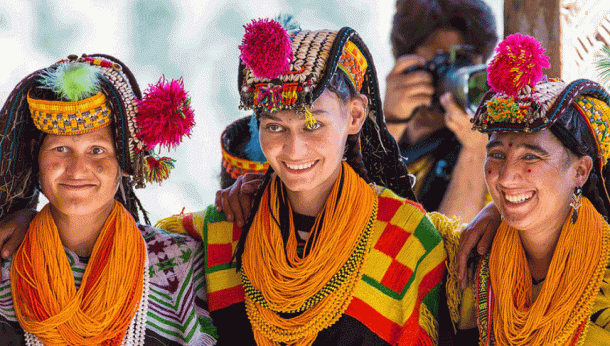
Hunza has been welcoming foreign visitors longer than almost anywhere else in northern Pakistan — the Aga Khan Development Network has had a significant presence in the region for decades, investing in education, healthcare, and heritage conservation. The Hunzakuts are predominantly Ismaili Muslim and are known for their warmth, literacy, and progressive attitudes. Women can travel in Hunza with considerable freedom compared to many other parts of Pakistan, though modest dress — loose clothes covering arms and legs — is expected and appreciated throughout.
The ancient Baltit Fort (restored by the Aga Khan Trust for Culture) and Altit Fort are the cultural centrepieces of Hunza and are unmissable — both charge a small entry fee (around 1,500 PKR) that supports ongoing conservation. Your guide will explain the history of the Mirs of Hunza (the ruling dynasty that inhabited Baltit Fort for 700 years) and the complex web of Silk Road trade that flowed through this valley for centuries. Photography is welcomed at both forts though some interior areas prohibit flash photography.
Blossom season brings a modest influx of Pakistani and international visitors to Hunza. Respect private orchard land — many of the most photogenic blossom views are on family-owned terraces. Ask permission before entering an orchard or a homestead garden to photograph. Dispose of all litter responsibly; the pristine mountain environment of Hunza is worth protecting. Tipping: guide 700 to 1,000 PKR per day; driver 300 to 500 PKR per day; hotel staff 200 to 300 PKR per stay.
Safety and Health Information
Karimabad sits at approximately 2,400 to 2,500 metres above sea level, and the Attabad Lake viewpoints and upper valley villages reach 2,600 to 2,800 metres. These are moderate altitudes for fit adults, but arriving from sea level warrants a sensible acclimatisation approach. Spend the first day in Hunza walking gently, staying well-hydrated, avoiding excessive alcohol or caffeine, and not attempting strenuous hikes immediately. Symptoms of mild altitude sickness — headache, fatigue, mild nausea — are common on day one and usually resolve with rest and hydration. If symptoms worsen or include breathlessness at rest or confusion, descent and medical review are required.
The KKH between Gilgit and Hunza is a well-maintained major road, though mountain driving always requires care and experienced drivers. Sections near Attabad Lake pass through a dramatic gorge with high rockfall potential after spring rains; our drivers are experienced on this route. The domestic Islamabad-to-Gilgit flight is a spectacular but inherently weather-dependent operation; build a buffer day into your return travel and do not book a connecting international flight from Islamabad on the same day as your Gilgit flight.
Health considerations: bring all prescription medications in sufficient supply. A basic first aid kit, rehydration sachets, ibuprofen, antihistamine, and blister plasters cover most contingencies. Sunscreen and UV-blocking sunglasses are essential — UV intensity at altitude is significantly higher than at sea level, and the reflection off snow and glaciers amplifies this. A good sun hat is equally important. Drink bottled or filtered water throughout; a reusable filtered bottle is environmentally responsible and practically sensible. Travel insurance with helicopter evacuation is mandatory — confirm it covers Pakistan and GB specifically.
When to travel
Cherry blossom season. Highlighted months are when we run this itinerary. Private departures can be arranged on any date — just ask.
Dates shown are guide departures. Exact start dates are confirmed at the time of booking and can be adjusted to suit your flights.
Plan your Cherry Blossom Tour: Islamabad to Hunza Tour
Tell us your dates and we will build this itinerary around them — private guide, your pace, your interests. We reply within one working day.
Or call +92 342 5017535
Questions travellers ask
1. When is the best time to visit Hunza Valley for cherry blossoms?
The best time to witness cherry blossoms in Hunza is from late March to mid-April. During this period, the valley bursts into shades of pink, white, and red blossoms, offering one of the most scenic springtime views in Northern Pakistan.
2. What are the main highlights of the Hunza Cherry Blossom Tour?
Key highlights include Altit & Baltit Forts, Attabad Lake, Passu Cones, Eagle’s Nest sunset point, and scenic drives through Nagar Valley and Hopper Glacier. The tour is designed to combine cultural exploration with seasonal photography opportunities.
3. Is this tour suitable for families and international travelers?
Yes, this is a family-friendly and foreigner-friendly tour that includes comfortable accommodation, guided visits, and scenic drives. It’s perfect for nature lovers, couples, photographers, and anyone wanting to enjoy the spring blossoms in Gilgit-Baltistan.
4. What should I pack for a spring tour in Hunza?
Pack layered clothing, as temperatures in March–April range from 8°C to 18°C. Bring a warm jacket, camera, sunglasses, sunscreen, and comfortable shoes. Since it’s a photography-focused tour, a good zoom lens or drone is also recommended.
5. What kind of accommodation and transport are included in this cherry blossom tour?
The tour includes stays in scenic hotels and boutique guesthouses in Hunza, Gilgit, and Nagar, with private transportation throughout the journey. Airport transfers, meals, guided excursions, and all entry tickets are part of this all-inclusive spring tour package.