Nanga Parbat & Rakaposhi Base Camp Trek (2026) – 10 Days & 9 Nights
Get ready to trek through two of the most legendary mountain landscapes on Earth in this once-in-a-lifetime 10-day expedition.
About this journey
Get ready to trek through two of the most legendary mountain landscapes on Earth in this once-in-a-lifetime 10-day expedition. Designed for nature lovers, photographers, and adventure seekers, this tour takes you to the base of two mighty peaks—Nanga Parbat, the western anchor of the Himalayas, and Rakaposhi, the jewel of the Karakoram.
Starting with a scenic flight from Islamabad to Gilgit or Skardu, you’ll save time and energy for the trails ahead. From there, you’ll dive straight into high-altitude magic, trekking through ancient pine forests, alpine meadows, and glacier-fed valleys under the towering shadows of 8,000-meter giants.
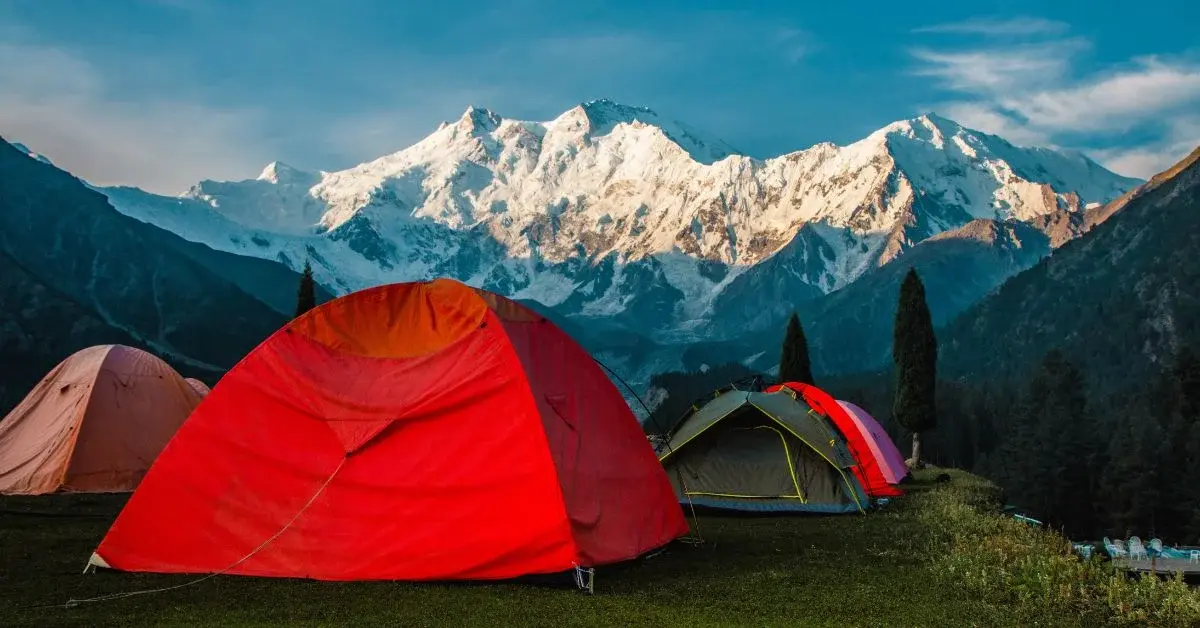
Begin your adventure in the mystical Fairy Meadows, one of the most beautiful alpine plateaus in the world. After a thrilling jeep ride to Tato Village and a 3-hour trek, arrive at Fairy Meadows where your wooden hut awaits, facing the majestic Nanga Parbat (8,126m)—also known as the “Killer Mountain.”
Spend two nights here, including a full-day hike to Nanga Parbat Base Camp, passing through Beyal Camp with surreal views, wildflowers, and glacier-fed streams.
After your descent, journey north into the Nagar Valley to begin your trek to the Rakaposhi Base Camp (Tagaphari). Starting from the beautiful Minapin Village, this 2-day trek leads you through dense forests and onto the Hapakun campsite, then higher up to a meadow facing the monstrous Rakaposhi (7,788m), one of the tallest relief drops in the world. Camp under the stars with the glacier at your feet.
This tour includes domestic flights between Islamabad and Gilgit (or Skardu), minimizing long drives and maximizing your time in the mountains. Ground support, porters, camping gear, and experienced trekking guides are all included for a smooth and safe journey.
Day by day
1Day 1: Arrival in Islamabad
Arrive at Islamabad International Airport, meet your guide, and transfer to your hotel. After rest, enjoy a short tour of Islamabad and gear check. Overnight stay in Islamabad.
2Day 2: Flight to Gilgit – Drive to Hunza (Flight: 1 hour, Drive: 2–3 hours)
Take a scenic morning flight to Gilgit (weather permitting). Upon arrival, drive to Karimabad in Hunza Valley. Visit Altit Fort or relax at your guesthouse with views of Rakaposhi. Overnight stay in Karimabad.
3Day 3: Drive to Minapin – Trek to Hapakun Camp (Drive: 1 hour, Trek: 3 hours)
After breakfast, drive to Minapin and begin your trek to Hapakun Camp (2,800m). The trail winds through pine forests with views of Diran and Rakaposhi. Set up camp in the forest. Overnight camping.
4Day 4: Trek to Rakaposhi Base Camp & Return (Trek: 6–7 hours round trip)
Today’s trek takes you to Rakaposhi Base Camp (3,600m). Walk across rocky paths, glacier crossings, and alpine meadows. After lunch with stunning views, descend to Minapin. Drive back to Hunza. Overnight stay in Karimabad.
5Day 5: Hunza to Raikot Bridge – Trek to Fairy Meadows (Drive: 6 hours, Trek: 3 hours)
Drive south to Raikot Bridge and transfer to jeeps for the off-road adventure to Tattu Village. Begin your scenic 3-hour trek to Fairy Meadows. Settle into your wooden cabin or tent. Overnight stay in Fairy Meadows.
6Day 6: Trek to Nanga Parbat Base Camp (Trek: 6–7 hours round trip)
A full-day hike through green meadows and rocky moraine takes you to Nanga Parbat Base Camp (3,967m), with one of the most dramatic views in the world. Return to Fairy Meadows for dinner. Overnight stay in Fairy Meadows.
7Day 7: Return to Gilgit (Trek + Drive: 6–7 hours)
Hike down to Tattu Village and take a jeep back to Raikot Bridge. From there, drive to Gilgit. Explore the local bazaar if time allows. Overnight stay in Gilgit.
8Day 8: Day Excursion to Naltar Valley (Drive Time: 2.5 hours one-way)
Take a scenic jeep ride to the forested valley of Naltar, known for its alpine lakes and vibrant flowers. Enjoy lunch by the lakeside and return to Gilgit. Overnight stay in Gilgit.
9Day 9: Flight to Islamabad – City Tour (Flight: 1 hour)
Catch a morning flight to Islamabad. Upon arrival, explore Faisal Mosque, Lok Virsa Museum, and enjoy a farewell dinner at Monal Restaurant in the Margalla Hills. Overnight stay in Islamabad.
10Day 10: Departure from Islamabad
Transfer to the airport for your onward flight. End of tour.
What you will experience
- Experience Pakistan’s two most iconic treks: Nanga Parbat Base Camp (Fairy Meadows) and Rakaposhi Base Camp
- Fly into the mountains for more time on the trail, less time on the road
- Trek through alpine meadows, lush forests, and glacier valleys
- Explore the cultural charm of the Hunza and Gilgit regions
- Enjoy guided hikes, local cuisine, and camp under the stars
What to bring
A practical starting point for this trip. Your guide will send a final, weather-checked list two weeks before departure.
Documents & essentials
- Passport valid 6+ months, plus photocopies stored separately
- Pakistan visa or e-visa confirmation printout
- Travel insurance certificate (mandatory — must cover altitude if trekking)
- Flight tickets and this itinerary, printed and on your phone
- Cash in USD or EUR for exchange; cards are not widely accepted outside major cities
- Passport-sized photographs for permits and hotel registration
Trekking clothing
- Broken-in trekking boots with ankle support — do not bring new boots
- Camp shoes or trainers for evenings
- Thermal base layers (2 sets), moisture-wicking
- Fleece or softshell mid-layer, plus an insulated jacket for camp
- Waterproof shell jacket and overtrousers
- Trekking trousers (2 pairs) and quick-dry shirts
- Trekking socks (4–5 pairs) plus liners
- Sun hat, warm hat and gloves — temperatures swing sharply with altitude
Trekking equipment
- Daypack, 30–35 L, with rain cover
- Duffel or kit bag for porter-carried gear
- Sleeping bag rated to −10°C (rentable locally on request)
- Trekking poles, adjustable
- Headtorch with spare batteries
- Water bottles or hydration bladder, 2–3 L total capacity
- Water purification tablets or filter
- Dry bags or heavy-duty liners to keep kit dry
Health & personal care
- Personal medication with a copy of the prescription
- Basic first-aid kit: blister plasters, painkillers, antihistamine, rehydration salts
- Anti-diarrhoeal and a broad-spectrum antibiotic if your doctor advises it
- High-factor sunscreen (SPF 50) and SPF lip balm
- Insect repellent
- Hand sanitiser and wet wipes
- Toilet paper — not reliably supplied outside hotels
- Altitude sickness medication (Acetazolamide) — discuss with your doctor before travel
Electronics
- Universal adapter — Pakistan uses type C and D sockets, 230 V
- Power bank; mains power is intermittent in mountain areas
- Camera with spare batteries — cold drains them quickly
- Phone with offline maps downloaded before departure
Good to have
- Reusable water bottle to reduce plastic waste
- Small padlock for luggage
- Snacks you like — choice is limited outside cities
- Earplugs and eye mask for long drives and shared lodges
- A small gift or postcards from home if you plan to visit local families
Before you travel
Best Time for Nanga Parbat and Rakaposhi Base Camp Trekking
Trekking to the base camps of two of Pakistan’s most iconic peaks requires precise seasonal timing. The high-altitude trails open only after winter snows clear and close again when autumn frost returns, giving a reliable window of roughly late May to early October. Within that window, three distinct periods each offer something different.
Late May to mid-June is the first viable window of the season. Snow is still retreating from the upper trails, the meadows around Fairy Meadows — the broad alpine plateau beneath Nanga Parbat’s Raikot face at approximately 3,300 metres — are ablaze with wildflowers, and the weather is typically at its most stable. The outer monsoon has not yet reached the western Karakoram, meaning extended runs of clear, crystal-blue skies are common. Overnight temperatures can drop to -2°C so warm sleeping gear is essential, while midday temperatures in clear conditions reach a pleasant 16°C to 20°C. Those seeking pristine trails, minimal trekking traffic and unspoilt mountain atmosphere will find June exceptional.
July and August are peak trekking season across Pakistan’s high mountains. Days are long and warm, the Karakoram Highway is in smooth operation, the guesthouses at Fairy Meadows are fully staffed and the trekking community is at its most vibrant. The views of Nanga Parbat’s 4,600-metre Raikot face at dawn are consistently breathtaking. Afternoon cloud and occasional short-lived thunderstorms are the trade-off — mornings are almost always clear, and a good waterproof layer is all the precaution needed.
September and early October are arguably the finest months of all. The outer monsoon retreats, the skies settle into long crystalline clarity, temperatures moderate comfortably at all altitudes and the autumn colours of the poplar and willow trees lining the Hunza Valley irrigation channels add a further layer of beauty to an already spectacular landscape. Trails are quieter, guesthouse prices drop slightly from peak season and the mountains reveal themselves in that particular amber-and-gold autumn light that photographers prize above all others. Snow can arrive at higher elevations from mid-October; the base camps are typically accessible throughout September.
Travel Tips for International Visitors
International visitors require a Pakistan Tourist e-Visa before arrival. Apply online at visa.nadra.gov.pk; the fee is approximately £35 to £45 for a 30-day single-entry visa, with processing taking three to five working days. Apply at least two weeks before departure. Trekking routes in Gilgit-Baltistan do not currently require a separate trekking permit for the Fairy Meadows and Rakaposhi Base Camp approaches, though our team confirms current requirements before every departure as regulations can change.
UK flights connect to Islamabad International Airport (ISB) via Emirates (Dubai), Qatar Airways (Doha), Turkish Airlines (Istanbul) or Etihad (Abu Dhabi) from London Heathrow, Manchester and Birmingham — total journey time including stopover is 14 to 17 hours. From Islamabad the tour proceeds north along the Karakoram Highway (KKH), one of the world’s great mountain roads, through Besham, Chilas and on to Raikot Bridge for Fairy Meadows — a road journey of 12 to 14 hours that is a dramatic adventure in itself, following the Indus River gorge beneath the first close views of Nanga Parbat.
Pakistan uses the Pakistani Rupee (PKR), with sterling exchange rates typically between 340 and 370 PKR per pound. Cash is absolutely critical: there are no reliable ATMs north of Gilgit and even Gilgit’s machines can be unreliable for international cards. Withdraw a generous supply of rupees in Islamabad before the tour — our team provides a detailed suggested cash budget at booking so you arrive fully prepared. A local SIM from Jazz, Telenor or Zong (£3 to £5 at the airport) provides 4G coverage in Islamabad and Gilgit, intermittent coverage along the KKH, and no coverage at Fairy Meadows or Rakaposhi Base Camp, where your guide carries a satellite phone for emergencies.
Travel insurance for this trek must explicitly cover high-altitude trekking above 5,000 metres, medical helicopter evacuation from remote mountainous terrain and emergency repatriation. A standard holiday policy is wholly insufficient. Inform your insurer of the maximum altitude and the remote character of the terrain before purchasing. Consult the FCDO travel advisory at gov.uk/foreign-travel-advice/pakistan before departure.
Accommodation on This Trek
Accommodation progresses from comfortable city hotels through clean KKH guesthouses to the simple but magnificently located mountain lodges at Fairy Meadows and in the Hunza Valley — a deliberate journey from urban comfort into mountain simplicity that is part of what makes this trek so memorable.
In Islamabad, your first and final nights are at a four-star hotel — the Marriott Islamabad, the Serena Islamabad or similar — where the pre-trek briefing takes place, equipment is checked and any final gear can be sourced from Islamabad’s well-stocked outdoor shops. Along the KKH, one overnight in Chilas or Gilgit is typically included; the Gilgit Serena Hotel is a genuinely restorative mid-journey stop with good food and mountain views.
Fairy Meadows is reached from Raikot Bridge via a steep jeep track (about 45 minutes) followed by a two-hour uphill hike through pine forest. Accommodation here is in traditional wooden log guesthouses on the meadow at 3,300 metres, with Nanga Parbat’s Raikot face filling the entire northern skyline. Rooms are simple twin or dormitory bunks with warm bedding, hearty home-cooked meals and solar-powered lighting. The experience of watching Nanga Parbat’s snows turn rose-gold at dawn from your guesthouse doorstep is something no amount of luxury can improve upon.
For the Rakaposhi Base Camp section, accommodation is arranged in the Hunza Valley, either in Karimabad — one of Pakistan’s most beautiful high-altitude towns, with hotels ranging from basic to excellent boutique properties with stunning mountain views — or at the guesthouses in Minapin village, the trailhead for the Rakaposhi approach. A Karimabad evening is a highlight in its own right: the Eagle’s Nest viewpoint at dusk, with Rakaposhi, Ultar Sar and Diran peaks lit in the last gold of the day, is one of the greatest accessible mountain panoramas in the world.
Local Culture and Etiquette in the Mountain Communities
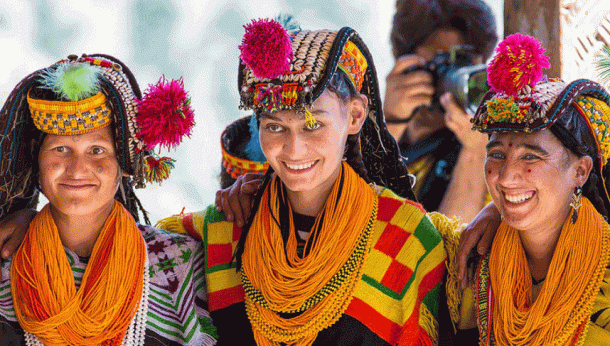
The valleys on this route are home to culturally distinctive communities including the Shina-speaking people of Diamer and Chilas and the Burusho people of Hunza, who speak the unique Burushaski language and have welcomed international trekkers warmly for over a century. Dress modestly at all times in villages and towns: legs and arms covered for both men and women, headscarves for women when near mosques or in traditional areas. On the open trail, practical trekking clothing is appropriate, but always change before entering any settlement. Communities around Diamer and Chilas are more conservative than Islamabad; your guide will advise on specific etiquette throughout the route.
The Hunza Valley is famous for its exceptional hospitality. If invited into a local home for chai or a meal, accepting is both courteous and invariably unforgettable. Fresh Hunza apricot jam, dried mulberries, walnut oil and chapatti baked on a wood fire are genuine culinary experiences no restaurant can replicate. Always seek explicit permission before photographing local people, especially women; your guide will help with any language barrier. Tipping is essential on a trek of this nature and forms a meaningful portion of the income of local guides and porters. Our team provides clear tipping guidance at the pre-trek briefing, covering the full support crew from lead guide to porter.
Safety and Health at High Altitude
This trek reaches elevations between 3,300 metres at Fairy Meadows and approximately 4,500 metres on the upper Rakaposhi approach. At these altitudes, Acute Mountain Sickness (AMS) is a genuine consideration that must be respected by every trekker regardless of fitness or experience. AMS does not discriminate: highly fit athletes are as susceptible as anyone else, and previous altitude experience does not guarantee immunity.
Classic AMS symptoms include persistent headache, nausea, dizziness, fatigue and disturbed sleep. Mild symptoms in the first 24 to 48 hours at altitude are common and usually resolve with rest and hydration. Worsening symptoms, or the appearance of serious signs such as loss of coordination, confusion, extreme breathlessness at rest or persistent dry cough, require immediate descent. Never ascend with significant AMS symptoms. Your lead guide carries a comprehensive medical kit including a Gamow bag (portable altitude pressure chamber) and supplemental oxygen, and holds a wilderness first aid and high-altitude medicine certification. The itinerary includes proper acclimatisation days and is never compressed to meet a schedule. Helicopters can reach Fairy Meadows and the Hunza Valley for medical evacuation — the primary reason why high-altitude evacuation insurance is non-negotiable.
On the Karakoram Highway and the Fairy Meadows jeep track, our drivers are experienced professionals who have operated these specific roads for many years. All KKH driving is timed for daylight. The Fairy Meadows track is steep and exposed — our drivers navigate it daily during trekking season with an outstanding safety record. Drink three to four litres of water daily; adequate hydration is the single most effective measure for supporting acclimatisation. Gilgit’s District Headquarters Hospital and Combined Military Hospital provide the best regional medical facilities and can be reached from most points on the route within two to four hours by road or under an hour by helicopter.
When to travel
Trekking season. Highlighted months are when we run this itinerary. Private departures can be arranged on any date — just ask.
Dates shown are guide departures. Exact start dates are confirmed at the time of booking and can be adjusted to suit your flights.
Plan your 10-Day Nanga Parbat & Rakaposhi Base Camp Trekking
Tell us your dates and we will build this itinerary around them — private guide, your pace, your interests. We reply within one working day.
Or call +92 342 5017535
Questions travellers ask
1. How difficult is the Nanga Parbat and Rakaposhi Base Camp Trek?
This trek is rated moderate to challenging, ideal for travelers with basic trekking experience and good fitness. The Nanga Parbat Base Camp trek (via Fairy Meadows) includes a steady 2–3 hour hike, while Rakaposhi Base Camp involves 5–6 hours of trekking through glacier terrain and alpine meadows.
2. What is the best time to do the Rakaposhi and Nanga Parbat trek?
The ideal trekking season is from June to September, when the weather is stable and trails are open. These months offer clear mountain views, green meadows, and safe hiking conditions in northern Pakistan.
3. What is included in this 10-day Pakistan trekking tour?
The tour includes domestic travel, accommodation, meals (breakfast & dinner), local guides, porters, trekking permits, and transportation from Islamabad to Gilgit-Baltistan. We also provide camping equipment for base camp nights.
4. Is the trek suitable for solo travelers or international tourists?
Yes! This is a guided trekking tour in Pakistan designed for solo adventurers, couples, and small groups. It is fully supported with experienced guides, cultural interaction, and logistical planning to ensure a safe and memorable Pakistan trekking experience.
5. What gear should I bring for the Nanga Parbat & Rakaposhi trek?
Pack trekking boots, thermal layers, a down jacket, trekking poles, a headlamp, gloves, sunscreen, and a sleeping bag (rated for -5°C to -10°C). A complete trekking gear checklist is provided upon booking.
6. Are permits required for this trekking tour in Gilgit-Baltistan?
Yes, all foreign and domestic trekkers require trekking permits for Fairy Meadows (Nanga Parbat) and Rakaposhi Base Camp. These are arranged by our team in advance and included in the tour package.