On a limestone ridge overlooking the ancient Sindhi city of Thatta lies one of the most extraordinary places in the Islamic world. Makli Necropolis – a UNESCO World Heritage Site – is one of the largest necropolises on earth: an estimated half a million tombs spread across 10 square kilometres, containing the royal dead of the Samma, Tarkhan, Arghun, and Mughal dynasties from the 14th to the 18th centuries. For British visitors, Makli is one of the least-known and most awe-inspiring heritage destinations in Asia.
This Makli Necropolis guide covers everything you need to know: what it is, why it matters, the key monuments, how to get there from Karachi, and how to plan a full day exploring Sindh’s remarkable heritage.
What Is Makli Necropolis?
Makli (also spelled Makli Hill) is a vast funerary site located on a limestone plateau just outside Thatta, Sindh, approximately 98 kilometres east of Karachi. The necropolis was designated a UNESCO World Heritage Site in 1981 under the title Historical Monuments at Makli, Thatta, in recognition of its extraordinary concentration of Islamic funerary architecture spanning more than four centuries.
The numbers alone are staggering. Estimates of the total number of tombs range from 500,000 to over one million – making Makli one of the single largest collections of funerary monuments anywhere on the planet. The site stretches across 10 square kilometres, and within that space you will find everything from simple brick graves to palatial domed mausoleums of breathtaking sophistication.
The monarchs, nobles, scholars, saints, and soldiers buried here ruled and shaped one of the most important cities of the Mughal world. Thatta served as the capital of Sindh for several centuries and was at its height a major centre of commerce, Islamic scholarship, and artistic production. The monuments at Makli are, in many ways, its permanent memorial.
- UNESCO World Heritage Site since 1981
- Location: limestone plateau adjacent to Thatta, Sindh – approximately 98km east of Karachi
- Site area: approximately 10 square kilometres
- Number of tombs: 500,000-1,000,000 (estimates vary)
- Active period: 14th to 18th centuries CE
- Dynasties represented: Samma, Tarkhan, Arghun, Mughal
- Current UNESCO status: on the List of World Heritage in Danger
Why Makli Is Extraordinary
The Scale Defies Comprehension
No description fully prepares you for the scale of Makli. You arrive, you walk through the entrance, and the tombs stretch to every horizon. There is a surreal, almost dreamlike quality to wandering through a landscape so comprehensively dedicated to the dead – monument after monument, dynasty after dynasty, the centuries layered one upon another beneath the wide Sindhi sky.
You can walk for three hours and still not see everything. The sheer accumulation of structures – from humble unadorned graves to soaring domed chambers – creates a landscape unlike anything else in South Asia. Makli is not a tidy heritage park with manicured paths between labelled exhibits. It is vast, sprawling, and alive with the weight of history.
Four Centuries of Islamic Artistic Achievement
What sets Makli apart from simply being a very large graveyard is the astonishing quality and variety of its artistic production. The site represents four continuous centuries of Islamic funerary architecture and decorative art, and across that span you can trace the evolution of styles, materials, and cultural influences with remarkable clarity.
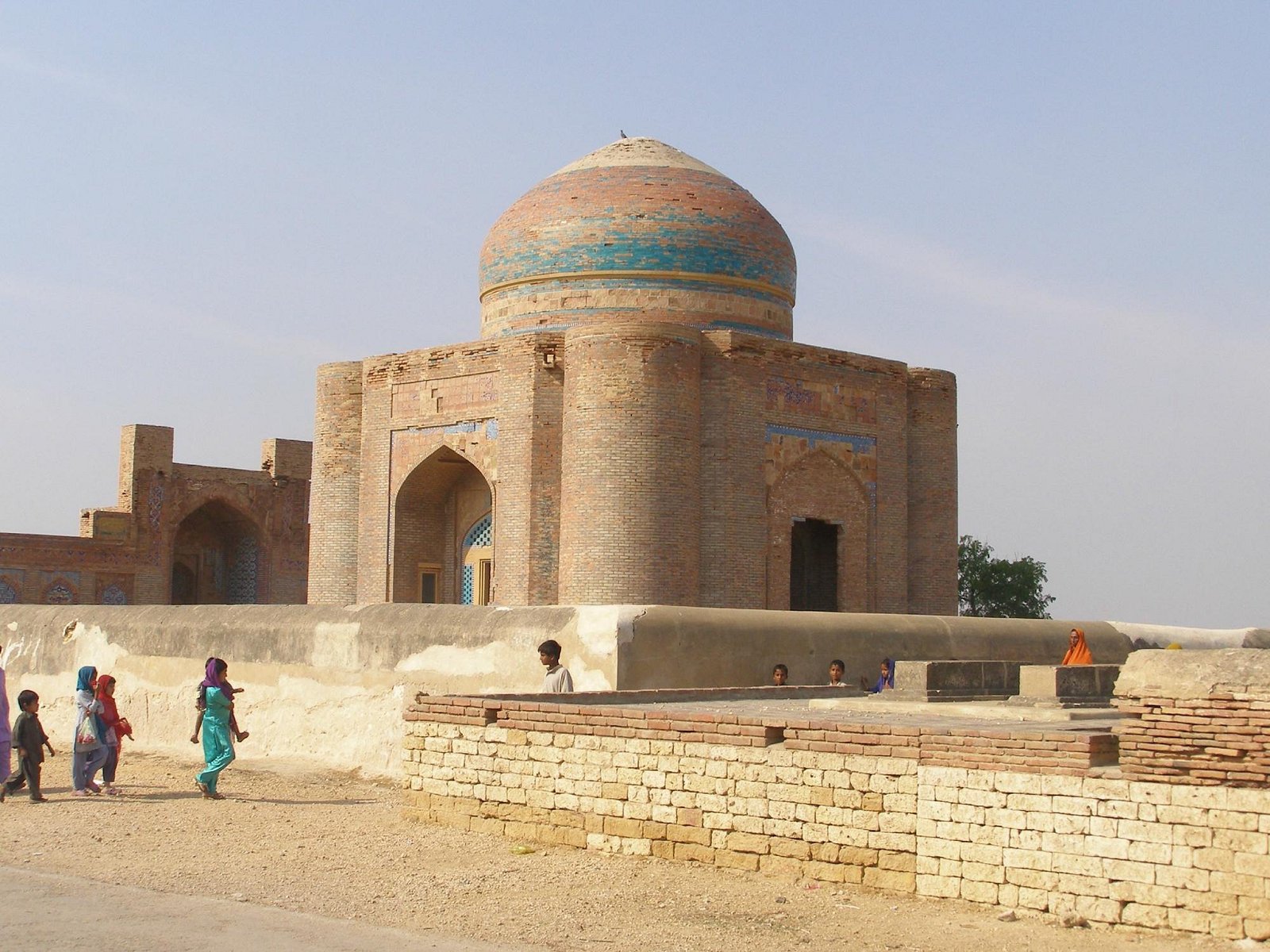
Three distinct building traditions are visible at Makli. The earliest major monuments – those of the Samma dynasty, dating from the 14th and 15th centuries – are characterised by carved sandstone of extraordinary refinement. Craftsmen cut intricate geometric patterns, arabesque scrollwork, floral motifs, and Quranic calligraphy into blue-grey stone with a precision that continues to astonish conservators today.
The later Mughal-influenced structures introduce a second tradition: glazed tile work in cobalt blue, turquoise, and white that catches the light and creates dazzling, jewel-like effects on tomb facades and domes. A third tradition in brick construction sits between these two, representing the Tarkhan and Arghun periods that bridged Sindhi and Mughal aesthetic sensibilities.
The Historical Weight of the Site
Thatta was no provincial backwater. At its height it was one of the great cities of the Mughal Empire – a significant centre of learning, trade, and administration that attracted scholars, poets, merchants, and rulers from across the Islamic world. The Mughal Emperor Shah Jahan himself visited Thatta (he commissioned the magnificent Shah Jahan Mosque there in 1647), and the rulers buried at Makli governed a city that was, for several centuries, a genuine metropolis.
Walking through Makli, you are walking through the burial ground of an entire civilisation – one that has largely vanished from Western historical consciousness but that left behind this extraordinary physical testament to its existence.
Key Tombs and Structures at Makli
Tomb of Jam Nizamuddin (Samma Dynasty, 15th Century)
Among the finest examples of carved sandstone work at Makli is the tomb of Jam Nizamuddin, a ruler of the Samma dynasty – the local Sindhi rulers who held power from approximately 1336 to 1520 and built the earliest significant monuments on the plateau. The Samma tombs are the oldest surviving major structures at Makli, and they established the distinctive aesthetic that characterises the site’s most celebrated stonework.
The carving on Jam Nizamuddin’s tomb is extraordinary: geometric patterns of great intricacy, Arabic calligraphic inscriptions of high quality, and floral motifs that suggest a tradition of craftsmanship at its confident peak. These monuments reward close attention.
Tomb of Isa Khan Tarkhan the Younger (c. 1644)
One of the most impressive structures at Makli, the tomb of Isa Khan Tarkhan the Younger dates from the Arghun-Tarkhan period of the 16th and 17th centuries – the dynasty that succeeded the Sammas and governed Sindh under Mughal overlordship. This large domed mausoleum combines the Sindhi tradition of carved stone with the growing influence of Mughal architectural vocabulary: a broader, more imposing footprint, elaborate carved exterior panels, and a dome of considerable presence.
Tomb of Diwan Shurfa Khan
The multi-domed structure of Diwan Shurfa Khan’s tomb is another architectural highlight – an unusual configuration that creates a striking silhouette and demonstrates the willingness of Sindhi builders to experiment with form as well as ornament. The interior spaces are worth exploring for their proportions and the quality of surviving decorative work.
The Samma Rulers Complex
The cluster of early Samma-period tombs represents Makli at its oldest and, for many visitors, its most haunting. These 14th and 15th-century monuments predate Mughal influence entirely and speak to an earlier, distinctly Sindhi aesthetic tradition. Their relative austerity compared to the later domed mausoleums makes their carved stonework all the more arresting.
Mughal-Era Tombs and Glazed Tilework
The later monuments at Makli show direct Mughal influence in their use of glazed tile facades – cobalt blue and turquoise against white grounds that create effects of considerable beauty even after centuries of exposure. Some structures incorporate both glazed tile and carved stone, occupying a transitional moment when two great building traditions were in active dialogue.
The Shah Jahan Mosque, Thatta
Three kilometres from Makli and essential to include in any visit, the Shah Jahan Mosque in Thatta is one of the finest examples of Mughal architecture in Sindh. Built in 1647 on the orders of the Emperor Shah Jahan – who commissioned it as a gesture of gratitude to the people of Thatta for the hospitality they showed him during a period of refuge – the mosque is a masterpiece of brick construction, its interior surfaces covered in glazed tile of remarkable quality.
The mosque’s 93 domes are designed to distribute sound with extraordinary precision: according to a tradition that acoustic testing has substantially confirmed, a whisper spoken at the mihrab can be heard clearly in any part of the prayer hall. The mosque remains an active place of worship – dress modestly and remove shoes before entering.
Together, Makli and the Shah Jahan Mosque make a compelling half-day combination that gives a rounded picture of Thatta’s historical significance.
Getting to Makli from Karachi
Makli lies approximately 98 kilometres east of Karachi on the National Highway N-55, and the drive takes roughly two to two-and-a-half hours depending on traffic leaving the city.
The most practical option for most visitors is a private taxi arranged in Karachi – negotiate a return trip with waiting time at the site. Agree the total price before departure and ensure your driver understands you need time both at Makli and at the Shah Jahan Mosque in Thatta.
Alternatively, Passage to Pakistan can arrange a fully guided day trip from Karachi including transport, an expert local guide, and all entry logistics – the most comfortable and informative way to visit, particularly for first-time visitors to Sindh.
A Day at Makli: Suggested Schedule
An early start is essential, particularly between October and April when the light on the carved stonework is best in the morning hours and temperatures remain manageable before midday.
- 7:30am – Depart Karachi. Early departure avoids urban traffic and maximises time at the site before heat builds.
- 10:00am – Arrive at Makli Necropolis. Begin at the main entrance area and orient yourself with a local guide before heading into the monument clusters.
- 10:00am-12:30pm – Explore Makli (allow at least three hours; four is better). Prioritise the Samma complex, the Isa Khan Tarkhan tomb, and the Mughal-era glazed tile monuments.
- 12:30pm – Drive to Thatta (approximately 10 minutes).
- 12:45pm-2:00pm – Visit the Shah Jahan Mosque; lunch in Thatta.
- 2:30pm – Depart for Karachi.
- 5:00pm – Arrive back in Karachi.
When to Visit Makli
The optimal visiting window is November to February, when temperatures across Sindh range from around 15C to 25C – warm by British standards, but entirely manageable for a full day of outdoor sightseeing. These winter months also produce some of the best light for photography, with clear skies and low-angle sun that brings out the depth of the carved stonework beautifully.
March and October are shoulder months: conditions are acceptable but warming noticeably. Avoid May through September entirely. Sindh in summer is one of the hottest inhabited environments on earth – temperatures regularly reach 42C to 50C, and outdoor sightseeing in these conditions is genuinely dangerous. There is effectively no shade at Makli, and the site has very limited water facilities.
Practical Visitor Information
- Entry fee: Nominal – currently PKR 100-200 per person (verify locally, as fees are periodically revised)
- Opening hours: 8am to 5pm daily
- Facilities: Minimal. Bring your own water (at least 1.5 litres per person), snacks, hat, sunscreen, and sturdy comfortable shoes. The terrain is uneven.
- Photography: Fully permitted and highly rewarding. The carved sandstone tombs photograph beautifully in morning light. A wide-angle lens helps convey the scale.
- Guides: Available at the entrance for a negotiated fee. Strongly recommended.
- Conservation: Please stay on existing paths, do not climb or touch the monuments, and take all litter away with you. Makli is already under serious conservation pressure.
Conservation: A Site Under Threat
Makli appears on UNESCO’s List of World Heritage in Danger – a designation that reflects the severity of the threats the site currently faces. Encroachment by modern construction, the illegal removal of decorated bricks for reuse elsewhere, vandalism, and insufficient funding for conservation work have all taken their toll.
This urgency is one of the most compelling reasons to visit Makli now. Every visitor who comes generates tourism income and helps build the case – at the level of local government, federal government, and international conservation bodies – that Makli deserves serious investment. You are not just a tourist; you are evidence that the site matters to the world beyond Pakistan’s borders.
Combining Makli with Other Sindh Sites
Karachi
If you have time before or after Makli, Karachi rewards a day or two of exploration. The National Museum of Pakistan houses an outstanding collection of artefacts from the Indus Valley Civilisation, including material excavated from Mohenjo-daro. Mohatta Palace – a beautiful Rajasthani-influenced building now serving as a museum – is a delight. Empress Market gives a flavour of the city’s layered historical character.
Mohenjo-daro
The other great UNESCO-listed heritage site in Sindh, Mohenjo-daro is one of the principal cities of the Indus Valley Civilisation – a 4,500-year-old urban settlement that was, at its height, larger than contemporary cities in Egypt and Mesopotamia. It lies approximately 450 kilometres north of Karachi. The two sites complement each other perfectly: Makli represents the medieval Islamic peak of Sindhi civilisation; Mohenjo-daro takes you back to its prehistoric origins.
Visit Makli with Passage to Pakistan
Makli Necropolis is the kind of place that is transformed by knowledgeable company. The site’s complexity – four dynasties, four centuries, three artistic traditions, hundreds of individual monuments – rewards expert interpretation. Visiting without context risks leaving with little more than a generalised impression of scale.
Passage to Pakistan arranges guided day trips to Makli and Thatta from Karachi, combining comfortable transport with expert local guides who understand both the history and the specific monuments worth prioritising. We also offer extended Sindh tours that combine Karachi, Makli, Thatta, and Mohenjo-daro into a genuinely comprehensive exploration of Pakistan’s most historically rich province.
Our specialist knowledge of Pakistan’s heritage sites – and our experience working with British travellers who want the extraordinary rather than the obvious – means we can give Makli the attention it deserves. This is not a site to rush or to navigate alone. It is a site to savour, with someone who can tell you what you are looking at and why it matters.
Get in touch with our team to start planning your Sindh itinerary. Makli is waiting – and it will not disappoint.