
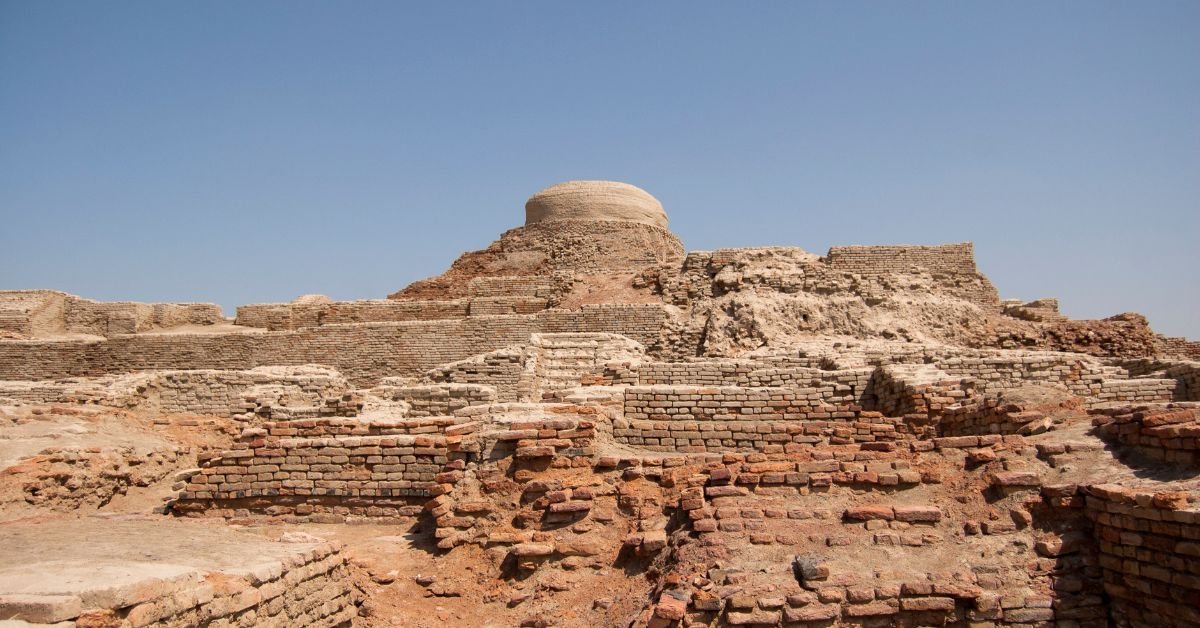
In 1921, a British archaeologist named John Marshall received a report that changed our understanding of human history. At a small town called Harappa in Punjab, workers digging a railway embankment had unearthed ancient burnt bricks of unusual quality. What they had stumbled upon was the first evidence of the Indus Valley Civilisation – a Bronze Age urban culture that had flourished 4,000 years earlier, contemporary with ancient Egypt and Mesopotamia, and yet entirely unknown to the modern world.
For UK travellers willing to venture off the beaten path, Harappa Pakistan offers one of the most profound archaeological experiences in Asia. This is not a site that has been polished for tourists or stripped of its strangeness. It remains, in many ways, a place where the sheer weight of what is not yet known is as compelling as what has been uncovered. If you want to stand at the origin point of one of humanity’s great civilisations – and feel the mystery of it pressing in from all sides – Harappa is where you need to go.
What is Harappa?
Harappa is one of the two principal cities of the Indus Valley Civilisation (IVC), alongside Mohenjo-daro in Sindh. It thrived from approximately 3300 to 1300 BCE, making it one of the earliest urban civilisations the world has ever produced – contemporary with the great cities of Mesopotamia and the pyramid-building pharaohs of Egypt, and yet wholly independent of them.
At its height, between roughly 2600 and 1900 BCE, Harappa may have been home to between 23,000 and 35,000 people. The site covers approximately 150 hectares, though much of it remains buried beneath the modern town of Harappa, which grew directly over the ancient ruins. What has been excavated represents only a fraction of what likely still lies underground.
The city sits in Sahiwal district, Punjab province – a flat, agricultural landscape far removed from the dramatic mountain scenery that draws most visitors to Pakistan. It is precisely this ordinariness that makes the site so startling. There is nothing in the surrounding Punjab countryside to suggest that this quiet town conceals the remnants of a civilisation that produced some of the most sophisticated urban planning of the ancient world.
The Discovery That Rewrote History
The story of Harappa’s rediscovery is almost as extraordinary as the site itself. In 1826, James Lewis – a British army deserter travelling under the assumed name Charles Masson – recorded the mounds whilst wandering through Punjab, noting the presence of a ruined brick structure without any idea of what lay beneath.
It was not until 1875 that Alexander Cunningham, founder of the Archaeological Survey of India, identified the mounds as potentially significant. But systematic excavation did not begin until 1920-21, when Rai Bahadur Daya Ram Sahni, working under the direction of Sir John Marshall, broke ground in earnest.
What followed was a revelation. The excavations pushed the known history of South Asian civilisation back by approximately 1,500 years, overturning the prevailing assumption that urban culture on the subcontinent began with the arrival of the Aryans around 1500 BCE. The Indus Valley Civilisation, it turned out, had been flourishing for two millennia before that – and it was quite unlike anything previously imagined. A new chapter in the story of humanity had to be written.
What to See at the Harappa Archaeological Site
The Harappa Museum
The museum is the essential first stop for any visit to Harappa, and it is considerably better than many visitors expect. The collection includes terracotta figurines, painted pottery, bronze tools, beads and jewellery, and – most intriguingly – the small carved seals bearing the undeciphered Indus script that have become the most recognisable symbol of the civilisation. Scale models help visitors understand what the ancient city looked like at its height, and the displays explain both the excavation history and the debates that continue to surround the site.
Allow at least one to two hours in the Harappa Museum before heading out to the mounds. The archaeological zones without this preparation can feel like a landscape of rubble; with it, the ruins begin to speak.
Mound AB (The Citadel Mound)
The western mound, known as Mound AB, is believed to have been the administrative or elite residential area of the ancient city. Excavations have revealed what appear to be granary platforms, though archaeologists continue to debate their precise function. From the top of the mound, there are views across the Ravi River floodplain – a reminder that the ancient city sat at the heart of a fertile, well-watered landscape that made it an ideal site for an early civilisation to flourish.
Mound E and ET (The Lower Town)
Mounds E and ET represent the residential heart of ancient Harappa – the areas where ordinary people lived, worked, and raised families. Excavations here have revealed streets, wells, and domestic architecture that speak to a highly organised civic culture. Unfortunately, this area suffered considerable damage in the 19th century, when local people quarried the ancient bricks for use as railway ballast – the same railway construction that ironically led to the site’s initial rediscovery.
Mound F (The Cemetery)
One of the most haunting areas of the Harappa archaeological site is the cemetery discovered at Mound F. Harappan burials reveal a society with clear beliefs about what comes after death: bodies were laid on a north-south axis and interred with pottery, ornaments, and food – provisions for whatever lay ahead. Evidence of both extended burials and cremation practices has been found, suggesting a degree of cultural diversity within the population that adds yet another layer of complexity to an already enigmatic civilisation.
How Harappa Compares to Mohenjo-daro
Visitors sometimes ask which of the two great Indus Valley cities is worth the journey. The honest answer is both, if time allows – they offer quite different experiences.
Mohenjo-daro, in Sindh, is better preserved and more immediately atmospheric. Its raised citadel and the famous Great Bath create a powerful visual impression that can be harder to find at Harappa. The Harappa experience is rawer – some of the most significant mounds are less intact as a result of 19th-century brick-robbing, and the site has not been as thoroughly managed for tourism.
Where Harappa compensates is in its museum, which many visitors find superior to Mohenjo-daro’s, and in the palpable sense that this is a place still yielding its secrets. There is something genuinely compelling about a site where the unknown presses in so close to the surface.
The Mysteries That Make Harappa Unforgettable
Part of what makes visiting Harappa so compelling for intellectually curious travellers is the sheer weight of unanswered questions that hang over the site. These are not peripheral puzzles but central ones, striking at the heart of what the Indus Valley Civilisation actually was.
The undeciphered script. More than 400 signs have been identified in the Indus script, found across thousands of seals and tablets from Harappa and other IVC sites. Despite more than a century of attempts, no one has cracked it. We do not know what language underlies it, what the inscriptions say, or even whether the script encodes administrative records, religious texts, or something else entirely. It is one of the longest-standing unsolved puzzles in the history of human writing.
The peaceful civilisation question. Unlike virtually every other major ancient civilisation, the IVC left almost no evidence of warfare – no weapons caches, no depictions of battles, no warrior kings commemorated in stone. How a society spanning more than a million square kilometres maintained cohesion for two thousand years without conquest or military coercion remains deeply mysterious. The IVC seems to have built on trade and civic order rather than force. Nothing in the ancient world quite resembles it.
The standardisation puzzle. Identical weights and measures, standardised brick proportions following the ratio 1:2:4, and strikingly uniform urban layouts have been found at IVC sites separated by more than 1,000 kilometres. What kind of authority – political, religious, or commercial – enforced these standards across such a vast area, and how? There is no obvious answer.
The collapse. Around 1900 BCE, the great cities of the IVC began to decline. By 1300 BCE, the urban civilisation had effectively ended. Climate change, prolonged drought, shifts in the course of the Ravi River, epidemic disease, and migration have all been proposed as explanations. None has been definitively confirmed. The people who built Harappa left no account of what happened to them.
Getting to Harappa
From Lahore
Lahore is the most natural base for a visit to the Harappa archaeological site. The distance is approximately 235 kilometres, and the journey by private car takes around three to four hours via the Grand Trunk Road or the M5 motorway. Hiring a private car and driver from Lahore for a day trip is the most practical option; an overnight stop in Sahiwal allows more time at the site.
From Multan
Multan is actually closer to Harappa than Lahore – approximately 190 kilometres, or around two and a half to three hours by car. If you are travelling between the two cities, Harappa makes an obvious and rewarding stop.
From Islamabad
From Islamabad, the distance is approximately 320 kilometres, making it a long day trip. An overnight stop in Sahiwal – the nearest town with accommodation, around 30 kilometres from the site – is more comfortable.
When to Visit Harappa
The best time to visit Harappa is between November and February, when Punjab temperatures are mild – typically between 5C and 20C – and the site can be explored in real comfort. The summer months from May to September bring fierce heat, with temperatures frequently reaching 40C to 45C, making outdoor archaeological sites genuinely gruelling.
The site is open year-round, with standard hours of 8am to 5pm daily. Entry for foreign visitors is approximately PKR 200 to 300, though it is worth confirming current rates locally. A site guide is available at the museum and is strongly recommended – Harappa without context is a collection of mounds; with a knowledgeable guide, it becomes one of the most thought-provoking places you will ever stand.
Combining Harappa with Other Sites in Punjab
Lahore (3-4 hours)
Lahore is the natural companion to any visit to Harappa. The Lahore Museum houses an exceptional collection of Indus Valley artefacts alongside the Fasting Siddhartha – one of the great sculptures of the ancient world. Lahore Fort and the Shalimar Gardens are both UNESCO World Heritage Sites. Two or three nights in Lahore gives you comfortable access to Harappa while also allowing time for the city’s extraordinary Mughal heritage.
Multan (2.5-3 hours)
Multan – the City of Saints – offers a completely different experience: Sufi shrines, centuries-old blue tile craftsmanship, and a living tradition of devotion that contrasts powerfully with the cool mystery of ancient archaeology. The two make an excellent pairing for a wider Punjab heritage circuit.
Mohenjo-daro (separate trip, Sindh)
For those who want the complete Indus Valley Civilisation picture, a separate journey to Mohenjo-daro in Sindh completes what Harappa begins. Seeing both cities – each built on the same principles, separated by hundreds of kilometres – makes the IVC’s scale and coherence genuinely visceral in a way that visiting either site alone cannot achieve.
Visit Harappa Pakistan with Passage to Pakistan
Harappa rewards careful planning. The logistics – getting there reliably from Lahore, finding a guide who understands the archaeology, and combining the site with other ancient Pakistan sites – are exactly what we do.
Our Ancient Pakistan Explorer tour is a 12-day heritage itinerary built around Harappa, Mohenjo-daro, the Gandhara Buddhist ruins at Taxila, and the Mughal monuments of Lahore. It is designed precisely for UK travellers who want to go beneath the surface – to understand what they are seeing, and why it matters – with expert local guides, comfortable transport, and the logistical confidence that lets you focus entirely on the history.
If you would prefer a shorter Punjab-focused itinerary combining Lahore and Harappa, or a wider journey that takes in both great IVC cities, we can design that around your interests and dates. Browse our Pakistan tour packages or contact our team to start planning.
The people who built Harappa planned their streets, standardised their bricks, carved their seals, and buried their dead with care. Then, around 1900 BCE, it began to end. We do not know why. Standing on the mounds and looking out across the Punjab plain they called home for two thousand years, that question feels less like an academic puzzle than a human one. It is one of the best reasons to make the journey.