Pakistan’s Highest Alpine Lake: An Introduction to the Rush Lake Trek
The Rush Lake Trek in Pakistan leads to the country’s highest alpine lake, sitting at 4,694 metres above sea level in the Nagar Valley of Gilgit-Baltistan. This glacial body of water — turquoise, ice-edged, and surrounded by some of the Karakoram’s most formidable peaks — rewards the trekkers who reach it with one of the most striking mountain panoramas available to non-technical climbers anywhere on earth. For UK visitors who have spent years walking the Brecon Beacons, the Lake District, or the Cairngorms, the rush lake trek pakistan offers something categorically different: genuine high-altitude wilderness, severe gradient, and a remoteness that the British hills simply cannot replicate.
The lake sits beneath the ice walls of Spantik — also known as Golden Peak, at 7,027m — and Momhil Sar at 7,414m. On a clear morning, these giants reflect in the lake’s surface with an exactness that makes the scene feel slightly unreal. The Barpu and Miar glaciers feed the water. No roads come within several hours of the lake. The trail to reach it is not marked, is not maintained, and requires a local guide with genuine knowledge of the glacier moraine. These are not selling points for a certain kind of traveller, but for the UK trekker who values earned experiences over packaged ones, they are exactly the point.
At a glance:
- Elevation: 4,694m (15,400 ft) — the highest alpine lake in Pakistan
- Location: Nagar Valley, Gilgit-Baltistan (adjacent to Hunza Valley)
- Trek duration: 3–4 days round trip from Hoper Village
- Total distance: approximately 24km round trip
- Difficulty: Strenuous — altitude and sustained gradient
- Best season: Late June to mid-September
- Total trip cost from UK: £750–£1,300 for a 10-day itinerary including flights
To see how this trek fits into a broader northern Pakistan itinerary, explore the Pakistan tour packages at Passage to Pakistan — all built around verified local guides with current trail knowledge.
Why Rush Lake Trek Pakistan Stands Apart from Other High-Altitude Routes
Pakistan’s northern mountains host dozens of trekking routes that attract international visitors — the Baltoro Glacier corridor to K2 Base Camp, Fairy Meadows beneath Nanga Parbat, the Gondogoro La high pass. Rush Lake sits in a different category from all of them, and the difference is instructive.
The Baltoro route is one of the world’s most famous treks, which means it is also one of the most crowded during peak season. Hundreds of trekkers file along the same moraine each August, camping in designated sites and moving through a logistics system that has become well-worn and somewhat predictable. Rush Lake attracts a fraction of that traffic. On the three-day approach from Hoper Village you are likely to encounter Nagar shepherds moving their flocks to high pasture, the occasional Pakistani mountaineering team using the Barpu Glacier as acclimatisation ground before an attempt on Spantik, and perhaps a handful of other international trekkers. The scale of the terrain — the length of the glacier, the height of the surrounding walls — absorbs these small groups completely.
Fairy Meadows, by contrast, has become extremely accessible since the road to Raikot Bridge was improved. The meadows themselves are beautiful, but the majority of visitors reach them without any serious trekking investment. Rush Lake cannot be approached on wheels, on horseback, or with any shortcut. The altitude gain from Hoper Village (2,700m) to the lake (4,694m) is nearly 2,000 metres over approximately 12 kilometres, and there is no stage of that climb where the gradient relents into a pleasant stroll.
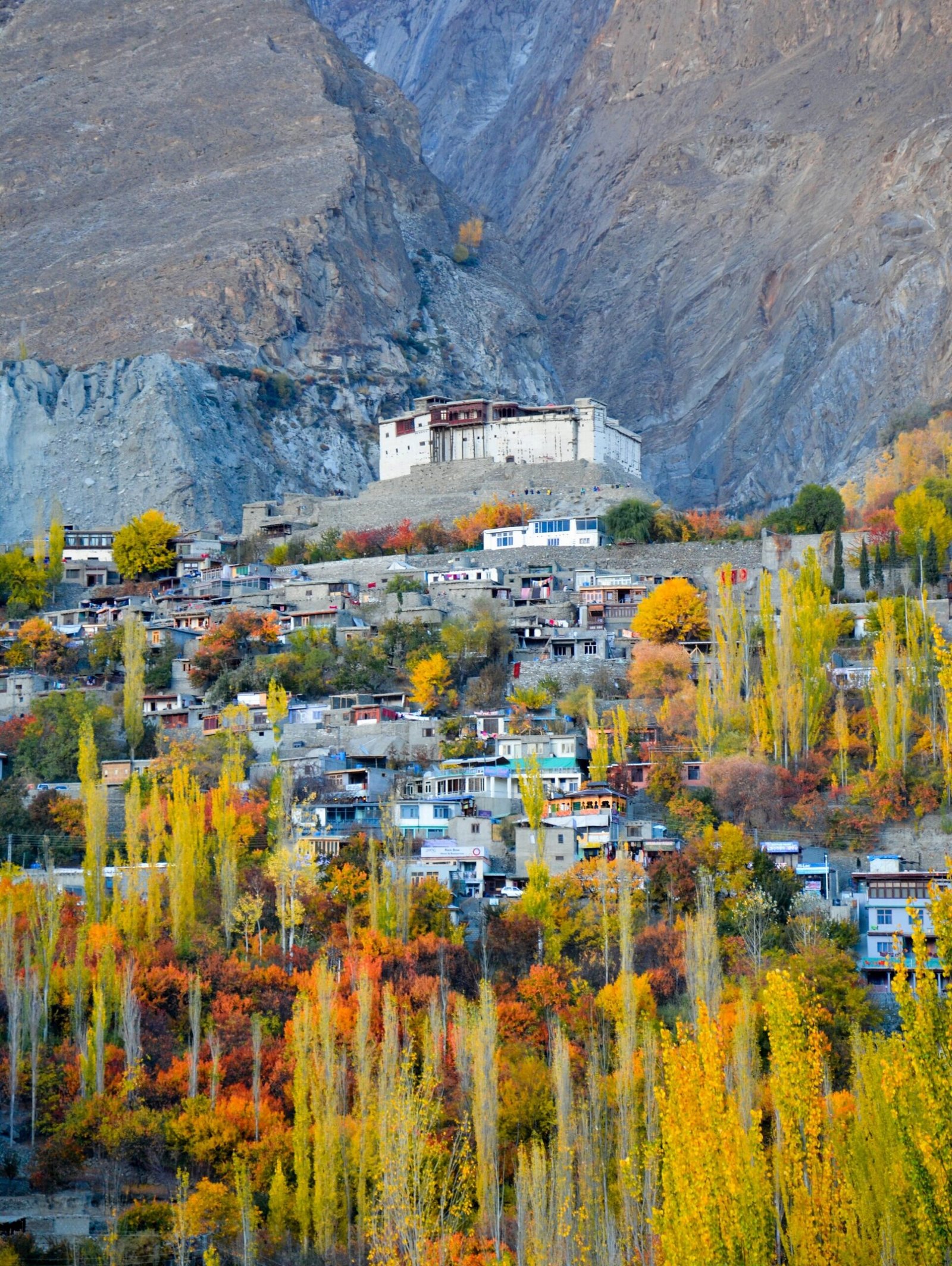
The Nagar Valley also provides a cultural context that distinguishes the experience from the Baltoro or Fairy Meadows routes. The people of Nagar, historically a separate kingdom from Hunza, are predominantly Shia Muslims with a distinct dialect, architectural tradition, and pattern of village life. Their stone houses — with carved wooden balconies and flat mud roofs stacked with dried apricots and firewood — occupy terraced slopes above a river that has been channelled into irrigation channels for centuries. The valley is agricultural in its lower reaches and completely wild above the snowline. Trekkers who spend a night in Hoper Village before setting out will find the guesthouse hospitality genuine rather than performed: home-cooked meals of daal, fresh chapati, and local apricot jam cost well under £5 per person.
Snow leopards inhabit the Barpu Glacier region. Sightings are uncommon but not unprecedented during late summer when ibex graze on the upper scree. Brown bears are also present in the valley forests below 3,500m. Golden eagles are a reliable sight above the moraine. None of this wildlife is guaranteed, but the possibility adds an alertness to the trek that is difficult to manufacture on routes where human activity has pushed large animals out.
The Rush Lake Trek Route: Stage-by-Stage Breakdown
The standard approach begins at Hoper Village (Hopar), accessible by jeep from Karimabad in the Hunza Valley. The following stage breakdown reflects current 2026 trail conditions.
Stage 1: Hoper Village (2,700m) to Barpu Glacier Camp (3,400m)
Distance: 8km | Elevation gain: 700m | Walking time: 5–6 hours
The trail departs Hoper heading northeast, initially crossing a series of irrigation channels and walnut orchards before the vegetation gives way to open hillside. The path climbs steadily through scrub and loose rock to the lateral moraine of the Barpu Glacier — a ridge of debris deposited as the glacier retreated. The moraine surface is uneven and requires careful footwork; ankle support from solid trekking boots matters here. Camp is typically established on a flat section of the moraine with views west over the Hunza River corridor and south toward the Rakaposhi massif. Glacial meltstreams provide reliable water. Several trekking outfitters maintain basic camp platforms at this site; independent trekkers should carry their own tent.
Stage 2: Barpu Glacier Camp (3,400m) to Rush Lake Base Camp (4,200m)
Distance: 7km | Elevation gain: 800m | Walking time: 6–8 hours
This is the most demanding stage of the trek. The route traverses the upper Barpu Glacier moraine before ascending steeply through boulder fields. Above 3,800m, snow may remain on north-facing slopes even in August; in a heavy snow year, this section requires crampons. Your guide will know current conditions before departure. The last two kilometres to Rush Lake Base Camp at 4,200m involve a sustained, energy-sapping climb on scree and consolidated snow. Altitude will be noticeable to most trekkers from 3,800m: headaches, reduced appetite, and slower pace are normal physiological responses and do not, in themselves, indicate serious altitude sickness. Camp at 4,200m occupies a natural bowl sheltered from the prevailing westerly wind. The lake lies 494 vertical metres above.
Stage 3: Summit Day — Rush Lake Base Camp to Rush Lake (4,200m to 4,694m) and Return
Distance: 4km round trip | Elevation gain: 494m | Walking time: 3–4 hours to the lake
A 5:00am start is advisable. The pre-dawn approach allows trekkers to reach the lake before afternoon cloud builds around the surrounding peaks, and early morning light on Spantik and Momhil Sar is worth the cold. The final slope to the lake is steep, with sections of loose rock requiring hands-on scrambling. At 4,694m the lake occupies an elevated shelf of glacially carved rock. It is approximately 800 metres in length and 250 metres wide. In September, residual ice may remain along the northern shoreline. The mountain panorama from the lake shore encompasses Spantik (7,027m), Momhil Sar (7,414m), Trivor (7,577m) — the most remote 7,000m peak in the Karakoram — and, on exceptional visibility days, the distant outline of Rakaposhi (7,788m) to the south. Allow a minimum of 90 minutes at the lake before beginning the descent. Most trekkers return to Hoper Village in one long descent day; those with time to spare spend a final night at Barpu Camp.
Permits, Guides, Porters and Costs in GBP (2026)
The administrative requirements for the Rush Lake Trek are straightforward compared to restricted routes such as the Baltoro Glacier.
Permits
No restricted-zone trekking permit is required for Rush Lake as of 2026. All foreign trekkers must register at the local police checkpoint in Hoper Village before setting out — a formality requiring your passport number and planned itinerary. A licensed guide handles this in under ten minutes. The Nagar Valley falls within Gilgit-Baltistan’s standard trekking zones and does not require the formal No Objection Certificate (NOC) that glaciers such as the Baltoro demand. Keep a copy of your passport data page accessible throughout the trek.
Guides and Porters
Hiring a licensed local guide is strongly recommended — not because the trail is technically complex, but because route-finding on the Barpu Glacier moraine in cloud is genuinely difficult for first-time visitors, and having a local contact matters significantly in the event of altitude-related illness. Guide fees run at approximately PKR 5,000–7,000 per day, equivalent to £12–17 per day at current 2026 exchange rates. Porters are optional for fit trekkers carrying light loads but invaluable if you bring camping gear: porter fees are PKR 4,000–6,000 per day (£10–15 per day), with each porter carrying a maximum of 25kg. The guide can arrange a porter through the village on arrival; booking in advance through your tour operator is more reliable.
For a four-day trek with one guide and one porter:
- Guide (4 days at £14/day average): £56
- Porter (4 days at £12/day average): £48
- Total staff costs: approximately £100–130
Equipment Hire
Karimabad in Hunza Valley has a growing number of trekking gear hire shops near the Altit Fort area. Sleeping bag hire (rated to -10°C) costs approximately £4–8 per day. A sturdy daypack runs £3–5 per day. Trekking poles can be hired for £2–4 per day. Bring your own boots — rental footwear quality in the valley is inconsistent, and poorly fitting boots on a 2,000m altitude gain cause serious damage to your feet and your prospects of reaching the lake.
Food and Accommodation
- Guesthouse in Hoper Village (dinner, bed, breakfast): £6–12 per night
- Camping food supplies sourced in Karimabad: £6–10 per day
- Guesthouses in Karimabad pre-trek: £12–35 per night depending on standard
Total Trek Budget (4 Days)
A self-organised Rush Lake Trek with guide, porter, food, guesthouse in Hoper, and camping provisions costs approximately £200–320 for the trek segment. Booked through a Pakistan operator as part of a combined Hunza itinerary — which is the approach most UK trekkers take — the trek component typically runs £350–550 inclusive of jeep transfers from Karimabad.
Acclimatisation and Fitness: The Two Factors That Determine Success
Rush Lake at 4,694m is the highest point most UK trekkers will have stood at in their lives. Ben Nevis reaches 1,345m. The Brecon Beacons’ highest point, Pen y Fan, is 886m. Even the highest mountain in England, Scafell Pike at 978m, is less than a quarter of Rush Lake’s elevation. The altitude difference is not simply a matter of being higher — it is a change in the fundamental physiological conditions in which the body must perform.
Acclimatisation Schedule
UK trekkers arriving in Pakistan for the first time should build at least five nights at progressively higher altitude before attempting to reach Rush Lake:
- Night 1–2 in Islamabad (507m): Adjust to Pakistan time, heat, food and diet. Rest rather than sightsee intensively.
- Night 3–4 in Gilgit (1,500m): Fly or drive from Islamabad. Gilgit is the regional hub and a sensible staging point. Day walks above the town aid adjustment.
- Night 5–7 in Karimabad, Hunza (2,438m): Undertake day walks above Karimabad — the Eagle’s Nest viewpoint at 3,100m is an excellent short acclimatisation hike. Descend to sleep. Two to three nights here before tackling Rush Lake is the minimum.
- Night 8: Begin the Rush Lake Trek from Hoper Village.
Do not compress this schedule. Acute Mountain Sickness (AMS) develops when ascent outpaces the body’s ability to adapt, and its early symptoms — persistent headache, nausea, loss of appetite — are easy to dismiss as travel fatigue until they escalate. If a member of your group develops confusion, loss of coordination, or breathlessness at rest, immediate descent is the only treatment. No medication substitutes for descending.
Fitness Preparation
Six months of consistent cardiovascular training is the baseline for trekkers with a desk-based weekday routine. The most effective preparation combines long hillwalking days — eight or more hours on sustained gradient in the Lake District, Snowdonia, or Scottish Highlands — with loaded pack training to condition the legs for the specific demands of carrying 10–12kg over loose terrain. Running or cycling builds cardiovascular base. Stair climbing with a loaded rucksack on consecutive days simulates the leg endurance required for Stage 2. You do not need to be a competitive athlete to reach Rush Lake, but you do need to be entirely comfortable on your feet for six to eight hours on uneven terrain, and the fact that you will be operating at 60–70% of your normal sea-level aerobic capacity must be factored into that calculation.
Altitude Medication
Many experienced high-altitude trekkers carry Acetazolamide (Diamox) as a prophylactic against AMS. It is prescription-only in the UK; consult your GP or a travel medicine clinic such as MASTA before departure. Ibuprofen is effective for altitude headache and is available over the counter in the UK. Carry a first aid kit with blister treatment, rehydration salts, and basic wound supplies — medical facilities above Gilgit are limited.
Practical Travel Tips for UK Visitors to the Rush Lake Trek Pakistan
Flights from the UK
Pakistan International Airlines (PIA) operates direct flights from London Heathrow to Islamabad Benazir Bhutto International Airport in approximately 8 hours. Turkish Airlines, Qatar Airways (via Doha), and Emirates (via Dubai) offer one-stop connections with journey times of 12–15 hours. Return fares typically range from £380–£700; booking four to five months ahead secures the best prices for June–September departures. From Islamabad, the fastest route to Hunza is the PIA domestic flight to Gilgit Airport (approximately 55 minutes, £28–60 one way). Gilgit flights are weather-dependent and frequently delayed — build at least one buffer day into your itinerary. The road alternative is the Karakoram Highway (KKH) from Islamabad to Gilgit, a spectacular 14-hour drive that is itself one of Pakistan’s landmark experiences.
Pakistan Tourist Visa
UK citizens require a visa to enter Pakistan. The Pakistan e-Visa system accepts online applications at pakistan.mofa.gov.pk and processes most applications within five to seven working days. A single-entry tourist visa valid for 30 days costs approximately £45–55. Multiple-entry visas and 90-day options are available. Apply at least three weeks before departure to allow for any processing delays.
Travel Insurance
Standard travel insurance policies do not cover high-altitude trekking above 4,000m. UK trekkers must purchase a specialist policy that explicitly includes helicopter evacuation cover. A rescue helicopter from the Nagar Valley to Gilgit costs upwards of £2,000 without insurance — a figure that can reach £5,000–10,000 if the evacuation continues to a better-equipped facility. UK providers offering Pakistan trekking cover to 6,000m include Battleface, True Traveller, and Dogtag. Read the small print on altitude limits and confirm your cover explicitly before departure.
Currency and Cash
Pakistan operates on cash for the vast majority of transactions outside major city hotels. ATMs in Karimabad are limited and frequently out of service during peak trekking season. Withdraw Pakistani Rupees (PKR) in Islamabad or Gilgit before heading north. The exchange rate at the time of writing is approximately PKR 380–420 to £1. Card payments are accepted at a small number of Karimabad hotels but not at guesthouses in Hoper Village or on the trail.
FCDO Travel Advice and Emergency Contacts
The UK Foreign, Commonwealth and Development Office (FCDO) publishes regularly updated travel advice for Pakistan at gov.uk/foreign-travel-advice/pakistan. Gilgit-Baltistan, where Rush Lake is located, is typically assessed at a lower risk rating than certain southern provinces. Register your travel plans with the FCDO’s online LOCATE service before departure. The British Embassy in Islamabad is reachable at +92 (0)51 201 2000 for consular emergencies. Keep the embassy number, your guide’s mobile number, and your insurance provider’s emergency line saved offline on your phone before you lose signal above Hoper.
Best Time to Attempt the Trek
Late July through mid-September represents the optimal window. August offers the most consistently snow-free conditions on the upper trail and the clearest lake reflections. Late June carries significant residual snowpack above 3,800m that slows progress and can require crampons. By late September, night temperatures at Rush Lake Base Camp drop well below -10°C and the risk of early season snowfall increases rapidly. The Gilgit-Baltistan region receives far less monsoon rainfall than southern Pakistan, making the summer window relatively reliable — but afternoon clouds and occasional thunderstorms are always possible above 4,000m.
Frequently Asked Questions About the Rush Lake Trek Pakistan
How difficult is Rush Lake for a first-time high-altitude trekker?
Rush Lake is classified as strenuous, primarily because of the altitude gain rather than any technical terrain. No ropes, crampons, or climbing skills are required under normal summer conditions (crampons may be needed in June). A person who is genuinely fit, has completed multi-day hillwalking trips in the UK, and follows a proper acclimatisation schedule has an excellent chance of reaching the lake. First-time trekkers to altitude should add an extra rest day at Barpu Camp (3,400m) before pushing to Rush Lake Base Camp (4,200m), rather than treating the standard itinerary as fixed.
What is the best month to do the Rush Lake Trek?
August is the peak month for Rush Lake: reliable snow clearance on the upper trail, warm daytime temperatures at altitude, and good visibility for the panoramic views from the lake shore. July is excellent for those who can handle some residual snow. Early September works well and has the advantage of fewer visitors, but trekkers should depart by the third week of September at the latest to avoid early autumn snowfall above 4,000m.
Can Rush Lake be combined with a Hunza Valley sightseeing itinerary?
Yes — and this is in fact the most common approach for UK visitors. Karimabad in Hunza Valley, the nearest comfortable base to the trek starting point, is 45 minutes by jeep from Hoper Village. A typical 10-day itinerary combines three nights in Karimabad (sightseeing at Baltit Fort, Altit Fort, and the Attabad Lake boat crossing) with four days on the Rush Lake Trek, followed by return travel through Gilgit to Islamabad. Passage to Pakistan offers itinerary combinations of exactly this kind, with all logistics pre-arranged.
Do I need a guide for Rush Lake, and how do I find one?
A guide is not legally mandatory but is strongly recommended for navigation above Barpu Camp, where the moraine becomes confusing and the route to Rush Lake is not marked. Guides can be arranged through Karimabad-based trekking agencies (several operate on the main bazaar road), through your hotel in Hoper Village, or through a tour operator booked from the UK. Booking in advance is more reliable than hiring on arrival, particularly during August when demand peaks.
Is there phone signal or internet on the trek?
SCOM, the Gilgit-Baltistan mobile network, provides intermittent coverage in Hoper Village and on the lower sections of the trail. Above Barpu Camp at 3,400m, connectivity becomes unreliable and disappears entirely near the lake. UK SIM cards do not function in Pakistan; purchase a local SCOM or Jazz SIM card in Gilgit with a data package before heading north. For solo trekkers or groups without a guide, a satellite communicator such as a Garmin inReach Mini is a sensible safety investment.
Plan Your Rush Lake Trek with Passage to Pakistan
Rush Lake at 4,694m is one of the Karakoram’s great rewards: earned slowly, approached over three days of hard trekking, and experienced in a silence that no accessible viewpoint can replicate. The logistics that sit between a UK trekker and that lake shore — flights, visa, domestic transfers, acclimatisation, guide, permit registration, camping — are entirely manageable with the right support on the ground. Passage to Pakistan works with verified local guides in the Nagar and Hunza Valleys who have current, first-hand knowledge of trail conditions, guesthouse quality, and the acclimatisation schedules that work for British visitors arriving from sea level. Start planning your trip today by browsing the full range of Pakistan tour packages at passagetopakistan.pk, and take the first step toward standing at the edge of Pakistan’s highest alpine lake.