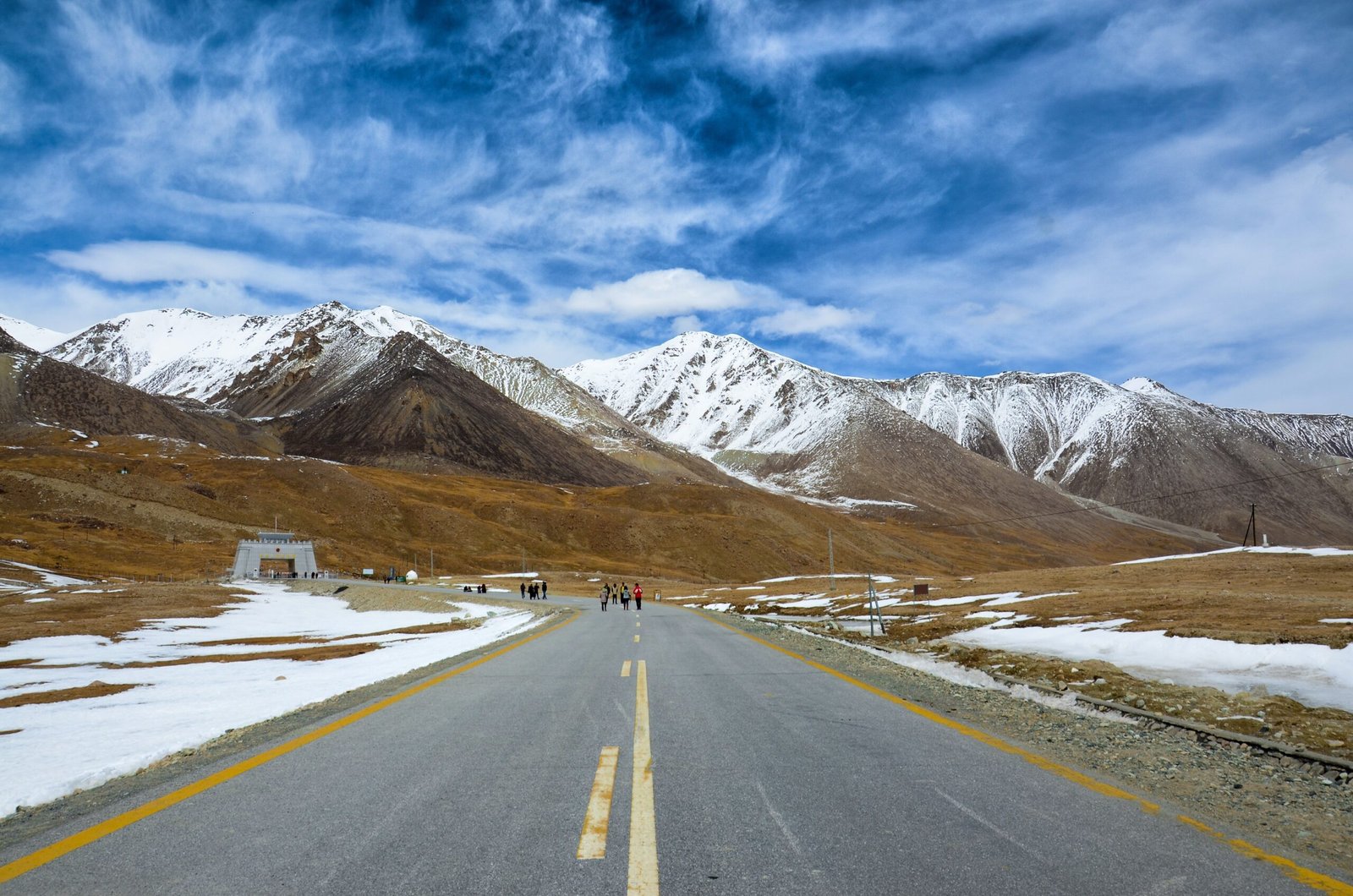
At 4,114 metres above sea level — higher than the summit of Mont Blanc — the Deosai Plains stretch across Gilgit-Baltistan in a manner that defies expectation. This is not the dramatic vertical world of K2 or Nanga Parbat. Instead, visitors arrive at a vast, open grassland the size of a small European country, where every horizon reveals nothing but sky, wildflowers, and the distant silhouettes of glaciated peaks. The Deosai Plains represent one of the most singular travel experiences in Pakistan, and the window to see them closes every October when the first heavy snowfall seals the access roads until the following June.
If you are planning a trip to northern Pakistan and have already researched Hunza Valley or the K2 base camp corridor, Deosai deserves a place on your itinerary. This guide covers everything a UK traveller needs to know: how to get there from Skardu, what to see, wildlife encounters, costs in GBP, visa considerations, and the practical detail that separates a smooth visit from a frustrating one.
Key takeaways: Deosai Plains are accessible from Skardu in a 2–3 hour jeep drive. The open season runs June to October, with late July through September offering the best combination of wildflowers and dry roads. Park entry costs around £3 per person. A full-day jeep excursion from Skardu costs approximately £40–£70. The primary wildlife draw is the Himalayan brown bear, one of the rarest mammals on the subcontinent.
What Makes the Deosai Plains So Extraordinary
The Deosai Plains are the second-highest plateau on earth, surpassed only by the Tibetan Plateau. Covering approximately 3,000 square kilometres across Skardu and Astore districts, they sit at an average elevation of 4,114 metres. That figure deserves a moment of consideration. The highest peak in the Alps, Mont Blanc, stands at 4,808 metres. The Deosai plateau places you within a few hundred metres of alpine Europe’s highest point — while you drive across open grassland in a 4×4.
The name “Deosai” derives from the Shina language, spoken across Gilgit-Baltistan, and translates roughly as “Land of Giants.” The name likely refers to the fierce winds and extreme cold that sweep the plateau, which can drop to minus 45 degrees Celsius in winter. In summer, the same landscape transforms: primroses, gentians, yellow composites, and alpine grasses turn the plateau vivid green from July through August, and the air carries an unusual clarity at altitude.
The plateau itself formed from tectonic upheaval — the same ongoing collision between the Indian and Eurasian plates that continues to push the Karakoram and Himalayan ranges upward. The result is a landscape that feels both ancient and elemental: shallow rivers crossing open meadows, isolated rock outcrops, and a sky so large and unobstructed that light behaves differently here than at lower altitudes. At night, the Milky Way is visible to the naked eye with a clarity that UK visitors, accustomed to light-polluted home skies, find genuinely surprising.
Deosai National Park was established in 1993, primarily to protect the Himalayan brown bear from poaching. The park encompasses the entire plateau and extends into surrounding valleys. It remains one of the least commercially developed protected areas in South Asia, with no permanent lodges within the park boundaries and very limited mobile signal across most of the plateau. This absence of infrastructure is precisely what draws serious travellers here.
Wildlife of Deosai: Himalayan Brown Bears and Beyond
The Himalayan brown bear (Ursus arctos isabellinus) is the reason Deosai National Park exists. In the early 1990s, the population on the plateau had fallen to an estimated 19 individuals due to hunting, habitat loss, and poaching. Since the park’s establishment, sustained conservation work — much of it supported by the Snow Leopard Foundation Pakistan — has helped the population recover to between 40 and 50 individuals. This makes Deosai one of the few places on earth where you have a realistic chance of watching these animals in the wild.
Sightings on day trips are common in July, August, and September, particularly in the early morning near Sheosar Lake and the Bara Pani meadows. Brown bears here are large, amber-coloured animals — considerably lighter in coat than their Eurasian or North American counterparts — and can be observed foraging for marmots, berries, and roots across the open plateau. A local guide with knowledge of regular bear foraging routes significantly improves sighting rates; ask your Skardu operator specifically about bear-focused visits.
Beyond the bears, the Deosai Plains support a wildlife community that rewards patient observation:
- Golden marmot — the large, ground-dwelling rodent that serves as a primary bear food source. They emerge from burrows throughout the day and produce a sharp whistle alarm call that carries far across the plateau. An accessible and photogenic animal.
- Marco Polo sheep — the iconic long-horned wild sheep named by the Venetian explorer who encountered them in Central Asia. They appear in small herds on the plateau’s fringes, often at dawn and dusk.
- Tibetan wolf — present but rarely seen. Local guides occasionally track fresh prints in soft ground near river crossings.
- Snow leopard — the park officially records their presence, though summer sightings on the open plateau are extremely uncommon. Winter is when they move through the lower margins.
- Raptors — the open plateau is excellent for eagles and hawks. Golden eagle, lammergeier (bearded vulture), and upland buzzard are regular sightings. Migratory bar-headed geese — the highest-flying migratory birds on earth — cross the plateau in September and October en route from their Central Asian breeding grounds to Indian wintering sites.
The wildflower season from late June through August also supports a community of high-altitude insects including painted lady and clouded yellow butterflies — species familiar to UK visitors but rarely encountered at this altitude elsewhere in the world.
Getting to Deosai Plains: Routes, Logistics, and the Drive from Skardu
The standard access point for Deosai Plains is Skardu, the capital of Gilgit-Baltistan. From Skardu, the Deosai road climbs steeply via the Skardu–Astore route, taking approximately 2–3 hours to reach the plateau entrance at Sheosar Gate. The road is unpaved for much of its length and requires a 4×4 vehicle. Attempting this route in a standard saloon car is not feasible. Jeep hire in Skardu for a full Deosai day trip costs between PKR 8,000 and PKR 15,000 (approximately £25–£45), negotiated with local drivers at Skardu’s commercial hub or through your accommodation.
Most visitors choose a day-trip format: depart Skardu at 7am, reach Sheosar Lake by 10am, spend several hours on the plateau including walking to bear viewpoints and exploring the lake margin, and return to Skardu by early evening. A more rewarding option for those with sufficient time is camping overnight on the plateau. Temperatures drop sharply after sunset regardless of the summer month, so sleeping equipment rated to minus 5 degrees Celsius is essential. Local operators in Skardu offer guided Deosai camping expeditions with transport, tents, cooking equipment, and a cook — these cost approximately £60–£100 per person per night depending on group size and inclusions.
The alternative access comes from the Astore Valley, entering the plateau from the south. This less-used route passes through Astore Valley scenery and allows a through-route traverse if travelling between Skardu and Gilgit. Driving the full plateau from one side to the other takes a full day on rough roads and is best arranged through an experienced local operator.
Reaching Skardu from the UK requires flying into Islamabad International Airport (ISB). Direct flights from London Heathrow are operated by Pakistan International Airlines, with codeshare options via British Airways, and connecting itineraries via Qatar Airways, Turkish Airlines, and Emirates through their respective hubs. Return fares from Heathrow typically range from £500 to £850 depending on season and advance booking lead time. Islamabad to Skardu is a 45-minute domestic PIA flight costing approximately £40–£60 return — though flights are subject to weather-related delays and cancellations, so build schedule flexibility into any itinerary that depends on this connection. The overland alternative — the Karakoram Highway from Islamabad to Skardu — takes 18–22 hours by private vehicle and traverses some of the most dramatic road scenery in the world, but it is a demanding journey.
Sheosar Lake and the Key Landmarks Within the Park
Sheosar Lake is the centrepiece of most Deosai visits. Situated at 4,142 metres — 28 metres above the plateau’s average elevation — the lake occupies a glacially carved hollow with no surface outflow. The water holds a deep blue-green colour that reflects surrounding peaks with unusual clarity on calm days. The name translates roughly as “Blind Lake” in Shina, a reference to the dense fog that frequently engulfs the lake area when weather systems move through. Fog can descend in minutes; departing before midday on an overcast day is wise.
A basic ranger post at Sheosar Gate collects entry fees (PKR 500–PKR 1,000 per person, approximately £1.50–£3). There are no food stalls, shops, or permanent accommodation within the park. Visitors who arrive without warm layers, packed food, water, sunscreen, and sunglasses create difficulties for themselves and for the ranger staff. UV radiation at 4,000 metres is intense even on overcast days — sunburn on the plateau is common and more severe than visitors from the UK typically anticipate.
Beyond Sheosar Lake, the Bara Pani meadows in the central plateau offer the best conditions for bear sightings and excellent open ground for walking. The Kala Pani area, further east, is prime golden marmot territory with strong photographic opportunities due to the animals’ curiosity and relatively large size. The plateau’s slow-moving rivers create ideal habitat for wading birds, and in September the arrival of migratory geese adds a distinct seasonal character to the landscape.
When to Visit Deosai: The Open Season and September’s Particular Appeal
The Deosai access road is impassable from approximately November through May due to snow accumulation — depths regularly exceed three metres on the plateau in midwinter. The road generally opens in late May or June depending on the previous winter’s snowfall volumes, and closes again in October or early November.
Each month in the open season has a distinct character:
- June — early season. The plateau is green with snow patches remaining in sheltered hollows. Roads can be muddy. Wildlife is active after the winter, and wildflowers are beginning to emerge.
- July–August — peak wildflower season. The plateau turns vivid green and gold with alpine flowers. Himalayan brown bears are highly active, fattening before winter. Daytime temperatures reach 15–20°C, dropping to near zero at night.
- September — arguably the most compelling month. Wildflowers fade but the plateau takes on rich amber and gold tones. Migratory birds arrive in volume. Bears are increasingly active as they prepare for hibernation. Visitor numbers fall relative to July–August. This is the last reliable month before road conditions deteriorate.
- October — late season. Weather becomes unpredictable and early snowfall is possible at any time. The plateau empties of tourists but wildlife activity remains strong. Only experienced travellers with established local guide contacts should visit in late October.
Practical Travel Tips for UK Visitors to Deosai Plains Pakistan
Visa: UK citizens can obtain a Pakistan e-visa online through the National Database and Registration Authority (NADRA) portal before travel. Standard tourist visa fees are approximately £65–£75 for a 30-day single entry, with multiple-entry options available. Processing typically takes 3–5 business days. The British High Commission in Islamabad is located at the Diplomatic Enclave, Ramna 5, Islamabad, and provides emergency consular assistance. Check the current FCDO travel advice for Pakistan at gov.uk/foreign-travel-advice/pakistan before booking — Gilgit-Baltistan, where Skardu and Deosai are located, has its own advisory status separate from parts of Pakistan the FCDO advises against visiting.
Travel insurance: Standard travel insurance does not cover high-altitude activities. Ensure your policy explicitly covers trekking and excursions above 4,000 metres. Providers including Battleface, True Traveller, and Dogtag offer adventure policies that cover Pakistan at altitude. Medical evacuation from Skardu to Islamabad is available by helicopter but costs several thousand pounds without insurance. This is a genuine risk in a remote environment at altitude — adequate cover is not optional.
Health and altitude: Deosai is significantly higher than European ski resorts and slightly below the altitude at which acute mountain sickness becomes a serious risk for unacclimatised individuals. Spend at least one night in Skardu (2,438m) before ascending to the plateau. Headache, fatigue, and mild nausea are possible even with acclimatisation. Drink water consistently, avoid alcohol the night before, and ascend gradually. Diamox (acetazolamide) is available in Pakistan pharmacies and can help prevent altitude sickness — consult your GP before travel. The NHS travel health page at travelhealthpro.org.uk provides Pakistan-specific health advice including vaccination recommendations.
Currency and costs: Pakistan uses the Pakistani Rupee (PKR). Carry cash in PKR for all expenses in northern Pakistan — reliable ATMs exist in Skardu but card acceptance outside hotels is minimal. A full Deosai day excursion from Skardu costs approximately:
- Jeep hire for two people sharing: £20–£22 per person
- Local guide (strongly recommended): £15–£20
- Park entry fee: £2–£3
- Packed food and drinks: £8–£10
- Approximate total per person: £45–£55
Skardu guesthouse accommodation ranges from basic double rooms at £15–£20 per night to comfortable 3-star hotel options at £50–£80 per night. A five-night Skardu itinerary including Deosai, Sheosar Lake, Shigar Fort, and Upper Kachura Lake represents excellent value compared to similar wilderness destinations in Nepal, Bhutan, or the Peruvian Andes.
For structured itineraries that include Deosai as part of a wider northern Pakistan journey, browse the Pakistan tour packages available through Passage to Pakistan, which include Skardu-based options with Deosai excursions built in.
Frequently Asked Questions
Is it possible to see Himalayan brown bears on a day trip to Deosai?
Yes, sightings on day trips are common in July, August, and September, particularly in early morning near Sheosar Lake and the Bara Pani meadows. A local guide who knows the current bear foraging locations significantly increases the probability of a sighting. Bears are wild animals and should be observed from a distance of at least 100 metres — the rangers at Sheosar Gate enforce this.
Do I need a special permit to enter Deosai National Park?
No trekking permit separate from the standard tourist visa is required for a day visit. There is a national park entry fee of PKR 500–1,000 (approximately £1.50–£3) collected at Sheosar Gate. Overnight camping within the park requires informing the rangers and paying a nominal camping fee. Your Skardu driver or operator will typically handle the gate paperwork.
How does the altitude affect visitors who have come directly from the UK?
Most visitors who spend at least one night in Skardu before ascending to Deosai tolerate the altitude adequately. Mild symptoms — headache, fatigue, slight shortness of breath — are possible and normal at 4,000+ metres. Drinking plenty of water, avoiding alcohol, and moving slowly reduce risk. Anyone with pre-existing cardiac or pulmonary conditions should consult a physician before visiting altitudes above 3,500 metres.
Is the Deosai road suitable for a standard hired 4×4?
The road is rough but manageable in a standard 4×4 such as a Toyota Land Cruiser or Hilux Surf — the vehicles of choice for Skardu-based drivers. Road condition varies by season: June and early July roads can be muddy after snowmelt, while August and September offer the most reliable surface. Your driver will know current conditions before departure.
What should I bring on a day trip to Deosai?
Carry warm layers including a fleece and windproof jacket regardless of the forecast — temperatures on the plateau can drop 10 degrees in minutes. Pack sufficient food and water for the full day. Bring high-factor sunscreen and UV-blocking sunglasses. A camera with a telephoto lens (200mm+) is worthwhile for wildlife observation at distance. Mobile signal is absent across most of the plateau, so download offline maps before departure.
Experience Pakistan’s High-Altitude Wilderness with Passage to Pakistan
The Deosai Plains offer something increasingly rare in global travel: a vast, accessible wilderness that has not been packaged, branded, or stripped of its difficulty. The roads are rough, the altitude is serious, and the facilities within the park are minimal by design. These constraints are not bugs in the experience — they are the reason the Himalayan brown bear still forages across this plateau, and why the night sky above Sheosar Lake remains one of the most extraordinary sights available to a traveller from the UK. September 2026 is the final window of the year. Deosai closes its gates when the snow arrives, and does not reopen until the following June.
Passage to Pakistan arranges bespoke northern Pakistan itineraries that include Deosai excursions from Skardu, with experienced local guides, well-maintained vehicles, and accommodation selected for location and reliability. Explore the full range of Pakistan tour packages at passagetopakistan.pk to begin planning a journey to one of the least-visited and most compelling landscapes in the world.