Gilgit-Baltistan — Pakistan’s northernmost territory — is unlike anywhere else on earth. Here, three of the world’s fourteen eight-thousanders rise from the same granite-and-ice landscape: K2 (8,611m), Broad Peak (8,047m), and Gasherbrum I (8,068m). Add the Karakoram, Pamir, Hindukush, and western Himalayas converging within a single region, and you have a destination that leaves even well-travelled visitors genuinely speechless.
For UK travellers seeking something beyond the well-worn tourist trail, Gilgit-Baltistan delivers on every level: vertiginous mountain roads, ancient Silk Road forts, turquoise glacial lakes, and some of the warmest hospitality you will encounter anywhere in the world. This guide covers everything you need to plan a trip from the United Kingdom — from flights and visas to the best time to go, where to stay, and how to stay safe.
Where is Gilgit-Baltistan?
Gilgit-Baltistan (GB) occupies Pakistan’s extreme north, bordering China’s Xinjiang province to the northeast, Afghanistan’s Wakhan Corridor to the northwest, and the disputed region of Indian-administered Kashmir to the east. Covering roughly 72,000 square kilometres — larger than Scotland and Wales combined — it is home to more high peaks than any other region on the planet.
The territory is divided into seven administrative districts, each with its own distinct character: Gilgit (the capital), Hunza, Nagar, Baltistan (centred on Skardu), Ghizer, Diamer, and Astore. The capital, Gilgit city, sits at approximately 1,500 metres above sea level at the confluence of the Gilgit and Hunza rivers — a busy trading crossroads that has served Silk Road travellers for centuries.
Despite its size and extraordinary landscapes, GB remains one of the least-visited regions by international tourists, which means you can explore dramatic mountain scenery, century-old forts, and remote glacial valleys without the crowds that define so many of the world’s headline destinations.
Getting to Gilgit-Baltistan from the UK
Flights from the UK to Islamabad
All international flights into Pakistan land at Islamabad International Airport (ISB). From the UK, the main carriers serving this route are Emirates (via Dubai), Qatar Airways (via Doha), and Turkish Airlines (via Istanbul). Flight times typically range from 14 to 17 hours depending on layover duration, and return fares generally start from around £600–£900, though booking well in advance or travelling outside peak season can bring prices down considerably.
PIA (Pakistan International Airlines) also operates direct flights from Manchester and London Heathrow to Islamabad, which can offer competitive fares and the convenience of checking luggage through to your destination.
Islamabad to Gilgit
Once in Islamabad, you have two options for reaching Gilgit: by air or by road.
By air: PIA and Serene Air both operate flights between Islamabad and Gilgit Airport, a journey of around one hour. These flights are spectacular — on clear days you fly at eye level with the Himalayas — but they are notoriously weather-dependent. Delays and cancellations are common, particularly in winter and during unsettled weather. Book flexible tickets and never plan an onward journey that absolutely depends on this flight running on time.
By road — the Karakoram Highway: The KKH is one of the great road journeys of the world. Running approximately 500 kilometres from Islamabad to Gilgit, it follows the Indus River through some of the most dramatic gorge scenery imaginable before climbing into the Karakoram range. The drive takes 12–16 hours by private vehicle. It is long, occasionally hair-raising, and utterly unforgettable. Travelling with a reputable tour operator means you have an experienced driver who knows every bend and a guide who can explain what you are seeing.
Islamabad to Skardu
Skardu, the gateway to K2 and the Baltoro Glacier, is served by flights from Islamabad (approximately one hour, also weather-dependent) or by a long overland journey of 18–20 hours via the Karakoram Highway and Indus Highway. Many travellers combine both — flying one way and driving the other to maximise scenery and flexibility.
Best Time to Visit Gilgit-Baltistan
Gilgit-Baltistan has pronounced seasons, and the timing of your visit makes an enormous difference to what you will experience.
April–June (Spring): One of the most magical periods to visit. Hunza Valley’s famous cherry and apricot orchards burst into blossom from late March through April, painting the hillsides in white and pink against a backdrop of snow-capped peaks. Temperatures are pleasant in the valleys (15–25°C), though some high-altitude roads and passes may still be closed by snowmelt. Crowds are lighter than peak summer, making this an excellent window for those who want the blossom spectacle without the bustle.
July–August (Peak Season): The warmest months, when all main roads are open, mountain festivals take place across the region, and trekking conditions at lower altitudes are ideal. This is the busiest period — particularly around Fairy Meadows and the Hunza Valley — so book accommodation and tour packages well in advance. Temperatures in Gilgit and Skardu reach 30–35°C in valley floors, but higher elevations remain comfortably cool.
September–October (Golden Autumn): Many experienced visitors consider this the finest season. The summer crowds begin to thin, the light is extraordinary, poplar trees turn gold against the mountains, and daytime temperatures remain very comfortable for trekking and sightseeing. Mountain roads are fully open. For photography and trekking combined, September is hard to beat.
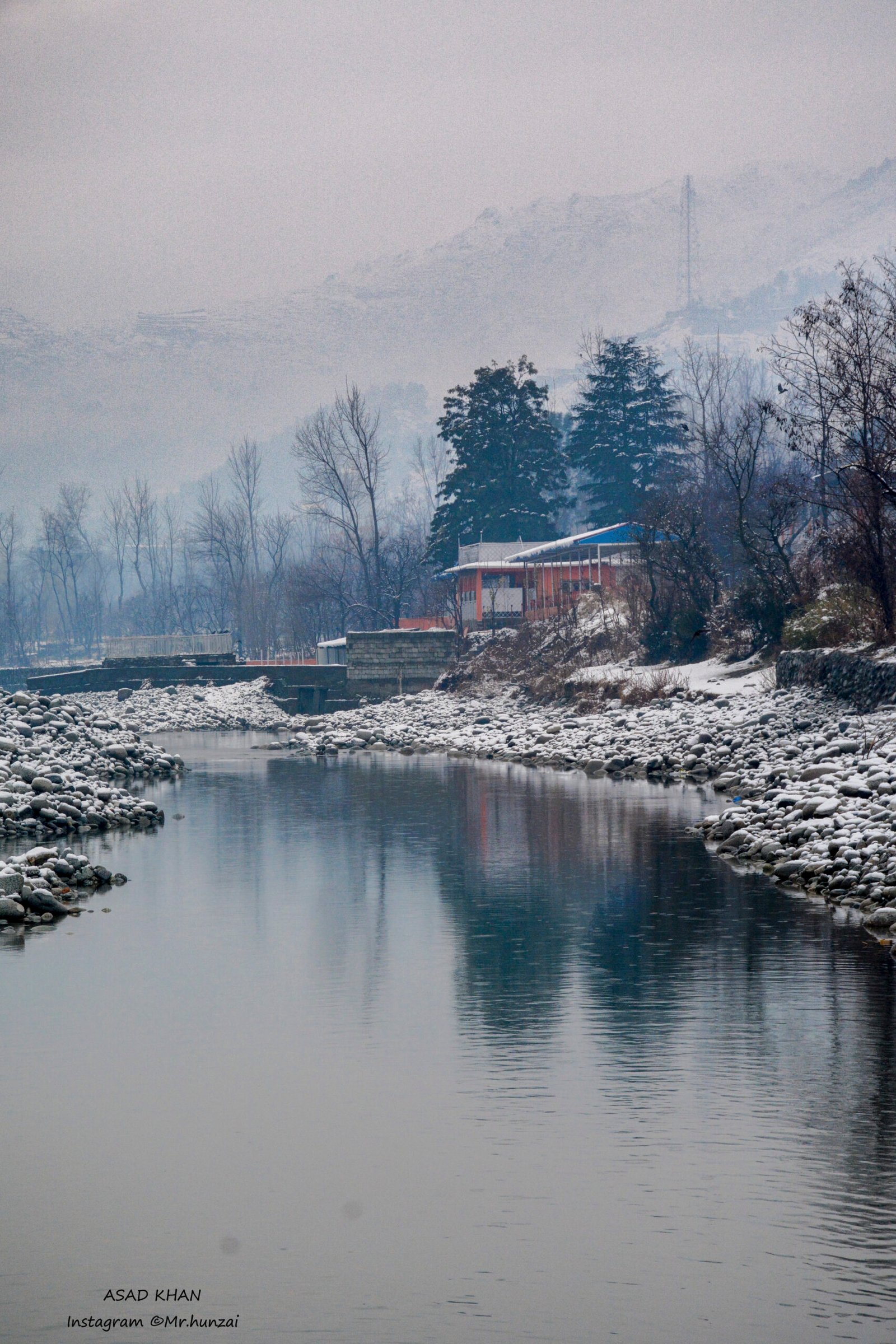
November–March (Winter): Much of GB becomes inaccessible in winter. The Karakoram Highway north of Gilgit can close due to snow and ice, many guesthouses shut, and Fairy Meadows becomes unreachable. Naltar Valley offers skiing for the adventurous, and Skardu has a stark, high-desert beauty in the cold months — but this is specialist territory, best left to those with specific winter mountaineering or skiing plans.
Top Places to Visit in Gilgit-Baltistan
Hunza Valley
Hunza is the destination that makes most visitors fall in love with Pakistan. The Hunza River Valley, centred on the old Mir’s capital of Karimabad at 2,438 metres, is enclosed by peaks exceeding 7,000 metres on all sides — Rakaposhi (7,788m), Ultar Sar (7,388m), and Diran (7,257m) forming an extraordinary amphitheatre of rock and ice.
In Karimabad, Baltit Fort — built over 800 years ago by Kashmiri craftsmen and restored in the 1990s by the Aga Khan Trust for Culture — is a must. Its rooftop views across the valley at sunrise are among the finest mountain panoramas in the world. The older Altit Fort, perched on a cliff above the river, houses a community museum and is equally rewarding. For the very best viewpoint in the region, the Eagle’s Nest at Duikar (3,600m) offers a sunrise vista of six peaks above 7,000 metres that simply cannot be overstated.
Attabad Lake, created in January 2010 when a catastrophic landslide dammed the Hunza River, is one of GB’s most photographed sights — its water an almost unreal turquoise blue, surrounded by sheer canyon walls. A short boat trip across the lake is an essential experience. Continuing north on the KKH brings you to the Khunjerab Pass at 4,693 metres, the world’s highest paved international border crossing and an extraordinary high-altitude landscape of rolling tundra and wild yaks.
Skardu and Baltistan
Skardu, the capital of Baltistan district, sits at 2,228 metres in a broad sandy valley carved by the Indus River. It is a slower-paced, very different experience from Hunza — more austere, more Central Asian in character, with the great brown mass of the Karakoram rising to its north.
The Skardu Fort and the crystalline Kachura Lakes are worth a day’s exploration. The Shigar Valley, 30 kilometres from Skardu, contains the magnificently restored Shigar Palace — a 17th-century royal residence now operating as a heritage hotel under the Aga Khan Cultural Service — and a network of small villages where traditional Balti crafts are still practised. Most importantly, Skardu is the jumping-off point for the Deosai National Park — the world’s second-highest plateau at 4,114 metres — and the gateway to K2 Base Camp and the Baltoro Glacier.
Gilgit City
Often overlooked in favour of Hunza and Skardu, Gilgit city repays a day’s exploration. The Kargah Buddha — a 7th-century rock carving of a standing Buddhist figure on a cliff face about 10 minutes’ drive from the centre — is a remarkable reminder of this region’s pre-Islamic past along the ancient Silk Road. The main bazaar is lively and colourful, a genuine working trading town rather than a tourist destination.
For those seeking a detour off the main circuit, Naltar Valley (35km from Gilgit) is exceptional: a pine-forested mountain valley with three blue-green glacial lakes and, in winter, one of Pakistan’s only ski resorts.
Fairy Meadows
No list of GB highlights is complete without Fairy Meadows. This high alpine pasture (3,300m) sits directly beneath the Raikot Face of Nanga Parbat (8,126m) — the world’s ninth-highest peak — and the combination of the lush meadow, the pine forest behind it, and the sheer 7,000-metre wall of ice and rock rising directly overhead is one of the most dramatic mountain compositions on earth.
Access is from Raikot Bridge on the KKH: a rough jeep track climbs for 30 minutes to a trailhead, followed by a 3–4 hour hike through forest. It is not technically demanding, but the altitude requires a reasonable fitness level. Accommodation at Fairy Meadows ranges from simple wooden guesthouses to tented camps. Spending a night here, watching the sunset alpenglow on Nanga Parbat from the meadow, is an experience that stays with you for life.
Trekking in Gilgit-Baltistan
GB is one of the world’s premier trekking destinations, with routes ranging from accessible two-day walks to epic three-week expeditions.
The K2 Base Camp trek via the Baltoro Glacier is the ultimate GB adventure — a 14–21 day return journey from Skardu that passes the famous Concordia confluence, where the world’s greatest concentration of high peaks surrounds you on all sides. This is a challenging, high-commitment trek best done in June–August. It requires good fitness, proper gear, and ideally some prior high-altitude experience.
The Gondogoro La (5,940m) adds a dramatic high-altitude pass crossing to the K2 circuit, creating a 14–16 day loop that is considered one of the world’s finest mountain treks. It is a technical route requiring crampons and ice axes, and should only be attempted with experienced guides.
For those with less time or experience, Rakaposhi Base Camp (2–3 days from Minapin village) is an achievable and spectacular introduction to GB trekking, with front-row views of Rakaposhi’s north face. The Snow Lake expedition (18–21 days) is for experienced wilderness trekkers seeking true remoteness.
Important: most significant treks in GB require permits from the Tourism Corporation of Pakistan, and a licensed local guide is legally required above certain altitudes. A reputable tour operator handles all of this automatically — one of many practical reasons to book with specialists rather than attempting to arrange independently.
Accommodation in Gilgit-Baltistan
Budget travellers will find a network of local guesthouses throughout the main valleys, typically costing £5–£20 per night. Standards vary widely, but many are family-run with home-cooked meals and genuine warmth. In Hunza particularly, guesthouse culture is well-established and the better places offer good mountain views and clean facilities.
For mid-range and upmarket stays, the Serena Hotels group operates properties in Gilgit, Hunza, and Skardu, all combining comfortable rooms with traditional architectural detailing and reliable service. The Shigar Palace (Serena’s heritage property in the Shigar Valley) is one of the finest places to stay in all of Pakistan. The Eagle’s Nest Hotel in Duikar, above Karimabad, offers perhaps the most famous mountain view from any hotel bed in the country.
Passage to Pakistan’s fully guided tour packages include all accommodation, selected for location and quality, with private transport and an English-speaking guide throughout. This removes all the uncertainty and logistics — particularly valuable in a region where road conditions, guesthouse availability, and permit requirements change regularly.
Food and Local Culture
Hunza Valley’s cuisine is distinct from the rest of Pakistan — lighter, fresher, and heavily influenced by the valley’s extraordinary local produce. The region is famed for its apricots (dried, pressed into oil, and incorporated into local dishes), walnuts, mulberries, and fresh vegetables from terraced fields that cling to the mountainsides. Chapshuro (a meat-filled flatbread cooked on a griddle) is the local staple and deeply satisfying after a day on the mountain. Diram fiti (mulberry pancakes) and harissa (slow-cooked meat and wheat porridge) are other local specialities worth seeking out.
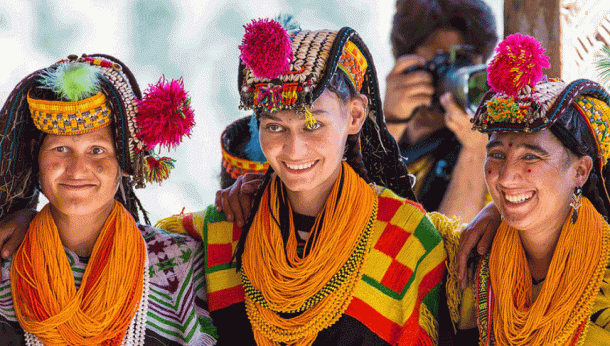
Culturally, Gilgit-Baltistan is predominantly Muslim, but the majority of Hunza’s population is Ismaili Muslim, followers of the Aga Khan. Ismaili communities are notably liberal by Pakistani standards — women in Hunza have been highly educated since the 1940s through the Aga Khan’s school network, and female visitors do not need to cover their hair in the Hunza Valley. Dress modestly in Skardu and Gilgit, but Hunza’s relaxed atmosphere surprises many UK visitors. Alcohol is not available anywhere in GB.
Practical Information for UK Visitors
Visa
UK citizens can obtain a Pakistan eVisa online through the NADRA portal (visa.nadra.gov.pk). The tourist eVisa costs approximately £35–£45 and is valid for 30 days. Processing is usually swift — within 24–72 hours in most cases — but apply well before travel. Ensure your passport has at least six months’ validity from your date of entry.
Currency
Pakistan’s currency is the Pakistani Rupee (PKR). The exchange rate in 2026 is approximately 350–360 PKR to the pound. There are ATMs in Gilgit and Skardu town centres, but they are not always reliable. Take sufficient cash from Islamabad — dollars and pounds can be exchanged easily there — as remote areas of GB have no banking facilities at all.
Mobile and Internet
Pakistan’s main mobile networks, Jazz and Zong, have 4G coverage in the main valleys and along the KKH corridor. Buy a local SIM in Islamabad on arrival; foreigners can register a SIM at main network shops with your passport.
Travel Insurance
Travel insurance is absolutely non-negotiable. Your policy must specifically cover emergency helicopter evacuation — mountain rescue in this region is almost always by helicopter, and without appropriate insurance, the cost can be catastrophic. Standard UK travel insurance policies frequently exclude or cap helicopter evacuation; purchase specialist adventure travel insurance.
FCDO Travel Advice
Check the UK FCDO travel advice for Pakistan at gov.uk/foreign-travel-advice/pakistan before and shortly before your departure. Gilgit-Baltistan is generally rated separately from more volatile parts of Pakistan.
Safety in Gilgit-Baltistan
Gilgit-Baltistan has a well-established and largely deserved reputation as one of Pakistan’s safest regions for international tourists. The local population across the Hunza Valley and Skardu is genuinely welcoming of foreign visitors, and serious incidents involving international travellers are rare.
Altitude is the most common issue affecting visitors: Skardu sits at 2,228 metres and Hunza at around 2,400m. Acclimatise properly — allow at least two days before significant physical exertion — stay well-hydrated, and be alert to symptoms of Acute Mountain Sickness (AMS): headache, nausea, fatigue, and dizziness. Never ascend further if symptoms appear.
Mountain roads demand respect. Sections of the KKH are narrow, exposed, and subject to rockfall and landslides. Travel with experienced, locally-familiar drivers. The emergency services number in GB is 1122 (Rescue).
Why Book Your Gilgit-Baltistan Tour with Passage to Pakistan
Planning a trip to Gilgit-Baltistan independently is considerably more complex than booking a comparable trip elsewhere. Trekking permits, a licensed guide requirement for high-altitude routes, highly variable road conditions, ATM unreliability, and the genuine difficulty of communicating accommodation and transport needs all add friction that most first-time visitors would rather avoid.
Passage to Pakistan specialises in tours to northern Pakistan for UK travellers, with years of on-the-ground experience and long-standing relationships with the best guesthouses, guides, and drivers in the region. Our tours include private airport transfers, all accommodation, an English-speaking expert guide throughout, fully inclusive ground transport in a private 4×4, all trekking permits, and full 24-hour support from our UK office.
Whether you are joining our 13-day Grand Northern Pakistan Tour — taking in Fairy Meadows, Hunza, Attabad Lake, and Skardu — or our dedicated 8-day Hunza Valley Tour, you arrive in Islamabad knowing that every detail has been arranged and every contingency planned for.