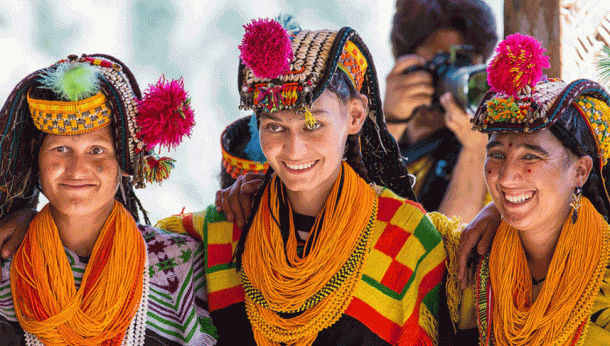
Pakistan is safe for tourists. That statement will surprise people who have formed their picture of the country from news coverage, and it is worth addressing directly. The gap between what international media reports and what visitors actually experience in Pakistan is one of the largest of any destination in Asia. Hundreds of thousands of foreign tourists travel through Pakistan each year, and the overwhelming majority return home without incident, often describing it as the most welcoming country they have ever visited.
That does not mean Pakistan is without risk. Every destination has areas that require care, and Pakistan is no different. What this guide does is give you an accurate, practical assessment of safety conditions as they actually are, so you can make an informed decision and plan accordingly.
The Honest Picture on Safety
The UK Foreign Commonwealth and Development Office, the US State Department, and similar government bodies issue travel advisories for Pakistan that range from “exercise normal precautions” in certain areas to “do not travel” in others. Reading these advisories carefully is important, because they are not blanket warnings. The areas flagged as high risk are specific: the former tribal regions along the Afghan border (particularly Khyber Pakhtunkhwa’s border districts and Balochistan’s more remote areas), and certain parts of Karachi. The vast majority of the places tourists actually go — Lahore, Islamabad, Hunza, Gilgit-Baltistan, Skardu, the Karakoram Highway, the Swat Valley — fall into a much lower risk category.
Pakistan experienced a serious security period in the late 2000s and early 2010s. Significant work since then has transformed the security situation in the main tourist corridors. The northern regions — which are the primary destination for most international visitors — have seen consistent tourism growth throughout this period precisely because conditions improved markedly.
Where Tourists Go and How Safe Those Areas Are
Most international tourists to Pakistan visit one of several main corridors. Understanding the specific situation in each helps far more than any general statement about the country.
Islamabad and Rawalpindi are the entry point for most international flights. Islamabad is a planned capital city with a functioning diplomatic community, international hotels, and a calm, orderly character. Security is visible but unobtrusive. Incidents do occur in Rawalpindi on occasion, but for tourists moving through for a day or two before heading north, it presents manageable and ordinary urban risk.
Lahore is Pakistan’s cultural capital and one of the great historic cities of South Asia. The old city, the Mughal monuments, the food scene, and the sheer energy of the place make it a destination in its own right. Foreign tourists walk the streets of Lahore, eat at street stalls, and visit shrines without difficulty. The city has a cosmopolitan character and locals are accustomed to foreign visitors.
Gilgit-Baltistan and the Karakoram Highway are where most adventure and trekking tourists spend the majority of their time. This region — encompassing Hunza, Naltar, Gilgit, Skardu, the Deosai Plateau, and the access routes to K2, Nanga Parbat, and dozens of other peaks — has a strong track record of safety for tourists. The communities here have been hosting foreign mountaineers and trekkers for decades. The local economy depends substantially on tourism, and visitors are genuinely welcomed. Violence against tourists in this region is exceptionally rare.
The Swat Valley was severely affected by militancy in the late 2000s but has undergone a dramatic recovery. It is now an active tourist destination for domestic and foreign visitors, with hotels, paragliding, hiking, and accessible mountain scenery. The change in conditions since the period that generated most of the negative international coverage is substantial.
Practical Safety Measures for Tourists
Travelling intelligently in Pakistan means applying the same approach you would use in any unfamiliar country: stay informed, avoid areas flagged in current advisories, keep your accommodation and itinerary registered with your embassy, and maintain contact with people back home.
Register with your embassy or consulate before you travel. The British High Commission, US Embassy, Australian High Commission, and their European equivalents all maintain registration systems for nationals travelling in Pakistan. This is a basic precaution that lets your embassy reach you if the situation in an area changes.
Use a reputable local operator or guide for trekking and remote travel. In the northern areas, this is standard practice and makes both logistical and safety sense. Local guides know current conditions on trails, have relationships with local communities, and can navigate permits and checkpoints efficiently. The Pakistan tour packages offered by experienced operators include this kind of support as standard.
Check current advisories close to your departure date. Conditions change, and an advisory that applied six months ago may have been revised. The FCDO, State Department, and similar bodies update their guidance regularly. Read the specific regional breakdowns rather than just the headline rating.
Avoid overland routes that cross into or near the Afghan border, and do not travel to the border districts of Khyber Pakhtunkhwa or into the more remote parts of Balochistan without specialist guidance and a clear understanding of current conditions. These areas are not part of a standard tourist itinerary and require a different level of planning.
How Locals Treat Foreign Tourists
This is the part of the Pakistan travel experience that surprises visitors most consistently. The hospitality extended to foreign tourists in Pakistan is extraordinary by any standard. In small villages along the Karakoram Highway, families invite passing travellers in for tea. In bazaars, strangers go out of their way to help with directions or translation. At guesthouses in the north, the owner’s family often treats guests as extended family rather than paying customers.
Pakistan has a concept called mehman-nawazi — literally, the honouring of guests — that is taken seriously across the country. A foreign visitor carries a kind of social distinction that locals feel a genuine obligation to uphold. This is not performance for tourists. It is how Pakistani society works, and it is one of the most consistent things visitors report after returning.
This cultural warmth does not eliminate risk, but it does mean that in practice, most foreign tourists in Pakistan find themselves in situations where locals are actively looking out for them rather than the reverse.
Women Travelling in Pakistan
Women travel in Pakistan both as part of groups and independently. It requires more planning than some destinations and some adjustment to local norms, but it is entirely feasible. Dressing modestly — loose trousers, a long top, a dupatta or scarf for the head in more conservative areas — is both respectful and practically useful in reducing unwanted attention. In the northern regions, where communities are more accustomed to international trekkers and mountaineers, the experience for women travellers is generally easier than in more conservative urban areas.
Women travelling solo or in small groups often report that the same culture of hospitality that benefits all tourists extends to them specifically: shopkeepers, hotel staff, and local guides tend to be protective rather than threatening. That said, exercising standard precautions — not walking alone at night in unfamiliar urban areas, being conscious of the situations you put yourself in — applies here as it does anywhere.
Health and Medical Considerations
Health preparation matters more in Pakistan than in some other destinations. Medical facilities in the northern regions are limited, and serious medical emergencies require evacuation to Gilgit or Islamabad. Travel insurance that covers medical evacuation is not optional for trekking and high-altitude travel — it is essential.
Altitude sickness is a genuine risk in Gilgit-Baltistan. Hunza sits at around 2,400 metres, Fairy Meadows at 3,300 metres, and trek routes to base camps push well above 4,000 metres. Ascend gradually, know the symptoms of acute mountain sickness, and do not push through them.
Vaccinations recommended for Pakistan include Hepatitis A and B, typhoid, tetanus, and rabies if you plan to spend time in rural areas. Consult a travel health clinic four to six weeks before departure. Malaria prophylaxis may be recommended depending on the regions you plan to visit and the season.
Food and water hygiene requires the same approach you would apply anywhere in South Asia: drink bottled or filtered water, be selective about where you eat, and carry oral rehydration salts. That said, Pakistani food — particularly in the north — is generally cooked fresh and served hot, which reduces many of the common risks.
What a Safe Pakistan Trip Looks Like in Practice
A well-planned trip to Pakistan — arriving in Islamabad, spending time in Lahore, travelling the Karakoram Highway through Hunza to Gilgit or Skardu, trekking in Gilgit-Baltistan — carries a level of risk that most experienced travellers would consider manageable and proportionate to the experience on offer.
The people who travel to Pakistan and come back saying it was the best trip of their lives are not naive or reckless. They are travellers who did their research, planned carefully, used reputable local operators, stayed informed, and found that the country matched almost none of their pre-trip anxieties and exceeded almost all of their expectations.
Pakistan rewards the effort it takes to get there. The landscapes of the north — the Karakoram, the Himalayas, the Hindu Kush converging in a single region — are among the most extraordinary on earth. The history of Lahore and the Mughal trail is world-class. The food is underrated internationally. And the people, consistently, are the thing visitors remember most.
If you want to plan a trip and would like help putting together the right itinerary for your timeframe, fitness level, and interests, the team at Passage to Pakistan can organise everything from transport and accommodation to guides and permits. Get in touch and we will put together a Pakistan tour package that works for you.