 Guided tour
Hunza Valley Tour (2026) – 8 Days & 7 Nights
8 Days & 7 Nights guided journey from £599 per person.
Enquire now →View itinerary8 Days 7 Nights
DurationPrivate or Group
Group typeApr – Oct 2026
Seasonfrom £599pp
PriceBook now →Overview
About this journey
The Hunza Valley Tour is an 8-day journey into one of the most celebrated landscapes on earth — a mountain paradise in Gilgit-Baltistan that has captivated explorers, writers, and adventurers since the first Western travellers ventured up the Karakoram Highway in the 1970s. Hunza Valley sits at 2,438 metres above sea level and is flanked on all sides by extraordinary peaks: Rakaposhi (7,788m) to the south, Ultar Sar (7,388m) directly above Karimabad, Diran (7,257m) to the west, and the jagged Passu Cones beyond the upper reaches of the valley. This is the view that inspired James Hilton’s fictional Shangri-La, and once you stand on the Eagle’s Nest viewpoint at dawn and watch six peaks above 7,000 metres flame in sequence at first light, you will understand exactly why.
This tour is designed to give you a thorough and immersive experience of Hunza Valley without the exhaustion of a longer expedition. In 8 days, you visit the ancient Baltit Fort and Altit Fort above Karimabad, make the drive north to the vivid turquoise Attabad Lake and the extraordinary Passu Cones, cross the legendary Hussaini Suspension Bridge, drive to the Pakistan-China border at Khunjerab Pass (4,693m), and explore the broader Gilgit region on your return. Two full days in Karimabad allow you to absorb the culture, cuisine, and community of the Ismaili heartland at your own pace.
Hunza is a particularly welcoming destination for UK travellers. The Ismaili Muslim community that forms the majority of Hunza’s population has a strong tradition of education, gender equality, and international openness fostered over decades by the Aga Khan Development Network. Female travellers consistently report feeling safe and comfortable in Hunza even when travelling independently. The valley is clean, the food is excellent, and the hospitality — particularly at the family-run mountain guesthouses of Karimabad — is genuinely warm and unforced.
The 8-day Hunza Valley Tour suits travellers who have 10–12 days available for Pakistan including travel days, those who want a focused Hunza experience without adding Skardu or Fairy Meadows, photographers targeting the valley’s extraordinary light and peak views, and couples or small groups seeking a manageable but adventurous first trip to Pakistan. The tour includes Khunjerab Pass as a full-day excursion — the drive north past Attabad Lake and up through Khunjerab National Park to the world’s highest international road border is an experience in itself, regardless of whether you cross into China.
Itinerary
Day by day
Below is a full day-by-day breakdown of the Hunza Valley Tour, including places visited, experiences, approximate driving times, and overnight locations.
Day 1 – Arrival in Islamabad
Your tour begins with arrival at Islamabad International Airport (IATA: ISB). A guide and driver meet you in the arrivals hall and transfer you to your hotel in the F-7 or Blue Area district of Islamabad. The evening includes a welcome briefing over dinner, where your guide introduces the tour, distributes practical notes, and answers initial questions. Islamabad is a pleasant, tree-lined capital with excellent restaurants in the F-7 and F-6 sectors — a good option if you arrive with energy in the evening. Overnight in Islamabad (508m).
Day 2 – Islamabad to Karimabad via Karakoram Highway (approx. 450km, 9–10 hrs)
A long but spectacular driving day north on the legendary Karakoram Highway. Departing at 6am, the route passes through Abbottabad (1,256m, stop for breakfast) and then enters the dramatic Kohistan gorges, where the Indus River churns through sheer canyon walls. The scenery shifts from terraced hillside agriculture to barren rock and glacial debris as altitude increases. Near Raikot Bridge you catch your first glimpse of Nanga Parbat (8,126m) rising over the valley. A roadside lunch stop at a local dhaba before the final approach to Karimabad. On arrival in Karimabad (2,438m), the valley opens dramatically — mountains on all sides, the ancient Baltit Fort above, apricot terraces below. Overnight in Karimabad.
Day 3 – Karimabad: Baltit Fort, Altit Fort, and Karimabad Bazaar
A full day exploring the heart of historic Hunza. Morning walk up to Baltit Fort (2,550m), built in the 8th century by Kashmiri craftsmen, expanded by successive Mirs of Hunza over nine centuries, and meticulously restored in the 1990s by the Aga Khan Trust for Culture. The fort’s interior contains royal reception halls, a watchtower with 360-degree views, and a fascinating exhibition on the history of the Hunza kingdom. Afternoon at Altit Fort (2,400m), the older of the two at over 900 years old, set on a cliff above the Altit village with views down the Hunza River. The lower terrace community museum tells the story of Altit village life. Return to Karimabad bazaar for late afternoon — browse dried apricot and walnut stalls, local gemstones (ruby, emerald, lapis lazuli from surrounding mountains), traditional Hunza caps, and embroidered fabric. Overnight in Karimabad.
Day 4 – Eagle’s Nest Sunrise, Ultar Base Camp Hike
An early alarm for this extraordinary day. Depart at 5am and drive 45 minutes up a rough mountain track to Eagle’s Nest viewpoint (3,600m) at Duikar village for sunrise over six Karakoram peaks above 7,000 metres — Rakaposhi, Diran, Ultar Sar, Bojahagur Duanasir II, Lady Finger, and Bublimoting. The light on these peaks at dawn is one of the great photographic experiences in Pakistan. Return for a full breakfast, then a morning hike to Ultar Base Camp (3,000m, approximately 3 hours return) for close-up views of the Ultar Sar glacier. The afternoon is free in Karimabad — visit the Hunza Cultural Museum, taste fresh mulberry juice in season (May–June), or simply sit with the view from your guesthouse terrace. Overnight in Karimabad.
Day 5 – Attabad Lake, Passu Cones, Hussaini Bridge
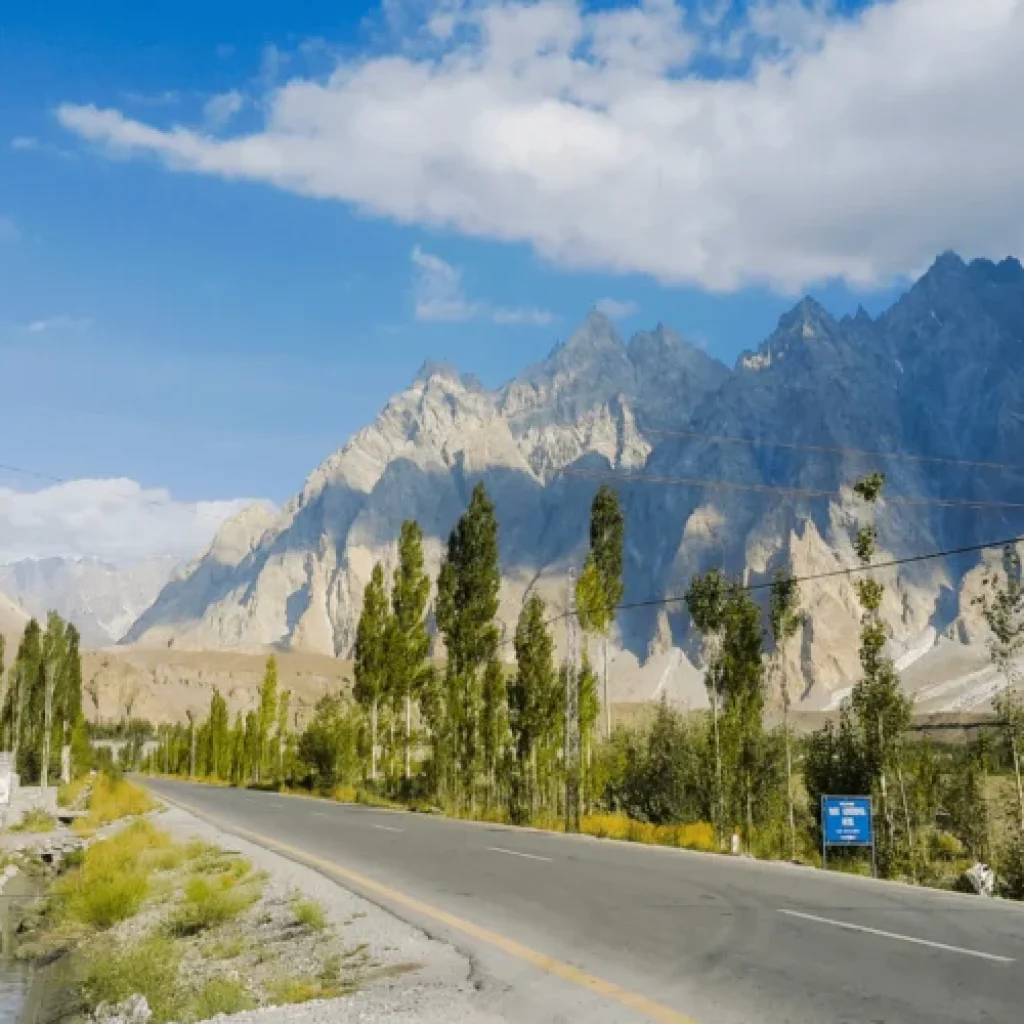
Drive 40km north of Karimabad to Attabad Lake, one of Pakistan’s most striking natural features. Created in January 2010 when a massive landslide at Attabad village dammed the Hunza River for 22km, the lake is now a vivid, impossible turquoise — the colour caused by suspended glacial flour — flanked by raw canyon walls. A 20-minute boat trip across the lake gives you extraordinary views of the dam, the old submerged KKH road tunnels, and the mountains beyond. Continue north to Passu (2,400m), where the Passu Cones — a row of 10 razor-edged cathedral-like rock towers rising to 6,106m — rise directly above the village in one of the most distinctive mountain silhouettes in the Karakoram. Walk the Hussaini Suspension Bridge, a 200-metre rope-and-plank crossing above the Hunza River that is widely photographed and unforgettable to cross. Return to Karimabad or overnight in Gulmit. Overnight in Karimabad or Gulmit.
Day 6 – Khunjerab Pass (4,693m) and Return
A full-day excursion to Khunjerab Pass — the highest paved international border crossing in the world at 4,693 metres and the historical gateway between Pakistan and China on the ancient Silk Road. The drive north from Karimabad (approximately 2.5 hours) passes through Sost (the last Pakistani customs town), climbs steadily through Khunjerab National Park — home to Marco Polo sheep, snow leopards, wolves, and Himalayan birds of prey — and culminates at the border gate. Photos at the international boundary marker, a quick step into Chinese territory (passport not required, simply to touch the marker), then return south. The Khunjerab National Park section of the drive, above 3,000m, is itself extraordinary for wildlife spotting and high-altitude scenery. Return to Karimabad in the evening. Overnight in Karimabad.
Day 7 – Rakaposhi Viewpoint, Nagar Valley, Gilgit
Check out from Karimabad and begin the return south, with a morning stop at the Rakaposhi Viewpoint at Minapin village (2,800m) for a definitive close-up view of Rakaposhi’s north face — at 7,788m, it is one of the world’s highest peaks with the greatest unbroken vertical rise from base to summit (5,800m of vertical over 15km horizontal distance). Short drive into Nagar Valley (2,600m) — culturally distinct from Hunza, Nagar was a separate kingdom with a long history of rivalry with Hunza, and its villages and mosques have a distinctly different character. Continue south to Gilgit (1,500m), the administrative capital of Gilgit-Baltistan. Optional late-afternoon visit to the Kargah Buddha, a 7th-century rock carving 10km from Gilgit. Overnight in Gilgit.
Day 8 – Gilgit to Islamabad and Departure
Options for the return: a domestic flight from Gilgit Airport (GSK) to Islamabad takes 55 minutes and is the most comfortable option, though mountain weather frequently causes delays and cancellations. Alternatively, a full-day drive (9–10 hours, 630km) returns you to Islamabad via the KKH through Besham and Abbottabad, allowing one final view of the mountain country on a road you now know well. Arrival in Islamabad in time for a farewell dinner or direct transfer to the airport for a late-night departure. Tour ends on arrival in Islamabad.
Highlights
What you will experience
- Watch sunrise from Eagle’s Nest (3,600m) as six peaks above 7,000 metres ignite in sequence at first light — one of Pakistan’s great dawn spectacles
- Explore Baltit Fort, an 800-year-old royal palace restored to international museum standards by the Aga Khan Trust for Culture
- Cross the Hussaini Suspension Bridge — 200 metres of rope and plank suspended above the Hunza River
- Boat across the extraordinary turquoise Attabad Lake, formed by a catastrophic 2010 landslide
- Walk beneath the Passu Cones — 10 razor-edged rock towers rising to 6,106m in one of the Karakoram’s most iconic silhouettes
- Drive to Khunjerab Pass (4,693m) — the highest paved international border crossing on earth
- Hike to Ultar Base Camp (3,000m) for a close-up view of the Ultar Sar glacier above Karimabad
- Taste fresh Hunza apricots, walnut oil, mulberry juice, and traditional osh (rice pilaf) in a family guesthouse
- Browse gemstones and traditional crafts in Karimabad bazaar — rubies, emeralds, and lapis lazuli from surrounding mountains
- Experience the Ismaili Muslim culture of Hunza — one of the most progressive, educated, and globally connected mountain communities in Asia
Packing list
What to bring
Hunza Valley sits at 2,438m and the tour takes you as high as 4,693m at Khunjerab Pass and 3,600m at Eagle’s Nest viewpoint. The temperature range across these 8 days can span 30°C — from warm valley afternoons to near-freezing mornings at altitude. Layering is the key packing principle.
Essential clothing layers: 2–3 pairs lightweight trekking trousers (convertible zip-off styles cover valley warmth and high-altitude cold in one garment). 3–4 moisture-wicking base layer T-shirts. One long-sleeved thermal top for layering. A 200–300 weight fleece for cool evenings and mornings at altitude. A waterproof and windproof outer shell jacket — essential for Khunjerab Pass, Eagle’s Nest dawn visits, and Attabad Lake boat ride. A down or insulated jacket for Khunjerab Pass, Eagle’s Nest at 5am, and altitude evenings — even in August, 4,693m is very cold. Warm hat and lightweight gloves. Wide-brimmed sun hat for valley afternoons. 4–5 pairs of Merino wool hiking socks.
Footwear: Waterproof trekking boots with good ankle support for the Ultar Base Camp hike, Hussaini Bridge walkway, and the rough terrain at Attabad. Lightweight trail shoes or comfortable walking shoes for Karimabad bazaar exploration and guesthouse evenings.
Photography: Hunza is one of the world’s premier photography destinations. A wide-angle lens (16–35mm) for valley panoramas and fort interiors. A telephoto (100–400mm) for distant peaks at dawn from Eagle’s Nest — Rakaposhi and Ultar Sar are some distance away and need reach to fill the frame. Multiple SD cards, spare batteries (cold temperatures drain batteries quickly at altitude), a portable charger, and a compact tripod for the pre-dawn Eagle’s Nest visit. A polarising filter significantly enhances sky and water colours, especially over Attabad Lake.
Health essentials: Sunscreen SPF 50+ (UV is intense at 2,400m+). Polarised sunglasses with UV400 rating. Rehydration sachets (electrolytes — essential for high-altitude days). Ibuprofen and paracetamol (for altitude headaches). Any prescription medications in original packaging. A small first-aid kit with blister plasters. Hand sanitiser. Altitude medication (acetazolamide/Diamox) if recommended by your GP — ask about this at a travel clinic consultation 4–6 weeks before departure.
Good to know
Before you travel
Best Time to Visit Hunza Valley
Hunza Valley is accessible and visitable from March through November, though the sweet spots for most travellers fall within a narrower window depending on what they most want to experience.
Late March and April bring the spectacular cherry blossom season to Hunza. The valley’s apricot, cherry, and plum orchards burst into white and pink bloom against a backdrop of snow-streaked peaks — one of Pakistan’s most famous seasonal sights and the centrepiece of the annual Silk Route Festival. April is increasingly popular with UK visitors who want blossom photography with mountain backdrop. Temperatures are cool (10–18°C by day, 2–7°C by night) and the valley is still relatively uncrowded. Note that Khunjerab Pass typically does not open until mid-May, so an April visit would not include the Pass excursion.
May and June offer a combination of spring greenery, opening of Khunjerab Pass, and warm valley temperatures (18–24°C). Apricots ripen in June and the bazaar fills with freshly harvested dried fruit. Wildflowers are extraordinary at altitude. This is an excellent all-round window for the Hunza Valley Tour, combining comfortable temperatures with open mountain roads.
July and August are the warmest and busiest months. Valley temperatures reach 24–28°C and all routes including Khunjerab Pass are fully open. Accommodation should be booked well in advance. Brief afternoon showers occur in July/August as a faint monsoon fringe reaches the valley, but these rarely disrupt sightseeing.
September is by many measures the finest month in Hunza. The valley’s poplar trees begin turning gold and amber, skies are clear and stable, temperatures are ideal (18–24°C), and visitor numbers thin noticeably from mid-month. For photographers, autumn Hunza is exceptional.
October brings full autumn colour — the valley turns golden from end to end and the contrast with the snow-dusted peaks above is breathtaking. Temperatures drop (8–14°C by day) and Khunjerab Pass begins to close (typically late October). A warm down jacket becomes essential in the evenings. October is a rewarding month for those who can accept the cold nights.
Travel Tips for UK Visitors
UK passport holders can apply for a Pakistan tourist e-Visa online at visa.nadra.gov.pk. The fee is approximately £35–45 (set in USD at $50, so the GBP equivalent fluctuates with exchange rates). Processing is typically 3–5 working days. The visa is issued electronically and linked to your passport number — no physical stamp or sticker is used. You may be asked to show a printout or screenshot of your approval at the airport.
Flights from the UK: Pakistan International Airlines (PIA) operates direct flights from London Heathrow (LHR) to Islamabad (ISB) daily, flight time approximately 8 hours. Connecting options via Turkish Airlines (Istanbul), Emirates (Dubai), Qatar Airways (Doha), and Etihad (Abu Dhabi) add 2–6 hours to the journey. Return airfares typically range from £450 to £850 depending on season and booking lead time. Book at least 3 months in advance for July–August travel.
Currency: Pakistan uses the Pakistani Rupee (PKR). In 2026, £1 buys approximately 350–380 PKR. Exchange currency in Islamabad at the start of your tour — the best rates are at licensed money changers in the F-7 Supermarket area or airport exchange counters (avoid hotel exchange desks, which offer poor rates). ATMs are available in Karimabad (Hunza Valley), though the machines sometimes run dry or reject foreign cards; bring enough PKR cash from Islamabad for your full Hunza stay. Recommended PKR cash for the full 8-day tour (tips, shopping, extras): PKR 60,000–80,000 (approximately £165–230).
Health and insurance: No vaccinations are mandatory for UK nationals entering Pakistan, though typhoid and hepatitis A are widely recommended. Altitude sickness is a genuine consideration — Khunjerab Pass at 4,693m and Eagle’s Nest at 3,600m are accessed on days 4 and 6, having arrived at 2,438m on day 2. This is a rapid ascent profile; stay very well hydrated (minimum 3 litres of water per day), avoid alcohol in the first 48 hours at altitude, and descend if you develop severe symptoms. Travel insurance with mountain rescue helicopter cover (minimum £1 million medical evacuation cover) is strongly recommended for all Pakistan travel.
Accommodation on This Tour
In Islamabad, you stay in a comfortable 3-star city hotel in the F-7 or Blue Area district — air conditioned, with Wi-Fi, in-house restaurant, and easy access to the airport road. This is an overnight transit property rather than a destination stay.
In Karimabad, Hunza — where you spend 4 nights — accommodation is in one of Hunza’s finest mountain guesthouses. Properties such as the Hunza Serena Inn (the valley’s most established mid-range property), the Eagle’s Nest Hotel (named for its viewpoint position above Duikar), or a comparable boutique lodge offer rooms with direct views across the Hunza Valley and Karakoram peaks, traditionally decorated wood-panelled interiors, and exceptional local hospitality. Most Hunza guesthouses at this level are family-owned and run, and meals — served in a shared dining room with other guests — are a genuine highlight: fresh-baked chapattis, apricot-seed oil salads, slow-cooked lamb, rice pilafs with local herbs, and seasonal fruit.
In Gulmit (used on the Passu/Attabad day if overnighting there), accommodation is in a simple but clean guesthouse with en-suite bathroom and hot water. This is a smaller, quieter village than Karimabad and gives a sense of Upper Hunza’s more traditional pace of life. In Gilgit, you stay in one of the town’s better mid-range hotels with reliable electricity, hot water, en-suite bathroom, and a restaurant serving both local and international dishes.
All properties on this tour have been pre-selected for cleanliness, hot water reliability, and a genuine sense of place. Single supplement applies for solo travellers who require a private room throughout; we can sometimes pair solo travellers on request to avoid the supplement.
Local Culture and Etiquette in Hunza
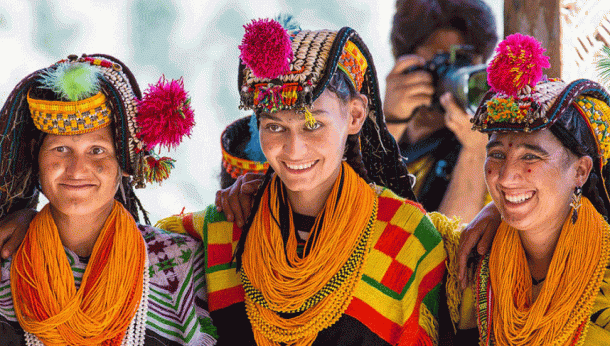
Hunza Valley is home predominantly to Ismaili Muslims — followers of Shah Karim Al-Hussayni, the Aga Khan IV — and this community has one of the highest literacy rates and most progressive social norms of any Muslim community in Pakistan. The Aga Khan Development Network has invested heavily in education, healthcare, and infrastructure throughout Hunza for decades, creating a society where women are educated, professionally active, and visible in public life in ways quite distinct from much of rural Pakistan.
For female travellers: Hunza is widely considered one of the safest and most welcoming destinations in Pakistan for women travelling alone or in pairs. Dress respectfully (cover shoulders and knees) but a hijab is not expected or required. Many guesthouse owners, shopkeepers, and guides in Hunza are women or employ women, and female visitors are welcomed without the awkwardness sometimes encountered in other parts of Pakistan. Trust your instincts, as you would anywhere, but do not let misplaced caution prevent you from exploring freely.
Visiting forts and cultural sites: Baltit Fort and Altit Fort both charge entry fees (approximately PKR 500–700, roughly £1.50–2 for international visitors) that go directly to their respective conservation trusts. Dress respectfully inside the forts. Photography is permitted in most areas. Do not touch or lean on the ancient woodwork.
Photography of people: Always ask permission, particularly with women and older community members. Many Hunza residents — particularly younger people — are comfortable being photographed and will often engage in the process enthusiastically. A smile and a gesture are understood; “Taseer lena theek hai?” (Urdu: “Is it alright to take a photo?”) or simply pointing at your camera with a questioning look is universally understood.
Tipping: Suggested rates for Hunza: local guide PKR 2,000–3,000 per day (£5.50–8.50); guesthouse meals (if paying separately) leave PKR 200–300; fort caretakers who give personal tours, PKR 300–500; boat operators at Attabad Lake PKR 200–300. Always tip in PKR banknotes rather than foreign coins. Tips are best given in person and with thanks, not anonymously in a tip box.
Safety and Health Information
Hunza Valley has an exceptional safety record for international visitors and is consistently highlighted as one of Pakistan’s safest and most visitor-friendly regions. The primary risks on this tour are environmental and health-related rather than security-related.
Altitude sickness: You arrive in Karimabad (2,438m) at the end of Day 2, then ascend to Eagle’s Nest (3,600m) on Day 4 and Khunjerab Pass (4,693m) on Day 6. This is a reasonably gradual profile, but 4,693m is a significant altitude for anyone not already acclimatised. Your guide is trained in AMS recognition and carries supplemental oxygen on the Khunjerab Pass excursion. Key prevention: drink a minimum of 3 litres of water per day from Day 2 onward, avoid alcohol for the first 48 hours in Karimabad, and eat lightly on days involving high altitude. If you develop a headache above 3,000m, rest, hydrate, and take paracetamol. If symptoms worsen despite rest (confusion, ataxia, blue extremities), descend immediately.
Road safety: The KKH is an extraordinary road but carries genuine mountain road risks — narrow sections, occasional falling rocks, and the absence of barriers on many cliff edges. All vehicles used on this tour are maintained 4×4 Toyota Land Cruisers driven by experienced mountain professionals. The Attabad Lake tunnel sections of the KKH (built to replace the road flooded by the 2010 landslide) can be narrow; vehicle headlights are essential.
Medical facilities: The Aga Khan Health Services operates a hospital in Gilgit and a network of primary care clinics in Hunza district, including in Karimabad. For serious medical emergencies, helicopter rescue is available (arrange through your guesthouse or via the Aga Khan network). UK travellers should carry comprehensive travel insurance with medical evacuation cover. Emergency numbers in Gilgit-Baltistan: Police 15, Emergency 1122, Gilgit District Hospital 05811-920400.
Tour calendar
When to travel
This tour runs April through October 2026. Best months are April–May (blossom season) and September–October. Private departures available year-round subject to weather.
JanFebMarAprMayJunJulAugSepOctNovDecReady when you are
Plan your Hunza Valley Tour
Tell us your travel dates and we’ll arrange a private or group departure — Baltit Fort, Attabad Lake, Karimabad and Eagle’s Nest included.
No commitment. We will reply within 24 hours with a personalised quote.
FAQ
Questions travellers ask
Q: Can I visit Hunza Valley independently without a tour?
Yes, independent travel to Hunza is possible for experienced travellers. Public buses and shared minivans run from Rawalpindi’s Pirwadhai bus terminal to Gilgit (approximately 18–20 hours). From Gilgit, local transport continues to Karimabad. Booking with Passage to Pakistan, however, provides a private vehicle, English-speaking guide, pre-vetted accommodation, and the logistical support that makes the most of limited time — particularly valuable given the distances involved and the variability of mountain road conditions.
Q: Is the Hussaini Suspension Bridge safe to cross?
Yes. The Hussaini Bridge is maintained by the local community and has been crossed by thousands of visitors. The wooden planks have gaps and the bridge sways noticeably in the wind, which is alarming but not dangerous if you cross one or two people at a time as instructed. Take your time, hold the rope rails, and do not run. Those with a serious fear of heights may prefer to photograph from the bank rather than cross.
Q: What is the best guesthouse view in Karimabad?
For the finest valley views from a bedroom or terrace, the Eagle’s Nest Hotel (Duikar, above Karimabad) and Hunza Serena Inn both offer exceptional panoramas. Rooms vary significantly — request a “mountain-view” room when booking, as not all rooms face the peaks. We book specifically to ensure our guests have peak-facing accommodation.
Q: Can I extend this tour to include Skardu or Fairy Meadows?
Yes. The 8-day Hunza Valley Tour can be extended by 5–7 days to include Skardu, Deosai Plains, and Fairy Meadows as a combined itinerary. Alternatively, the Grand Northern Pakistan Tour (13 days) covers all of this in a single journey. Contact us for a combined quote — the price per day typically reduces on longer tours.
Q: Will I encounter any language barriers?
English is widely understood in Karimabad, particularly among hotel staff, tour guides, and younger community members. In Hunza, English literacy rates are among the highest in Pakistan thanks to the Aga Khan education network. In more remote areas and on road stops through Kohistan and Chilas, Urdu is the local language — your guide handles all communication in these areas. A few words of Urdu (shukria = thank you, kitna paise? = how much?) are appreciated and easy to learn.