Rakaposhi Base Camp Trek (2026) – 7 Days & 6 Nights
Step into a world of glaciers, pine forests, and towering peaks on the unforgettable Rakaposhi Base Camp Trek.
About this journey
Step into a world of glaciers, pine forests, and towering peaks on the unforgettable Rakaposhi Base Camp Trek. Perfect for adventurers short on time but big on ambition, this 2 to 3-day trek in Nagar Valley (Gilgit-Baltistan) offers front-row views of one of the most iconic and photogenic peaks in the Karakoram—Rakaposhi (7,788 meters).
This trek is considered one of the best short treks in Pakistan, offering high reward for moderate effort. No technical climbing needed—just a good pair of boots, a sense of adventure, and a love for the mountains. Your journey begins in the peaceful village of Minapin, located in Nagar Valley, just a short drive from Gilgit. From here, the trail climbs steadily through fragrant pine forests and flower-filled meadows.
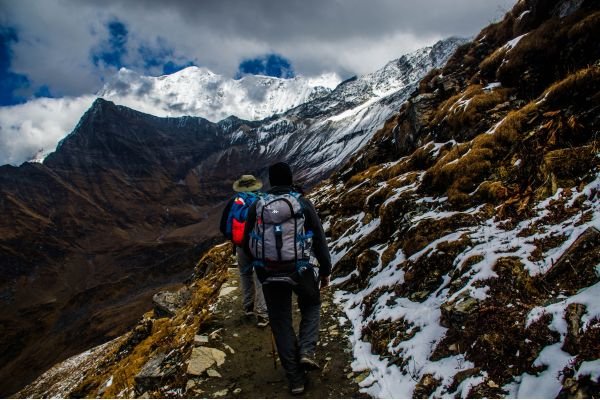
The first overnight stop is at Hapakun, a scenic campsite surrounded by forests with views of the Minapin Glacier. The next day, continue the ascent to Tagaphari, the base camp of Rakaposhi, where you’ll be rewarded with jaw-dropping views of Rakaposhi’s massive ice wall and the glacial valley below.
Camping under starlit skies, with glaciers cracking in the distance and snow-draped peaks surrounding you, is an experience that will stay with you for life.
Day by day
1Day 1: Arrival in Islamabad
Arrive at Islamabad International Airport, meet your guide, and transfer to your hotel. After rest, enjoy a short tour of Islamabad and gear check. Overnight stay in Islamabad.
2Day 2: Flight to Gilgit – Drive to Hunza (Flight: 1 hour, Drive: 2–3 hours)
Take a scenic morning flight to Gilgit (weather permitting). Upon arrival, drive to Karimabad in Hunza Valley. Visit Altit Fort or relax at your guesthouse with views of Rakaposhi. Overnight stay in Karimabad.
3Day 3: Drive to Minapin – Trek to Hapakun Camp (Drive: 1 hour, Trek: 3 hours)
After breakfast, drive to Minapin and begin your trek to Hapakun Camp (2,800m). The trail winds through pine forests with views of Diran and Rakaposhi. Set up camp in the forest. Overnight camping.
4Day 4: Trek to Rakaposhi Base Camp & Return (Trek: 6–7 hours round trip)
Today’s trek takes you to Rakaposhi Base Camp (3,600m). Walk across rocky paths, glacier crossings, and alpine meadows. After lunch with stunning views, descend to Minapin. Drive back to Hunza. Overnight stay in Karimabad.
5Day 5: Day Excursion to Naltar Valley (Drive Time: 2.5 hours one-way)
Take a scenic jeep ride to the forested valley of Naltar, known for its alpine lakes and vibrant flowers. Enjoy lunch by the lakeside and return to Gilgit. Overnight stay in Gilgit.
6Day 6: Flight to Islamabad – City Tour (Flight: 1 hour)
Catch a morning flight to Islamabad. Upon arrival, explore Faisal Mosque, Lok Virsa Museum, and enjoy a farewell dinner at Monal Restaurant in the Margalla Hills. Overnight stay in Islamabad.
7Day 7: Departure from Islamabad
Transfer to the airport for your onward flight. End of tour.
What you will experience
- Experience Pakistan’s most iconic trek Rakaposhi Base Camp
- Fly into the mountains for more time on trail, less time on road
- Trek through alpine meadows, lush forests, and glacier valleys
- Explore the cultural charm of Hunza and Gilgit regions
- Enjoy guided hikes, local cuisine, and camp under the stars
What to bring
A practical starting point for this trip. Your guide will send a final, weather-checked list two weeks before departure.
Documents & essentials
- Passport valid 6+ months, plus photocopies stored separately
- Pakistan visa or e-visa confirmation printout
- Travel insurance certificate (mandatory — must cover altitude if trekking)
- Flight tickets and this itinerary, printed and on your phone
- Cash in USD or EUR for exchange; cards are not widely accepted outside major cities
- Passport-sized photographs for permits and hotel registration
Trekking clothing
- Broken-in trekking boots with ankle support — do not bring new boots
- Camp shoes or trainers for evenings
- Thermal base layers (2 sets), moisture-wicking
- Fleece or softshell mid-layer, plus an insulated jacket for camp
- Waterproof shell jacket and overtrousers
- Trekking trousers (2 pairs) and quick-dry shirts
- Trekking socks (4–5 pairs) plus liners
- Sun hat, warm hat and gloves — temperatures swing sharply with altitude
Trekking equipment
- Daypack, 30–35 L, with rain cover
- Duffel or kit bag for porter-carried gear
- Sleeping bag rated to −10°C (rentable locally on request)
- Trekking poles, adjustable
- Headtorch with spare batteries
- Water bottles or hydration bladder, 2–3 L total capacity
- Water purification tablets or filter
- Dry bags or heavy-duty liners to keep kit dry
Health & personal care
- Personal medication with a copy of the prescription
- Basic first-aid kit: blister plasters, painkillers, antihistamine, rehydration salts
- Anti-diarrhoeal and a broad-spectrum antibiotic if your doctor advises it
- High-factor sunscreen (SPF 50) and SPF lip balm
- Insect repellent
- Hand sanitiser and wet wipes
- Toilet paper — not reliably supplied outside hotels
- Altitude sickness medication (Acetazolamide) — discuss with your doctor before travel
Electronics
- Universal adapter — Pakistan uses type C and D sockets, 230 V
- Power bank; mains power is intermittent in mountain areas
- Camera with spare batteries — cold drains them quickly
- Phone with offline maps downloaded before departure
Good to have
- Reusable water bottle to reduce plastic waste
- Small padlock for luggage
- Snacks you like — choice is limited outside cities
- Earplugs and eye mask for long drives and shared lodges
- A small gift or postcards from home if you plan to visit local families
Before you travel
Best Time to Visit Rakaposhi Base Camp
Rakaposhi (7,788 m) dominates the Hunza Valley — its south buttress falling nearly 6,000 vertical metres from summit to valley floor in one of the most dramatic mountain profiles on Earth. The trek to Rakaposhi Base Camp approaches from the Minapin Glacier, and the season is governed entirely by when the high passes and moraines become accessible.
Late June offers good conditions as snow melts from above 4,000 m. The wildflower meadows below the moraine are at their most spectacular — yellow and purple alpine blooms carpeting the glacial plains. Daytime temperatures in the Hunza Valley sit at a very comfortable 22–28°C; on the glacier approach expect 10–15°C with a sharp wind-chill above 3,500 m. Karimabad's famous cherry orchards are in full fruit in late June — a seasonal highlight in themselves.
July and August are peak season: the passes are fully clear, weather windows on summit days are longest, and both Karimabad and Minapin village have their full complement of guesthouses open. Karimabad's apricot orchards are in fruit in August — a Hunza tradition is fresh or sun-dried apricots with every meal during this season. Book accommodation in advance for July and August as both domestic and international trekker numbers are highest.
September is consistently rated by experienced Karakoram trekkers as the finest month. Late-summer haze clears, views of Rakaposhi's ice-armoured summit ridge are exceptionally sharp, and the valley terraces begin turning russet and gold as harvest season approaches. Temperatures at base camp altitude (approximately 3,700 m) drop to -5°C to -8°C at night in September — a good four-season sleeping bag is required. Visitor numbers thin significantly after mid-September.
October onward: closing. The Minapin Glacier approach typically becomes impassable to standard trekkers by mid-October due to ice and snowfall. Karimabad itself remains accessible year-round via the Karakoram Highway but the Rakaposhi trek is definitively a summer and early-autumn activity.
Travel Tips for International Visitors
Visa: Apply for a Pakistan tourist e-Visa at visa.nadra.gov.pk — approximately £35–45 for a 30-day stay, processed in 1–3 working days. The Hunza Valley falls within Gilgit-Baltistan, which is open to foreign trekkers on a standard tourist visa. No restricted-area permit is required for the Minapin/Rakaposhi Base Camp trek. Your Passage to Pakistan coordinator confirms permit requirements at booking, as regulations in this region can be updated.
Flights: The gateway is Islamabad International Airport (ISB). PIA offers London Heathrow–Islamabad direct (approximately 8–10 hours); Gulf hub connections via Qatar Airways, Emirates or Etihad take 13–16 hours total. From Islamabad, the Karakoram Highway (KKH) journey to Karimabad takes approximately 18–20 hours by road, typically split over two days with an overnight in Gilgit or Besham. Alternatively, PIA and Serene Air operate domestic flights from Islamabad to Gilgit (45 minutes, spectacular over the Karakoram) — reducing the overland approach to 2.5 hours. Note: domestic mountain flights are weather-dependent and subject to delays; build schedule flexibility around the flight.
The Karakoram Highway: The KKH — ancient Silk Road now paved between Islamabad and the Chinese border at Khunjerab — is the backbone of any northern Pakistan itinerary. The stretch from Gilgit to Karimabad passes through Rakaposhi View Point restaurant (a legendary stop for photographs), the turquoise Attabad Lake formed by a 2010 landslide, and the dramatic Hunza River gorge. Our overland transfers use experienced drivers on this route.
Currency: ATMs in Karimabad (HBL and Allied Bank branches) are reliable in summer but can run out of cash during July–August peak. Withdraw backup PKR in Islamabad or Gilgit. Beyond Karimabad in Minapin village there are no financial services — carry all required cash before setting out. Exchange rate approximately 350–360 PKR to £1.
Mobile signal: Jazz and Zong have 4G coverage in Karimabad and along the KKH in Hunza. Signal weakens on the trail from Minapin toward the glacier and is absent in the upper trek above the lateral moraine. Download offline maps (Gaia GPS, Maps.me with Gilgit-Baltistan tiles) before leaving Karimabad. Our lead guides carry satellite phones.
Fitness: The Rakaposhi Base Camp trek is graded moderate-to-strenuous. Expect 5–7 hours of walking per day, gaining 1,200–1,500 m elevation over the approach stages. Terrain varies from a well-defined path above Minapin to rough moraine and occasional boulder-hopping at glacier level. Trekking poles are strongly recommended. Recent hillwalking experience (Snowdon, Ben Nevis, Wainwrights above 600 m) is a good baseline — technical mountaineering experience is required.
Altitude acclimatisation: Karimabad itself sits at approximately 2,438 m — already high enough for mild AMS symptoms on arrival from sea level. The base camp approach reaches 3,700–3,800 m. Our itinerary builds in an acclimatisation day in Karimabad before the trek begins. Consult your GP about Acetazolamide (Diamox) as a prophylactic, ideally 4 weeks before departure. Drink at least 3 litres of water daily from day one in Karimabad.
Travel Insurance: Helicopter emergency evacuation cover is mandatory for this trek. Ensure your policy specifies trekking to at least 4,000 m and covers helicopter rescue from remote areas of Pakistan. True Traveller, World Nomads and Battleface all offer suitable UK policies — verify altitude limits in the policy schedule before purchasing.
Accommodation on This Tour
This seven-day itinerary combines comfortable mid-range accommodation in Islamabad and Karimabad with authentic village guesthouses in Minapin — the variety is one of the pleasures of northern Pakistan trekking.
Islamabad (Nights 1 and 7): Best Western Plus Islamabad, Hotel One or similar (F-7/F-8 sectors) — modern air-conditioned rooms with reliable Wi-Fi and breakfast. Convenient for pre-trek rest and post-trek recovery.
Gilgit (Night 2): Gilgit Serena Hotel is the flagship option — a beautifully designed lodge with gardens, mountain views, reliable power and excellent food. The Riveria Hotel Gilgit and PTDC Motel are good mid-range alternatives. Gilgit is the transfer hub between the domestic airport and onward travel to Hunza.
Karimabad, Hunza (Nights 3 and 6): Karimabad has the finest range of accommodation in northern Pakistan outside Islamabad. Eagle's Nest Hotel offers the most dramatic mountain view in Pakistan — a ridge-top property with Rakaposhi, Ultar Sar and the Hunza Valley spread below it. Hunza Serena Hotel provides five-star service in traditional architectural style with landscaped gardens. For excellent mid-range value, Diran Guest House and Old Hunza Inn on Karimabad's main bazaar are beloved by experienced northern Pakistan trekkers. All options include hearty breakfasts of fresh Hunza bread, local honey and chai.
Minapin village guesthouses (Nights 4–5): Minapin is a traditional Hunzakut farming village at 2,480 m, gateway to the Rakaposhi trek. Several family-run guesthouses offer clean rooms, freshly baked chapati, locally grown vegetables and daal, and exceptional views of Rakaposhi's lower buttresses from the dining terrace. Facilities are basic — shared bathrooms, solar-heated water, generator electricity — but the quality of hospitality more than compensates. Our coordinator pre-selects the best-maintained option for each season.
Local Culture and Etiquette
Hunzakut and Ismaili Muslim tradition: The Hunza Valley has been a predominantly Ismaili Muslim community for over a century, following the Aga Khan whose development network (AKDN) has transformed the valley's infrastructure, education and healthcare. Ismaili culture is notably more relaxed than conservative Sunni areas of Pakistan: women in Karimabad are often seen without headscarves; music is played openly; the village atmosphere is hospitable and open to international visitors. This relative liberalism should not be mistaken for an absence of Islamic culture — respect remains important, particularly in Minapin which is slightly more conservative.
Dress: Modest but relaxed in Karimabad. Women can wear trousers and a loose shoulder-covering top without a headscarf in town; technical trekking layers are perfectly appropriate on the trail. In Minapin village, women's headscarves are appreciated as a gesture of respect. Men in trekking trousers and zip-off hiking pants are fine throughout.
Food and hospitality: Hunza cuisine is distinct from the rest of Pakistan — lighter, less oily, based on fresh and dried apricots, mulberries, walnuts, local wheat bread and salted Hunza tea (a unique pink tea made with baking soda). You will be offered chai at every guesthouse and by local families along the trail. Accept with both hands extended — refusing hospitality is considered impolite. An invitation into a local home for a meal is one of the most memorable experiences of any Pakistan visit.
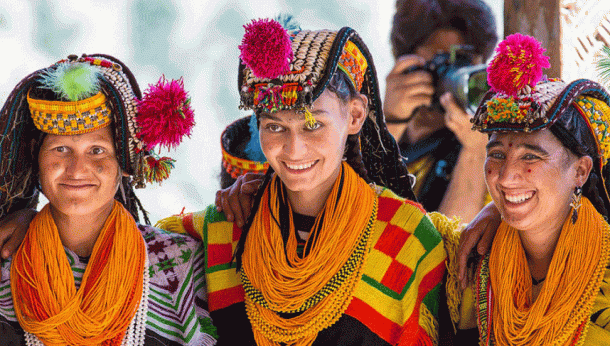
Photography: The Karakoram scenery is endlessly photogenic. Photography is welcomed at all scenic viewpoints. Local women are sometimes camera-shy — always ask and respect a no. The eagle hunters and polo players of Karimabad bazaar are generally proud subjects and will often pose for portraits.
Tipping: Minapin guesthouse staff: 300–500 PKR per night. Passage to Pakistan lead guide: 1,000–2,000 PKR per full trekking day. Porters (if used): 500–1,000 PKR per day. Restaurant staff in Karimabad: 200–300 PKR for a full meal. Cash PKR only.
Safety and Health Information
Altitude and AMS: The Hunza Valley sits at 2,400 m and Rakaposhi Base Camp approaches 3,700–3,800 m. Our itinerary includes an acclimatisation day in Karimabad before the trek begins — use it for gentle walking and good hydration rather than sightseeing at altitude. Classic AMS symptoms (headache, nausea, fatigue, disrupted sleep) should prompt immediate descent; improvement is almost always rapid. Your guide carries a pulse oximeter and oxygen, and is trained to recognise HACE (High Altitude Cerebral Edema) and HAPE (High Altitude Pulmonary Edema) — rare but serious conditions requiring immediate descent and evacuation.
Glacier and moraine hazards: The upper approach to Rakaposhi Base Camp crosses active moraine — loose rock deposited by the glacier. The terrain is unstable underfoot; wear ankle-supporting boots and follow your guide's exact route. Rockfall can occur from cliff bands above the moraine — rest only in spots your guide identifies as safe. Do not walk on the glacier surface without crampons and guide supervision.
Sun and cold exposure: UV radiation at altitude is significantly higher than at sea level — SPF 50+ sunscreen and UV-rated sunglasses are essential. Carry a waterproof layer and down jacket at all times on the trek even when valley temperatures feel warm. Dehydration accelerates at altitude — drink consistently rather than waiting to feel thirsty.
Emergency facilities: Aga Khan Health Service Hospital Gilgit is the primary emergency facility for the Hunza region — approximately 2.5 hours by road from Karimabad. The AKES clinic in Karimabad handles minor issues. For helicopter rescue, Rescue 1122 Gilgit-Baltistan covers this region; your travel insurance must explicitly include helicopter rescue from altitude. CMH Gilgit handles trauma cases.
Emergency contacts: Rescue 1122 Gilgit-Baltistan | Police: 15 | AKES Gilgit Hospital: +92-581-920700. Your Passage to Pakistan guide is your primary emergency contact. Register your trek with your government’s travel registry. UK travellers: FCDO Pakistan travel advice.
When to travel
Trekking season. Highlighted months are when we run this itinerary. Private departures can be arranged on any date — just ask.
Dates shown are guide departures. Exact start dates are confirmed at the time of booking and can be adjusted to suit your flights.
Plan your Conquer the Karakoram 7-Day Rakaposhi Base Camp Trekking Tour
Tell us your dates and we will build this itinerary around them — private guide, your pace, your interests. We reply within one working day.
Or call +92 342 5017535
Questions travellers ask
1. How difficult is the Rakaposhi Base Camp Trek?
The Rakaposhi Base Camp Trek is rated as moderate and is suitable for trekkers with basic fitness and a love for the outdoors. The trail involves ascending from Minapin Village to Tagaphari, with panoramic views of the Rakaposhi Glacier, and continues to base camp at around 3,500 meters.
2. What is the best time to trek to Rakaposhi Base Camp?
The best trekking season is from June to September, when weather conditions are stable and trails are free of snow. During this period, you’ll enjoy clear views of Rakaposhi Peak (7,788m), lush green meadows, and comfortable daytime temperatures.
3. What should I pack for the Rakaposhi Base Camp Trek?
Essential gear includes trekking boots, a warm jacket, thermal layers, gloves, a headlamp, a water bottle, sunscreen, and a light backpack. Nights can be cold even in summer, so a sleeping bag rated for -5°C is highly recommended.
4. Is the trek guided and safe for solo or international travelers?
Yes, this is a fully guided trekking tour in Northern Pakistan with professional local support, porters, and safety protocols. It’s ideal for solo travelers, couples, and small groups seeking a safe, well-organized mountain experience.
5. What are the accommodation options during the Rakaposhi trek?
Accommodation includes guesthouses in Minapin and camping at Tagaphari or base camp with tents and basic mountain facilities. All meals are provided during the trek, and local porters and cooks accompany the group for support.